• 文献检索
  • 文档翻译
  • 深度研究
  • 学术资讯
  • Suppr Zotero 插件Zotero 插件
  • 邀请有礼
  • 套餐&价格
  • 历史记录
应用&插件
Suppr Zotero 插件Zotero 插件浏览器插件Mac 客户端Windows 客户端微信小程序
定价
高级版会员购买积分包购买API积分包
服务
文献检索文档翻译深度研究API 文档MCP 服务
关于我们
关于 Suppr公司介绍联系我们用户协议隐私条款
关注我们

Suppr 超能文献

核心技术专利:CN118964589B侵权必究
粤ICP备2023148730 号-1Suppr @ 2026

文献检索

告别复杂PubMed语法,用中文像聊天一样搜索,搜遍4000万医学文献。AI智能推荐,让科研检索更轻松。

立即免费搜索

文件翻译

保留排版,准确专业,支持PDF/Word/PPT等文件格式,支持 12+语言互译。

免费翻译文档

深度研究

AI帮你快速写综述,25分钟生成高质量综述,智能提取关键信息,辅助科研写作。

立即免费体验

每日追踪通货膨胀情况。

Tracking inflation on a daily basis.

作者信息

Alvarez Santiago E, Lein Sarah M

机构信息

University of Basel, Basel, Switzerland.

CEPR, London, UK.

出版信息

Swiss J Econ Stat. 2020;156(1):18. doi: 10.1186/s41937-020-00062-w. Epub 2020 Nov 4.

DOI:10.1186/s41937-020-00062-w
PMID:33169102
原文链接:https://pmc.ncbi.nlm.nih.gov/articles/PMC7609834/
Abstract

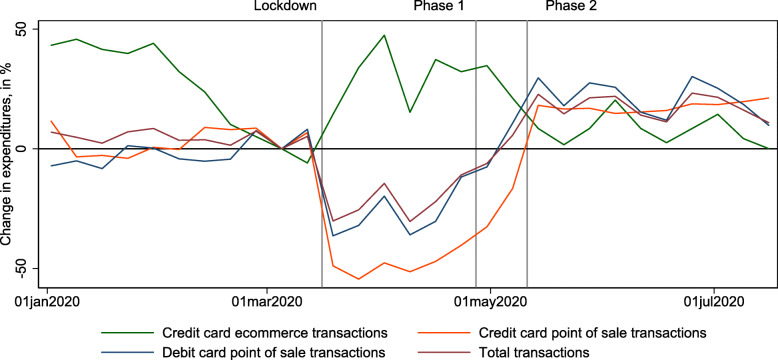
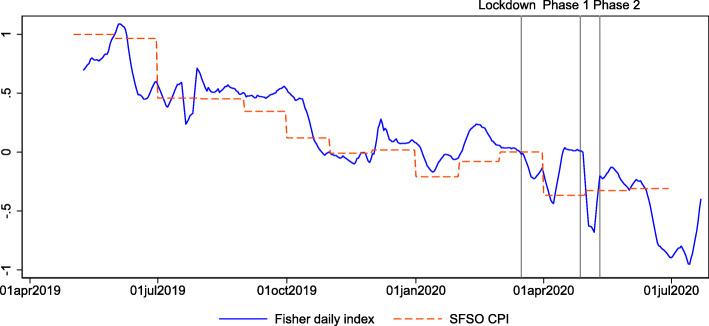
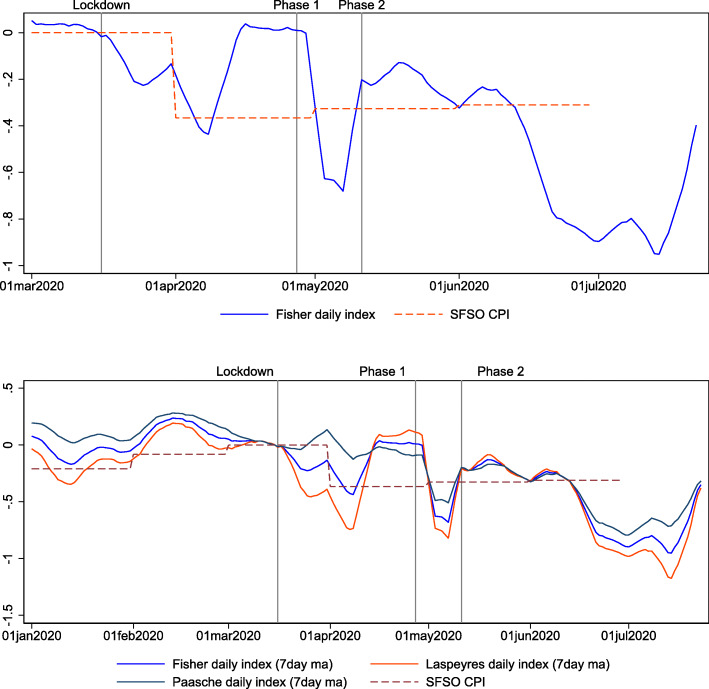
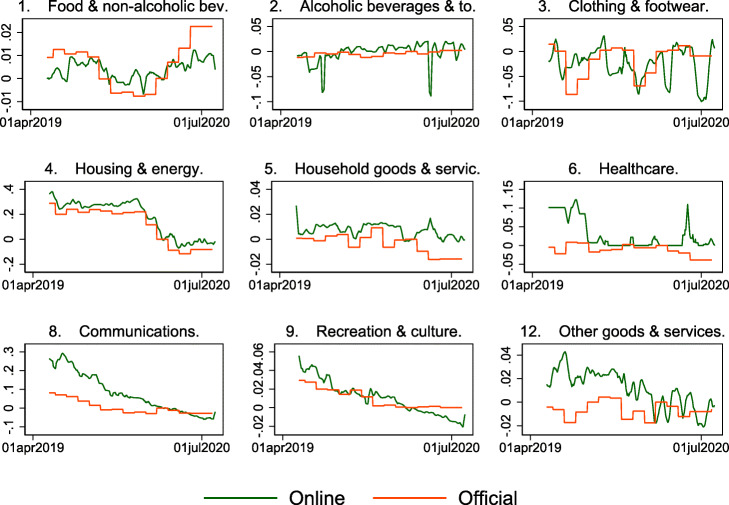
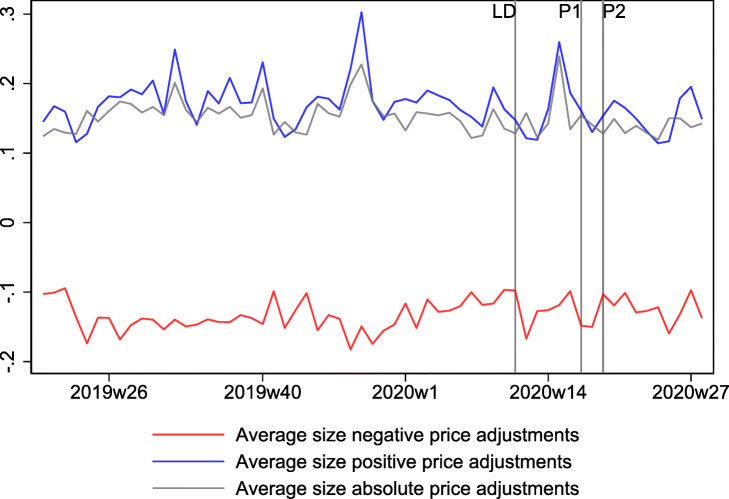
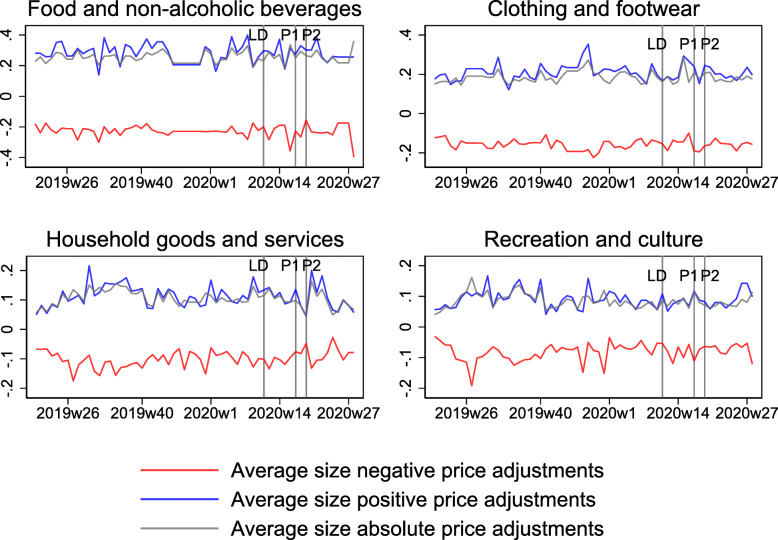
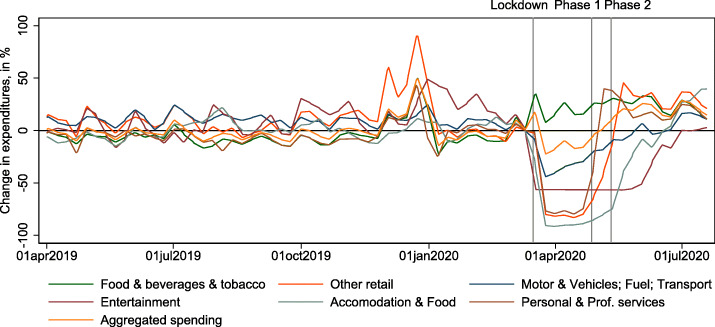
Using online data for prices and real-time debit card transaction data on changes in expenditures for Switzerland allows us to track inflation on a daily basis. While the daily price index fluctuates around the official price index in normal times, it drops immediately after the lockdown related to the COVID19 pandemic. Official statistics reflect this drop only with a lag, specifically because data collection takes time and is impeded by lockdown conditions. Such daily real-time information can be useful to gauge the relative importance of demand and supply shocks and thus inform policymakers who need to determine appropriate policy measures.

摘要

利用瑞士的在线价格数据和借记卡实时交易数据中支出的变化情况,我们能够每天追踪通货膨胀。在正常时期,每日价格指数围绕官方价格指数波动,但在与新冠疫情相关的封锁措施实施后,该指数立即下降。官方统计数据只是在一段时间后才反映出这种下降,特别是因为数据收集需要时间,而且受到封锁条件的阻碍。这种每日实时信息有助于衡量需求和供给冲击的相对重要性,从而为需要确定适当政策措施的政策制定者提供参考。
https://cdn.ncbi.nlm.nih.gov/pmc/blobs/2912/7609834/19b632c17711/41937_2020_62_Fig10_HTML.jpg
https://cdn.ncbi.nlm.nih.gov/pmc/blobs/2912/7609834/2c778caa9d86/41937_2020_62_Fig1_HTML.jpg
https://cdn.ncbi.nlm.nih.gov/pmc/blobs/2912/7609834/cfd085d2ae55/41937_2020_62_Fig2_HTML.jpg
https://cdn.ncbi.nlm.nih.gov/pmc/blobs/2912/7609834/cf78509bff96/41937_2020_62_Fig3_HTML.jpg
https://cdn.ncbi.nlm.nih.gov/pmc/blobs/2912/7609834/50141c34493b/41937_2020_62_Fig4_HTML.jpg
https://cdn.ncbi.nlm.nih.gov/pmc/blobs/2912/7609834/4cc3cef1b893/41937_2020_62_Fig5_HTML.jpg
https://cdn.ncbi.nlm.nih.gov/pmc/blobs/2912/7609834/1d976c889301/41937_2020_62_Fig6_HTML.jpg
https://cdn.ncbi.nlm.nih.gov/pmc/blobs/2912/7609834/fc6c35773d45/41937_2020_62_Fig7_HTML.jpg
https://cdn.ncbi.nlm.nih.gov/pmc/blobs/2912/7609834/d0157abb3729/41937_2020_62_Fig8_HTML.jpg
https://cdn.ncbi.nlm.nih.gov/pmc/blobs/2912/7609834/049b28bb8810/41937_2020_62_Fig9_HTML.jpg
https://cdn.ncbi.nlm.nih.gov/pmc/blobs/2912/7609834/19b632c17711/41937_2020_62_Fig10_HTML.jpg
https://cdn.ncbi.nlm.nih.gov/pmc/blobs/2912/7609834/2c778caa9d86/41937_2020_62_Fig1_HTML.jpg
https://cdn.ncbi.nlm.nih.gov/pmc/blobs/2912/7609834/cfd085d2ae55/41937_2020_62_Fig2_HTML.jpg
https://cdn.ncbi.nlm.nih.gov/pmc/blobs/2912/7609834/cf78509bff96/41937_2020_62_Fig3_HTML.jpg
https://cdn.ncbi.nlm.nih.gov/pmc/blobs/2912/7609834/50141c34493b/41937_2020_62_Fig4_HTML.jpg
https://cdn.ncbi.nlm.nih.gov/pmc/blobs/2912/7609834/4cc3cef1b893/41937_2020_62_Fig5_HTML.jpg
https://cdn.ncbi.nlm.nih.gov/pmc/blobs/2912/7609834/1d976c889301/41937_2020_62_Fig6_HTML.jpg
https://cdn.ncbi.nlm.nih.gov/pmc/blobs/2912/7609834/fc6c35773d45/41937_2020_62_Fig7_HTML.jpg
https://cdn.ncbi.nlm.nih.gov/pmc/blobs/2912/7609834/d0157abb3729/41937_2020_62_Fig8_HTML.jpg
https://cdn.ncbi.nlm.nih.gov/pmc/blobs/2912/7609834/049b28bb8810/41937_2020_62_Fig9_HTML.jpg
https://cdn.ncbi.nlm.nih.gov/pmc/blobs/2912/7609834/19b632c17711/41937_2020_62_Fig10_HTML.jpg

相似文献

1
Tracking inflation on a daily basis.每日追踪通货膨胀情况。
Swiss J Econ Stat. 2020;156(1):18. doi: 10.1186/s41937-020-00062-w. Epub 2020 Nov 4.
2
What pandemic inflation tells: Old habits die hard.疫情引发的通胀说明了什么:旧习难改。
Econ Lett. 2021 Jul;204:109907. doi: 10.1016/j.econlet.2021.109907. Epub 2021 May 15.
3
Weighting bias and inflation in the time of COVID-19: evidence from Swiss transaction data.新冠疫情时期的加权偏差与通胀:来自瑞士交易数据的证据
Swiss J Econ Stat. 2020;156(1):13. doi: 10.1186/s41937-020-00057-7. Epub 2020 Sep 16.
4
COVID-19 inflation weights in the UK and Germany.英国和德国的新冠疫情通胀权重。
J Macroecon. 2023 Jun 17:103543. doi: 10.1016/j.jmacro.2023.103543.
5
Analysis of Launch and Postapproval Cancer Drug Pricing, Clinical Benefit, and Policy Implications in the US and Europe.美国和欧洲的癌症药物上市后定价、临床获益分析及其政策影响
JAMA Oncol. 2021 Sep 1;7(9):e212026. doi: 10.1001/jamaoncol.2021.2026. Epub 2021 Sep 16.
6
Adjusting Health Expenditures for Inflation: A Review of Measures for Health Services Research in the United States.调整卫生支出的通货膨胀率:美国卫生服务研究的措施述评。
Health Serv Res. 2018 Feb;53(1):175-196. doi: 10.1111/1475-6773.12612. Epub 2016 Nov 21.
7
Using crowd-sourced data for real-time monitoring of food prices during the COVID-19 pandemic: Insights from a pilot project in northern Nigeria.利用众包数据对新冠疫情期间食品价格进行实时监测:来自尼日利亚北部一个试点项目的见解
Glob Food Sec. 2021 Jun;29:100523. doi: 10.1016/j.gfs.2021.100523.
8
Rising Costs of Otic Drops: Review of a National Database.耳用滴剂成本上升:国家数据库回顾。
Laryngoscope. 2021 Apr;131(4):E1069-E1075. doi: 10.1002/lary.29176. Epub 2020 Nov 16.
9
Online food prices during the COVID-19 pandemic.新冠疫情期间的在线食品价格。
Agribusiness (N Y N Y). 2021 Winter;37(1):91-107. doi: 10.1002/agr.21673. Epub 2020 Dec 3.
10
Pandemic Preference Shocks and Inflation in a New Keynesian Model.新凯恩斯模型中的大流行偏好冲击与通货膨胀
Atl Econ J. 2022;50(3-4):133-146. doi: 10.1007/s11293-022-09752-7. Epub 2022 Dec 27.

引用本文的文献

1
Monitoring consumption Switzerland: data, background, and use cases.瑞士消费监测:数据、背景及应用案例
Swiss J Econ Stat. 2023;159(1):4. doi: 10.1186/s41937-023-00108-9. Epub 2023 Mar 20.
2
Weighting bias and inflation in the time of COVID-19: evidence from Swiss transaction data.新冠疫情时期的加权偏差与通胀:来自瑞士交易数据的证据
Swiss J Econ Stat. 2020;156(1):13. doi: 10.1186/s41937-020-00057-7. Epub 2020 Sep 16.

本文引用的文献

1
Measuring real consumption and consumer price index bias under lockdown conditions.在封锁条件下衡量实际消费和消费者价格指数偏差。
Can J Econ. 2022 Feb;55(Suppl 1):480-502. doi: 10.1111/caje.12545. Epub 2022 Feb 8.
2
Consumer responses to the Covid-19 crisis: evidence from bank account transaction data.消费者对新冠疫情危机的反应:来自银行账户交易数据的证据
Scand J Econ. 2022 Jul 15. doi: 10.1111/sjoe.12512.
3
Tracking the COVID-19 crisis with high-resolution transaction data.利用高分辨率交易数据追踪新冠疫情危机
R Soc Open Sci. 2021 Aug 11;8(8):210218. doi: 10.1098/rsos.210218. eCollection 2021 Aug.
4
COVID-19 and regional shifts in Swiss retail payments.新冠疫情与瑞士零售支付的区域变化
Swiss J Econ Stat. 2020;156(1):14. doi: 10.1186/s41937-020-00061-x. Epub 2020 Sep 25.
5
Weighting bias and inflation in the time of COVID-19: evidence from Swiss transaction data.新冠疫情时期的加权偏差与通胀:来自瑞士交易数据的证据
Swiss J Econ Stat. 2020;156(1):13. doi: 10.1186/s41937-020-00057-7. Epub 2020 Sep 16.
6
Mobility and sales activity during the Corona crisis: daily indicators for Switzerland.新冠疫情危机期间的流动性与销售活动:瑞士的每日指标
Swiss J Econ Stat. 2020;156(1):9. doi: 10.1186/s41937-020-00055-9. Epub 2020 Aug 24.
7
Blacking out.
Swiss J Econ Stat. 2020;156(1):7. doi: 10.1186/s41937-020-00052-y. Epub 2020 Jul 23.
8
A daily fever curve for the Swiss economy.
Swiss J Econ Stat. 2020;156(1):6. doi: 10.1186/s41937-020-00051-z. Epub 2020 Jul 9.