Grigoli Francesco, Pugacheva Evgenia
IMF, United States of America.
J Macroecon. 2023 Jun 17:103543. doi: 10.1016/j.jmacro.2023.103543.
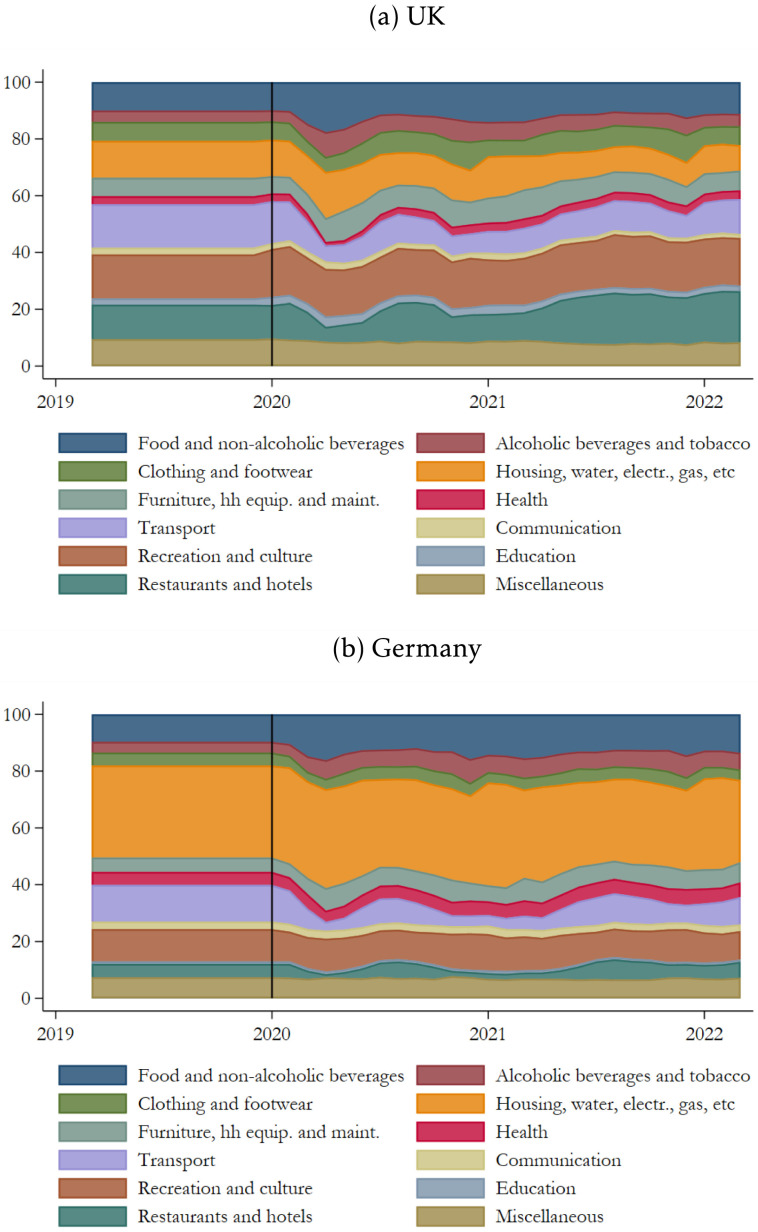
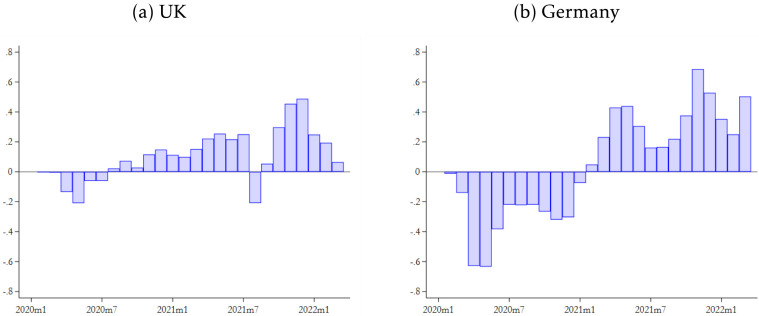
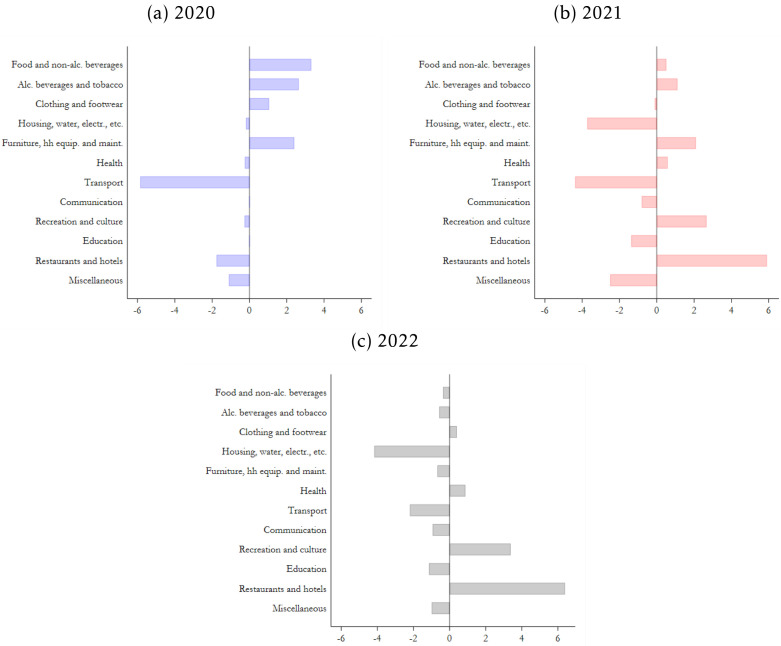
The COVID-19 pandemic altered consumption patterns significantly in a short period of time. However, official inflation statistics take time to reflect changes in the weights of the CPI consumption basket. Using credit card data for the UK and Germany, we document how consumption patterns changed and quantify the resulting inflation bias. We find that consumers experienced a higher level of inflation at the beginning of the pandemic than what a fixed-weight inflation (or the official-weight) index suggests and lower inflation thereafter. We also show that weights can differ among age groups and in-person vs. online spenders. These differences affect the purchasing power of the population heterogeneously. We conclude that CPI inflation indexes based on frequently updated weights can provide useful inputs to assess changes in the cost of living, including across segments of the population. If shifts in consumption patterns prove persistent, these indexes can help determine the need to introduce new weights and inform monetary policy and the design of support policies for the more vulnerable.
新冠疫情在短时间内显著改变了消费模式。然而,官方通胀统计数据需要时间来反映消费物价指数(CPI)消费篮子权重的变化。利用英国和德国的信用卡数据,我们记录了消费模式的变化情况,并对由此产生的通胀偏差进行了量化。我们发现,在疫情初期,消费者经历的通胀水平高于固定权重通胀(或官方权重)指数所显示的水平,而在那之后通胀水平则较低。我们还表明,不同年龄组以及线下与线上消费者的权重可能存在差异。这些差异对不同人群的购买力产生了不同影响。我们得出结论,基于频繁更新权重的CPI通胀指数能够为评估生活成本变化提供有用信息,包括不同人群的生活成本变化。如果消费模式的转变被证明是持续的,这些指数有助于确定引入新权重的必要性,并为货币政策以及为更弱势群体设计支持政策提供参考。