Faculty of Medicine and Health Technology, Tampere University, Tampere, Finland.
Department of Neurobiology, Stanford University, Stanford, CA, USA.
PLoS Comput Biol. 2020 Nov 10;16(11):e1008360. doi: 10.1371/journal.pcbi.1008360. eCollection 2020 Nov.
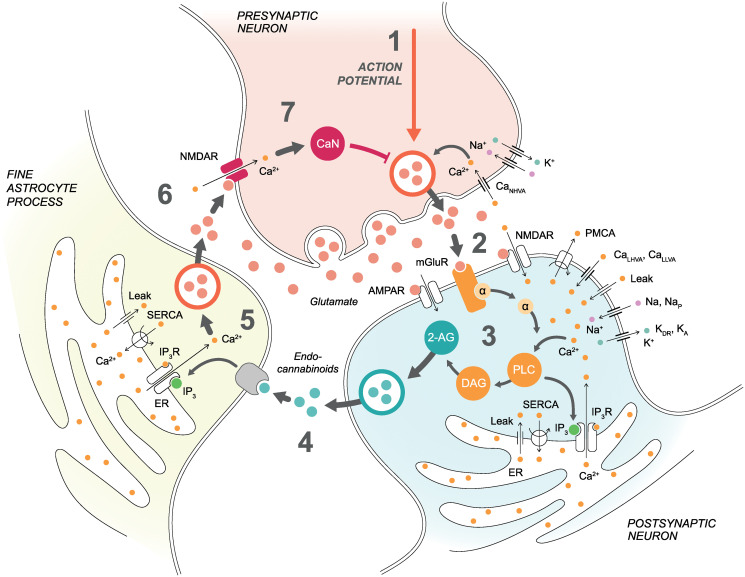
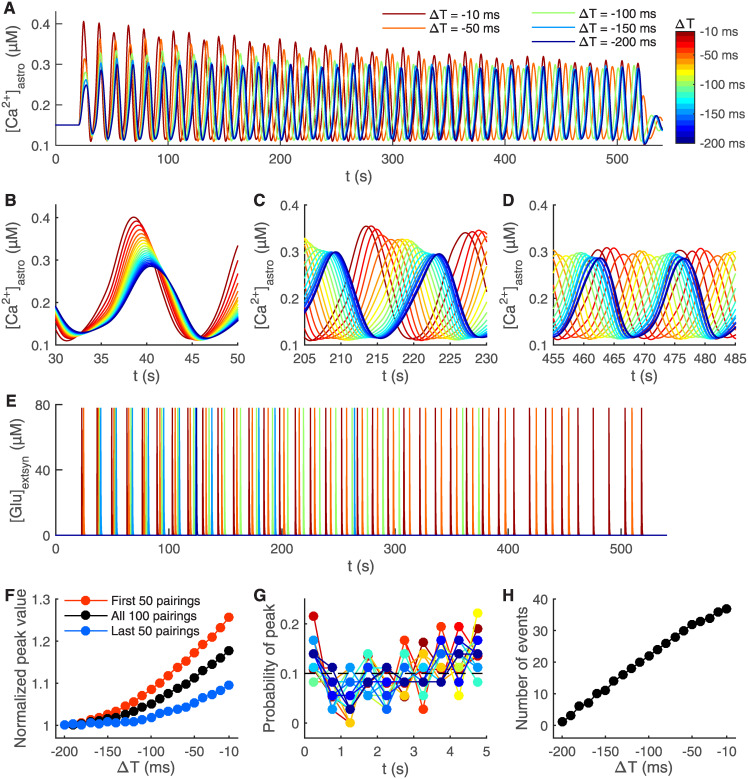
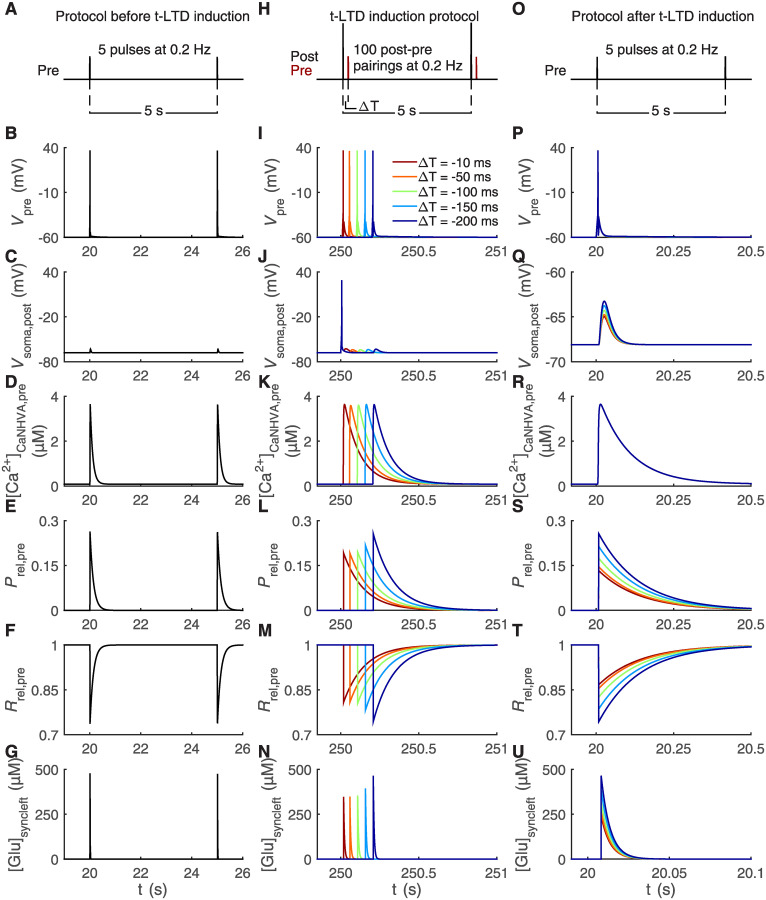
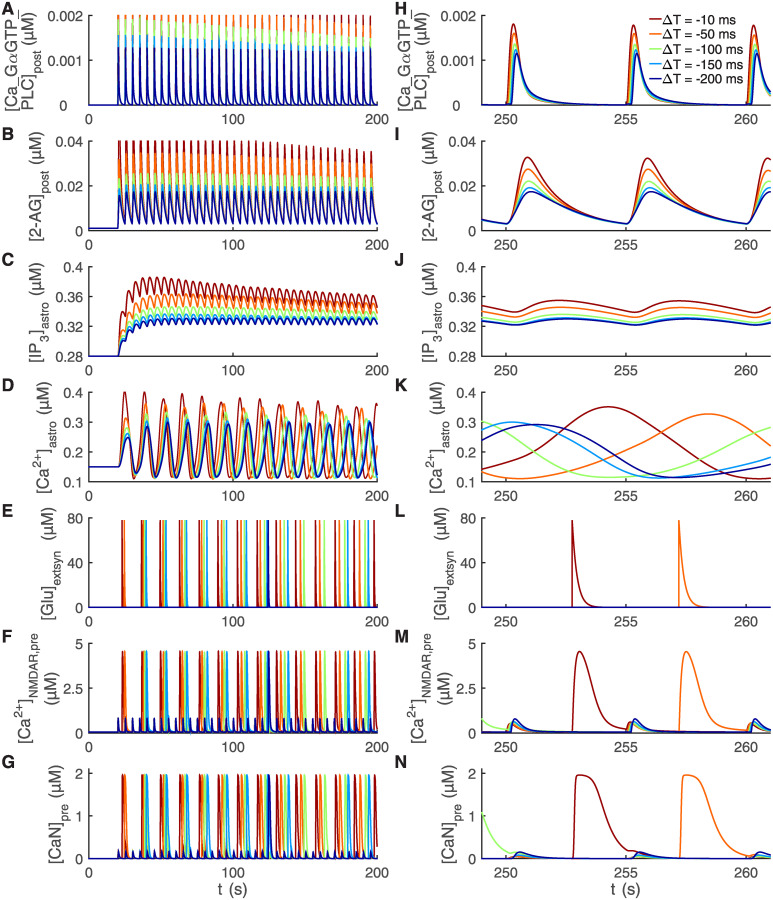
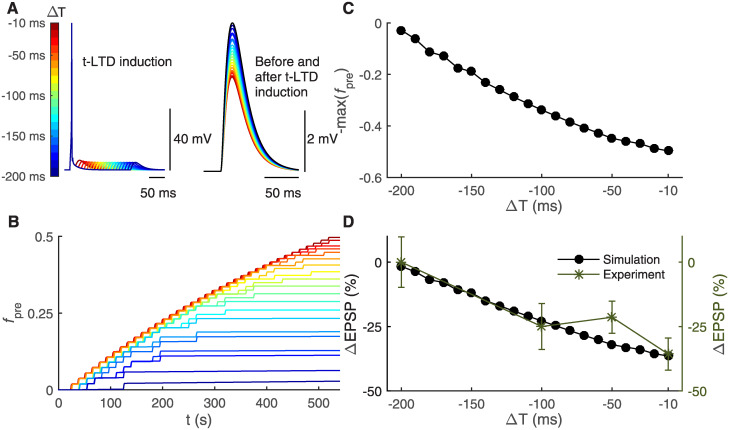
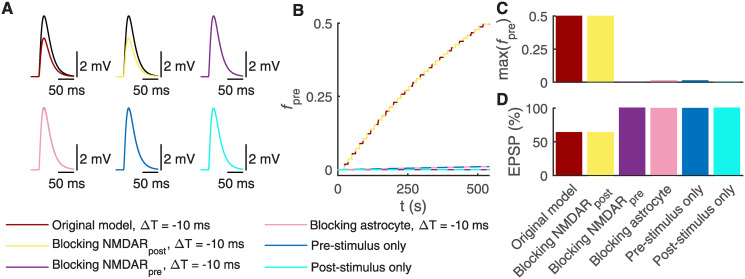
Astrocytes have been shown to modulate synaptic transmission and plasticity in specific cortical synapses, but our understanding of the underlying molecular and cellular mechanisms remains limited. Here we present a new biophysicochemical model of a somatosensory cortical layer 4 to layer 2/3 synapse to study the role of astrocytes in spike-timing-dependent long-term depression (t-LTD) in vivo. By applying the synapse model and electrophysiological data recorded from rodent somatosensory cortex, we show that a signal from a postsynaptic neuron, orchestrated by endocannabinoids, astrocytic calcium signaling, and presynaptic N-methyl-D-aspartate receptors coupled with calcineurin signaling, induces t-LTD which is sensitive to the temporal difference between post- and presynaptic firing. We predict for the first time the dynamics of astrocyte-mediated molecular mechanisms underlying t-LTD and link complex biochemical networks at presynaptic, postsynaptic, and astrocytic sites to the time window of t-LTD induction. During t-LTD a single astrocyte acts as a delay factor for fast neuronal activity and integrates fast neuronal sensory processing with slow non-neuronal processing to modulate synaptic properties in the brain. Our results suggest that astrocytes play a critical role in synaptic computation during postnatal development and are of paramount importance in guiding the development of brain circuit functions, learning and memory.
星形胶质细胞被证明可以调节特定皮质突触的突触传递和可塑性,但我们对其潜在的分子和细胞机制的理解仍然有限。在这里,我们提出了一个新的躯体感觉皮层第 4 层到第 2/3 层突触的生物物理化学模型,以研究星形胶质细胞在体内尖峰时间依赖性长时程抑制(t-LTD)中的作用。通过应用突触模型和从啮齿动物躯体感觉皮层记录的电生理数据,我们表明,来自突触后神经元的信号,由内源性大麻素、星形胶质细胞钙信号和与钙调神经磷酸酶信号偶联的突触前 N-甲基-D-天冬氨酸受体协调,诱导 t-LTD,其对突触后和突触前放电之间的时间差敏感。我们首次预测了 t-LTD 下星形胶质细胞介导的分子机制的动力学,并将复杂的生化网络与突触前、突触后和星形胶质细胞位点联系起来,以确定 t-LTD 诱导的时间窗口。在 t-LTD 期间,单个星形胶质细胞充当快速神经元活动的延迟因素,并将快速神经元感觉处理与慢速非神经元处理整合在一起,以调节大脑中的突触特性。我们的结果表明,星形胶质细胞在出生后发育过程中的突触计算中起着关键作用,对于指导大脑回路功能、学习和记忆的发展至关重要。