Zhang Linwen, Parot Jeremie, Hackley Vincent A, Turko Illarion V
Biomolecular Measurement Division, National Institute of Standards and Technology, Gaithersburg, MD 20899, USA.
Institute for Bioscience and Biotechnology Research, Rockville, MD 20850, USA.
Proteomes. 2020 Nov 6;8(4):33. doi: 10.3390/proteomes8040033.
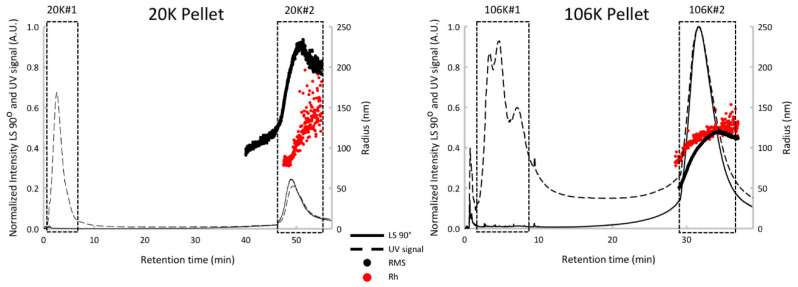
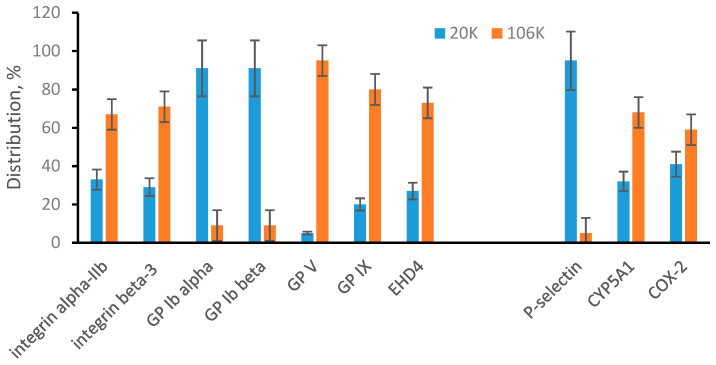
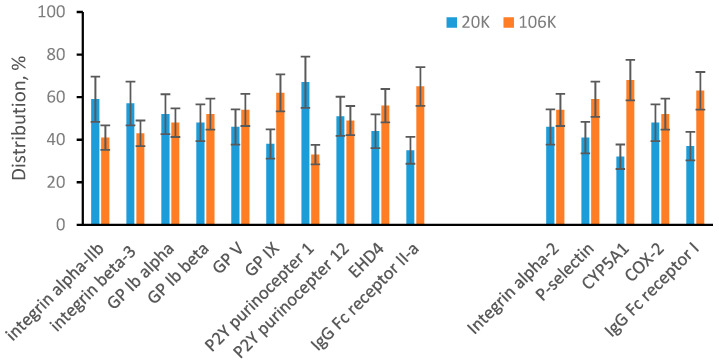
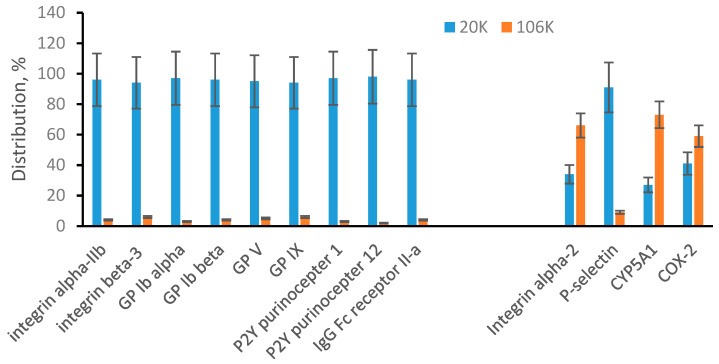
Extracellular vesicles (EVs) are traditionally divided into two major groups: (i) large vesicles originating from plasma membrane and called microvesicles, and (ii) small vesicles originating from the endoplasmic membrane and called exosomes. However, it is increasingly clear that the actual composition of a particular EV preparation cannot be adequately described with these two simple terms and is much more complex. Since the cell membrane origin of EVs predetermines their biological functions, the understanding of EV biogenesis is important for accurate interpretation of observed results. In the present study, we propose to take advantage of selective expression of some proteins in plasma or endosomal membranes and to use these proteins as plasma membrane-specific or endosomal membrane-specific markers. We have demonstrated that a quantitative mass spectrometry analysis allows simultaneous measurement of plasma membrane-specific and endosomal membrane-specific proteins in microvesicles and exosomes obtained after differential ultracentrifugation. Before mass spectrometry analysis, we also used sonicated platelets as a model of mixed EVs and multidetector asymmetrical-flow field-flow fractionation as an analytical method to verify a possible cross contamination of obtained microvesicles and exosomes. Based on the quantitative appearance of membrane-specific protein markers in EV preparations from human plasma and from human ARPE-19 cell medium, we concluded that there is no actual size limitation and both microvesicles and exosomes can be represented by large and small vesicles.
细胞外囊泡(EVs)传统上分为两大类:(i)源自质膜的大囊泡,称为微囊泡;(ii)源自内质膜的小囊泡,称为外泌体。然而,越来越明显的是,用这两个简单的术语无法充分描述特定EV制剂的实际组成,其要复杂得多。由于EVs的细胞膜起源决定了它们的生物学功能,因此了解EV的生物发生对于准确解释观察结果很重要。在本研究中,我们建议利用某些蛋白质在质膜或内体膜中的选择性表达,并将这些蛋白质用作质膜特异性或内体膜特异性标记物。我们已经证明,定量质谱分析可以同时测量差速超速离心后获得的微囊泡和外泌体中的质膜特异性和内体膜特异性蛋白质。在进行质谱分析之前,我们还使用超声处理的血小板作为混合EVs的模型,并使用多检测器不对称流场流分馏作为分析方法,以验证获得的微囊泡和外泌体是否可能存在交叉污染。基于来自人血浆和人ARPE-19细胞培养基的EV制剂中膜特异性蛋白质标记物的定量出现,我们得出结论,实际上不存在大小限制,微囊泡和外泌体都可以由大、小囊泡代表。