Huon Jean-François, Montassier Emmanuel, Leroy Anne-Gaëlle, Grégoire Matthieu, Vibet Marie-Anne, Caillon Jocelyne, Boutoille David, Navas Dominique
CHU Nantes, Clinical Pharmacy Unit, Nantes, France
EA3826, Laboratory of Clinical and Experimental Therapeutics of Infections, Université de Nantes, Nantes, France.
mSystems. 2020 Nov 10;5(6):e00542-20. doi: 10.1128/mSystems.00542-20.
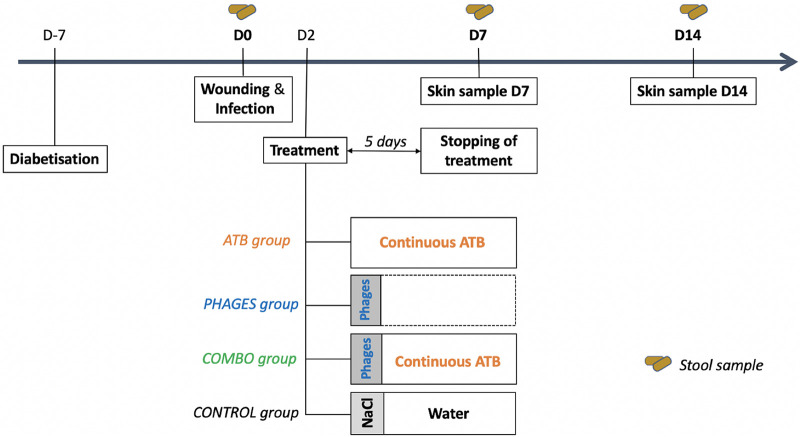
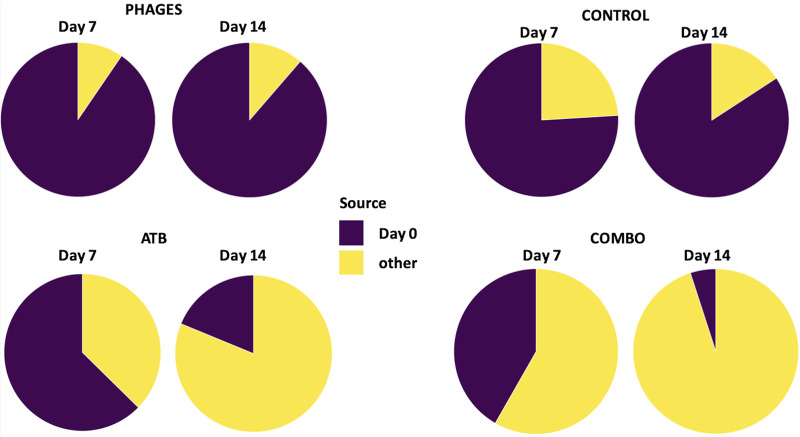
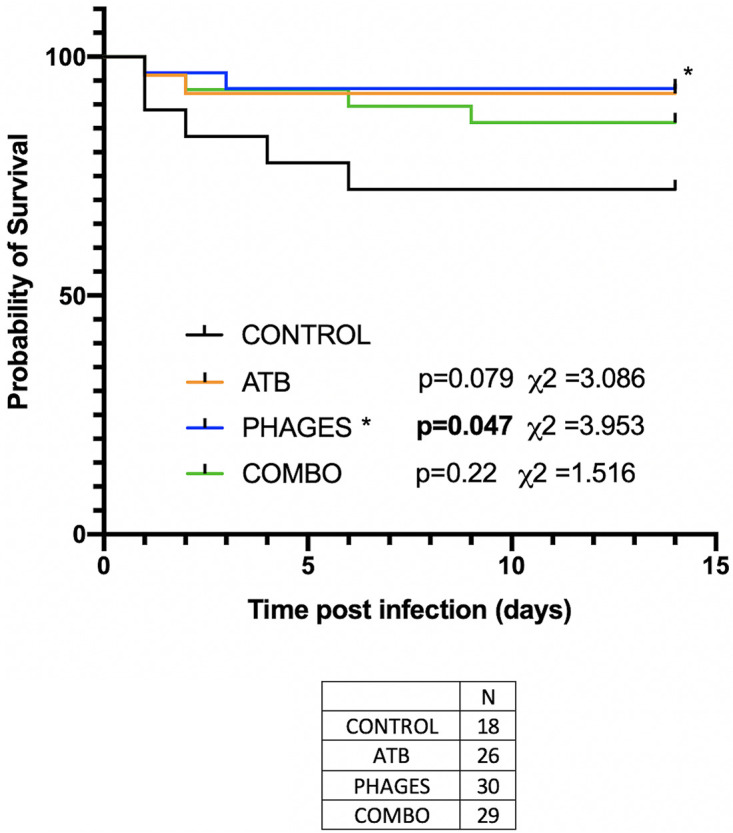
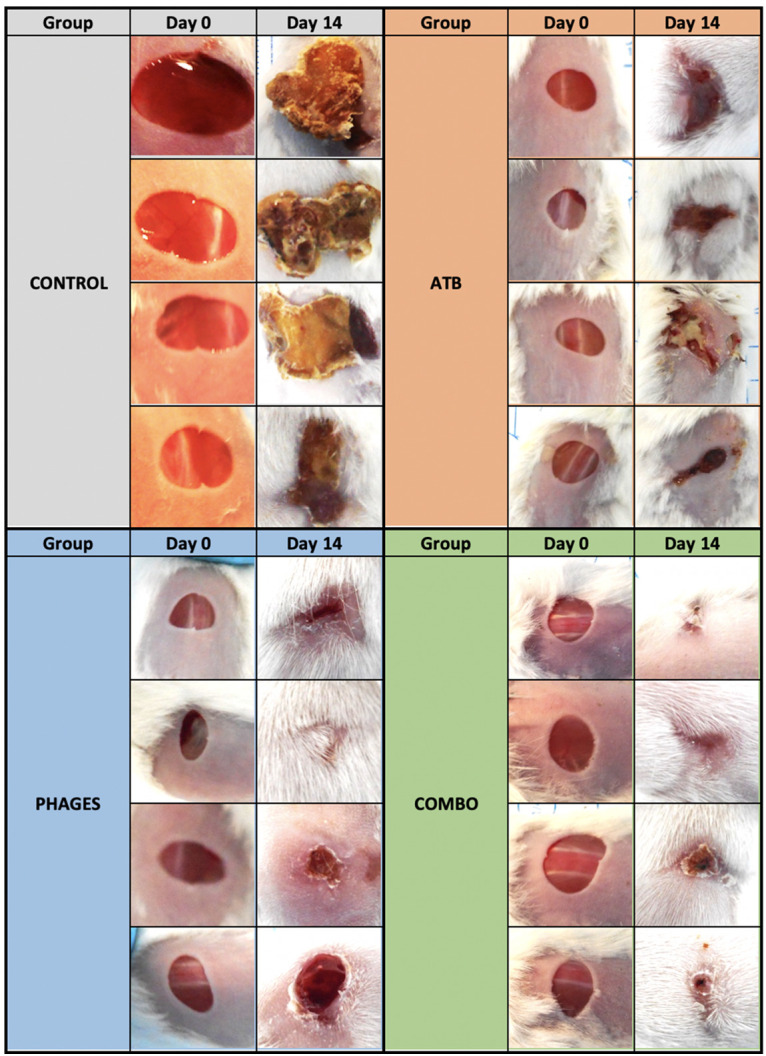
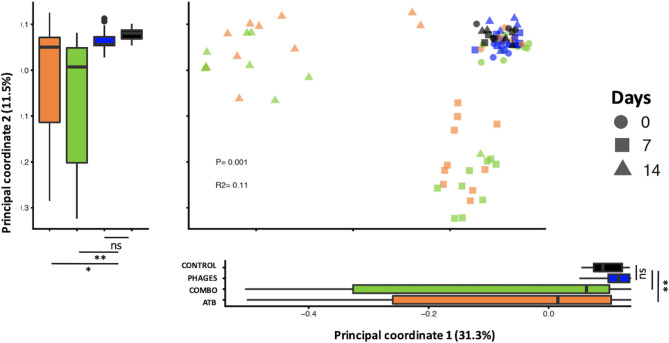
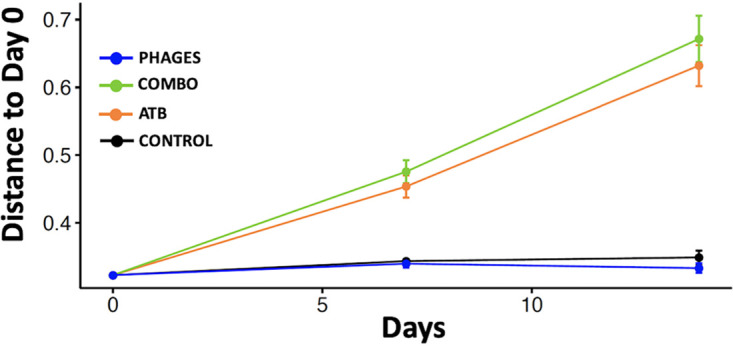
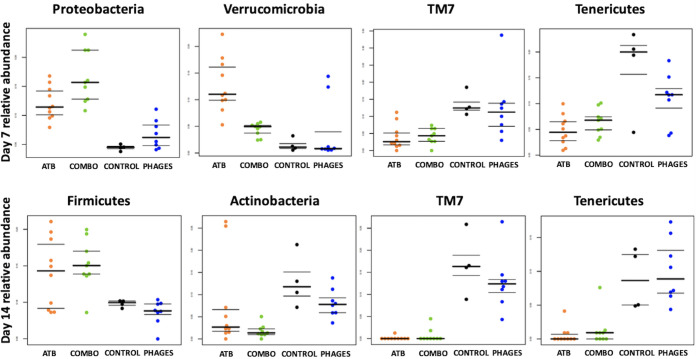
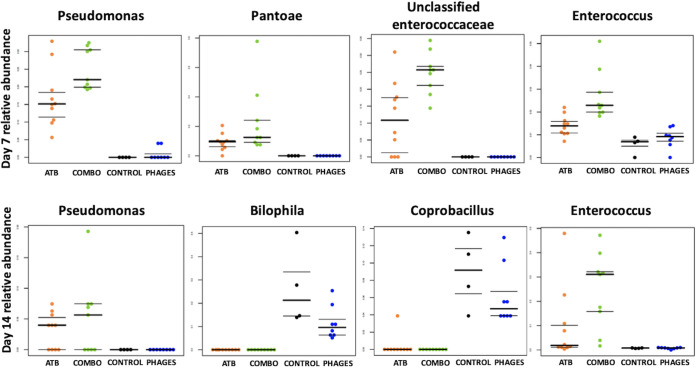
Diabetes is marked by a range of complications, including chronic infections that can lead to limb amputation. The treatment of infected wounds is disrupted by arteriopathies that reduce tissue perfusion as well as by the critical development of bacterial resistance. We evaluated the impact of a local application of bacteriophages compared to that of a administration of amoxicillin-clavulanic acid in a mouse model of wound infection. We found that phage treatment resulted in improved clinical healing and a reduction in local bacterial load at 7 and 14 days postinfection. Unlike antibiotics, phage therapy did not deplete the intestinal microbiota of treated animals. Amoxicillin resulted in a reduction of alpha and beta diversities of the murine microbiota and disturbed architecture even 7 days after the end of treatment, whereas phage treatment did not impinge on the microbiota. The management of diabetic foot infections is frequently a dead end for surgeons and infectious disease specialists. When the pathogen to be treated is not resistant to conventional antibiotics, the latter tend to unbalance the intestinal microbiota, which is linked to multiple pathologies. A local treatment with bacteriophages, in addition to being as much or even more effective than antibiotics from a clinical and microbiological point of view, makes it possible to respect the patient's microbiota. These results suggest that the use of this therapeutic alternative is a major avenue and that the introduction of recommendations for their use is now necessary.
糖尿病的特征是一系列并发症,包括可能导致肢体截肢的慢性感染。感染伤口的治疗会受到降低组织灌注的动脉病变以及细菌耐药性这一关键问题的干扰。在伤口感染的小鼠模型中,我们评估了局部应用噬菌体与给予阿莫西林 - 克拉维酸相比的效果。我们发现,噬菌体治疗在感染后7天和14天时可改善临床愈合情况并降低局部细菌载量。与抗生素不同,噬菌体疗法不会消耗接受治疗动物的肠道微生物群。阿莫西林导致小鼠微生物群的α和β多样性降低,甚至在治疗结束7天后仍会扰乱其结构,而噬菌体治疗不会影响微生物群。糖尿病足感染的治疗对于外科医生和传染病专家来说常常是个难题。当待治疗的病原体对传统抗生素不耐药时,抗生素往往会破坏肠道微生物群的平衡,而这与多种疾病相关。从临床和微生物学角度来看,局部应用噬菌体治疗不仅与抗生素一样有效甚至更有效,还能保护患者的微生物群。这些结果表明,使用这种治疗替代方法是一条重要途径,现在有必要引入相关使用建议。