Service de Médecine Intensive Réanimation, Institut de Cardiologie, Groupe Hospitalier Pitié-Salpêtrière, Assistance Publique-Hôpitaux de Paris, 47-83, Boulevard de l'Hôpital, 75651, Paris Cedex 13, France.
INSERM, UMRS_1166, ICAN Institute of Cardiometabolism and Nutrition, Sorbonne Université, Paris, France.
Intensive Care Med. 2020 Dec;46(12):2168-2183. doi: 10.1007/s00134-020-06292-z. Epub 2020 Nov 11.
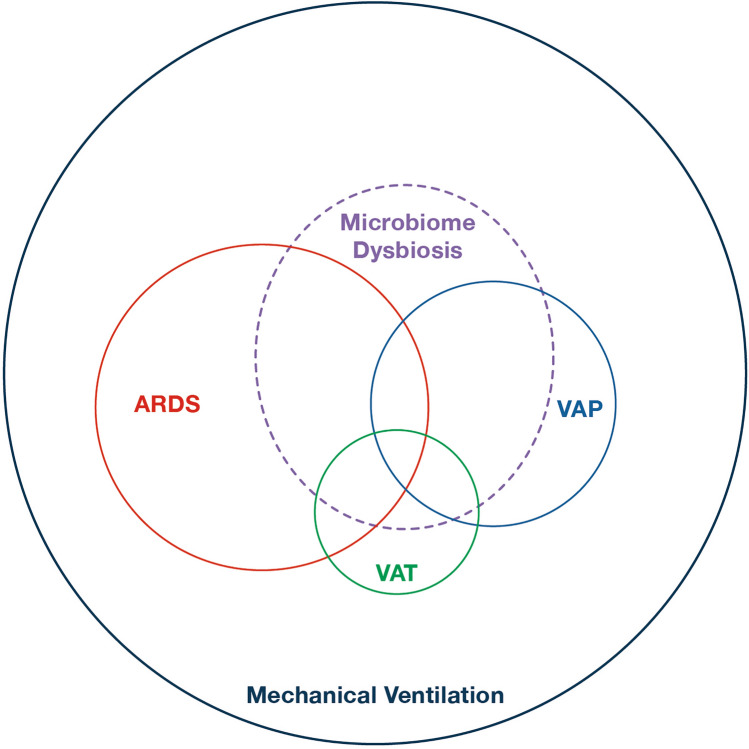
Pulmonary infection is one of the main complications occurring in patients suffering from acute respiratory distress syndrome (ARDS). Besides traditional risk factors, dysregulation of lung immune defenses and microbiota may play an important role in ARDS patients. Prone positioning does not seem to be associated with a higher risk of pulmonary infection. Although bacteria associated with ventilator-associated pneumonia (VAP) in ARDS patients are similar to those in patients without ARDS, atypical pathogens (Aspergillus, herpes simplex virus and cytomegalovirus) may also be responsible for infection in ARDS patients. Diagnosing pulmonary infection in ARDS patients is challenging, and requires a combination of clinical, biological and microbiological criteria. The role of modern tools (e.g., molecular methods, metagenomic sequencing, etc.) remains to be evaluated in this setting. One of the challenges of antimicrobial treatment is antibiotics diffusion into the lungs. Although targeted delivery of antibiotics using nebulization may be interesting, their place in ARDS patients remains to be explored. The use of extracorporeal membrane oxygenation in the most severe patients is associated with a high rate of infection and raises several challenges, diagnostic issues and pharmacokinetics/pharmacodynamics changes being at the top. Prevention of pulmonary infection is a key issue in ARDS patients, but there is no specific measure for these high-risk patients. Reinforcing preventive measures using bundles seems to be the best option.
肺部感染是急性呼吸窘迫综合征(ARDS)患者的主要并发症之一。除了传统的危险因素外,肺部免疫防御和微生物群的失调可能在 ARDS 患者中起重要作用。俯卧位似乎与肺部感染风险增加无关。虽然与 ARDS 患者呼吸机相关性肺炎(VAP)相关的细菌与无 ARDS 患者的细菌相似,但非典型病原体(曲霉属、单纯疱疹病毒和巨细胞病毒)也可能导致 ARDS 患者感染。诊断 ARDS 患者的肺部感染具有挑战性,需要结合临床、生物学和微生物学标准。在这种情况下,现代工具(例如分子方法、宏基因组测序等)的作用仍有待评估。抗菌治疗的一个挑战是抗生素在肺部的扩散。虽然使用雾化靶向递送抗生素可能很有趣,但它们在 ARDS 患者中的应用仍有待探索。在最严重的患者中使用体外膜氧合会导致感染率很高,并带来几个挑战,诊断问题和药代动力学/药效学变化是最突出的问题。预防肺部感染是 ARDS 患者的关键问题,但这些高危患者没有具体的预防措施。使用捆绑包加强预防措施似乎是最佳选择。