Zhou Yangjie, He Runcheng, Zhao Yuwen, He Yan, Hu Yacen, Sun Qiying, Xu Qian, Tan Jieqiong, Yan Xinxiang, Tang Beisha, Guo Jifeng
Department of Neurology, Xiangya Hospital, Central South University, Changsha, China.
Department of Geriatric Disorders, Xiangya Hospital, Central South University, Changsha, China.
Front Neurol. 2020 Oct 16;11:526615. doi: 10.3389/fneur.2020.526615. eCollection 2020.
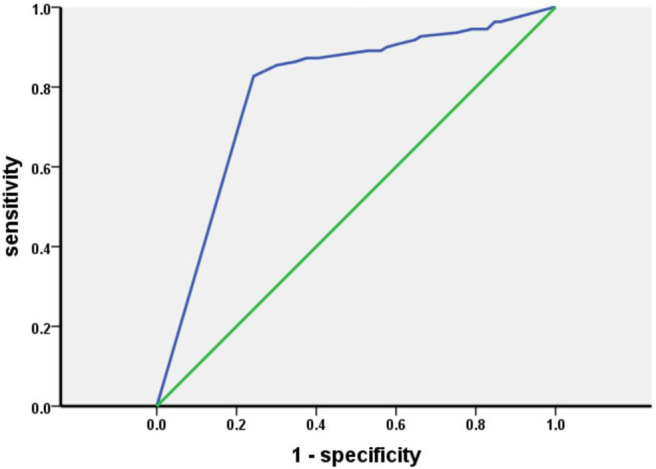
To conduct an investigation into the reliability of assessing the olfactory function of patients with Parkinson's disease (PD) in a clinical setting of crowding patients in populated countries, such as China, by the hyposmia rating scale (HRS) and compare other non-motor features between patients with PD with olfactory dysfunction (PD-OD) and patients with PD without olfactory dysfunction (PD-NOD), according to the result of olfactory function assessed by the Sniffin' Sticks test. A total of 320 patients with clinically confirmed or clinically possible PD were recruited. Olfactory function of all participants was assessed with the HRS and the Sniffin' Sticks test. Demographic data and clinical information were collected, and patients were evaluated using standardized assessment protocols. With reference to the Sniffin' Sticks test, the specificity, sensitivity, coincidence rate, and kappa value of the HRS was computed, and then its reliability was evaluated. We divided patients into PD-OD and PD-NOD groups based on the results of olfactory function assessed by the Sniffin' Sticks test. Clinical manifestations were compared between PD-OD and PD-NOD. The percentage of patients with OD determined by the Sniffin' Sticks test was 65.6%, and the percentage of those with OD was 55.6% when using the HRS measured olfactory function. With reference to the Sniffin' Sticks test, the specificity, sensitivity, coincidence rate, and kappa value of the HRS were 82.73, 75.71, 78.13%, and 0.55, respectively. The area under the receiver operating characteristic curve for the HRS was 0.793. There were no differences in demographic characteristics between the PD-OD and PD-NOD groups. The patients with hyposmia had more severe non-motor symptoms. The HRS is of great value as a self-assessment scale for evaluating olfactory function, especially in PD patients over 55 years old. Moreover, PD patients with hyposmia have more severe non-motor features than PD patients without hyposmia, mainly in terms of mood and constipation.
为了在中国等人口众多国家拥挤的临床环境中,通过嗅觉减退评分量表(HRS)调查评估帕金森病(PD)患者嗅觉功能的可靠性,并根据Sniffin' Sticks测试评估的嗅觉功能结果,比较嗅觉功能障碍的PD患者(PD-OD)和无嗅觉功能障碍的PD患者(PD-NOD)之间的其他非运动特征。共招募了320例临床确诊或临床疑似PD患者。所有参与者的嗅觉功能均通过HRS和Sniffin' Sticks测试进行评估。收集人口统计学数据和临床信息,并使用标准化评估方案对患者进行评估。参照Sniffin' Sticks测试结果,计算HRS的特异性、敏感性、符合率和kappa值,进而评估其可靠性。根据Sniffin' Sticks测试评估的嗅觉功能结果,将患者分为PD-OD组和PD-NOD组。比较PD-OD组和PD-NOD组的临床表现。Sniffin' Sticks测试确定的嗅觉功能障碍患者百分比为65.6%,使用HRS测量嗅觉功能时为55.6%。参照Sniffin' Sticks测试,HRS的特异性、敏感性、符合率和kappa值分别为82.73、75.71、78.13%和0.55。HRS的受试者工作特征曲线下面积为0.793。PD-OD组和PD-NOD组在人口统计学特征上无差异。嗅觉减退的患者有更严重的非运动症状。HRS作为评估嗅觉功能的自我评估量表具有重要价值,尤其是对于55岁以上的PD患者。此外,嗅觉减退的PD患者比无嗅觉减退的PD患者有更严重的非运动特征,主要体现在情绪和便秘方面。