Löffler Maria, Wallerang Kai B, Venceslau Sofia S, Pereira Inês A C, Dahl Christiane
Institut für Mikrobiologie & Biotechnologie, Rheinische Friedrich-Wilhelms-Universität Bonn, Bonn, Germany.
Instituto de Tecnologia Química e Biológica António Xavier, Universidade Nova de Lisboa, Oeiras, Portugal.
Front Microbiol. 2020 Oct 16;11:578209. doi: 10.3389/fmicb.2020.578209. eCollection 2020.
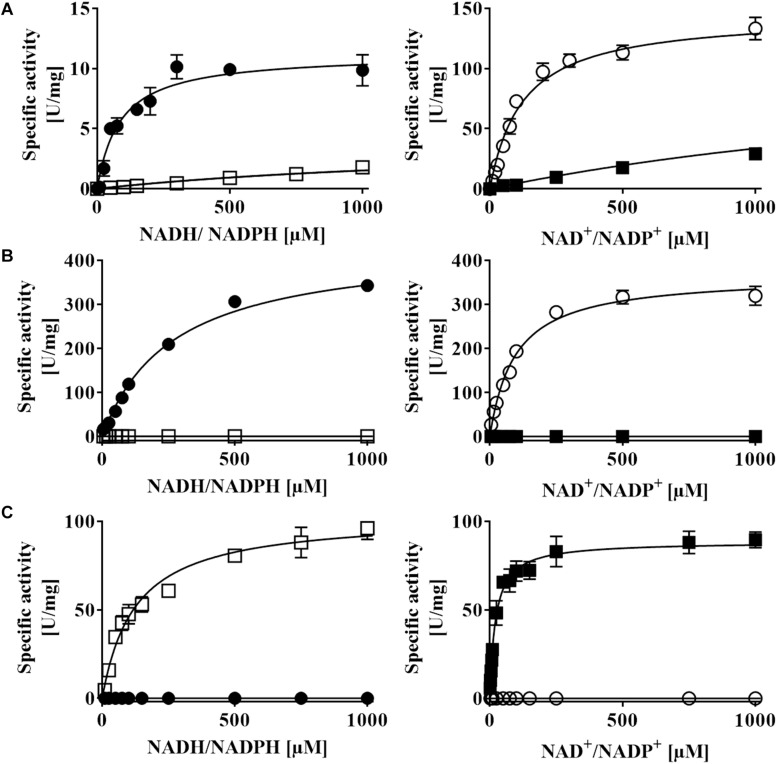
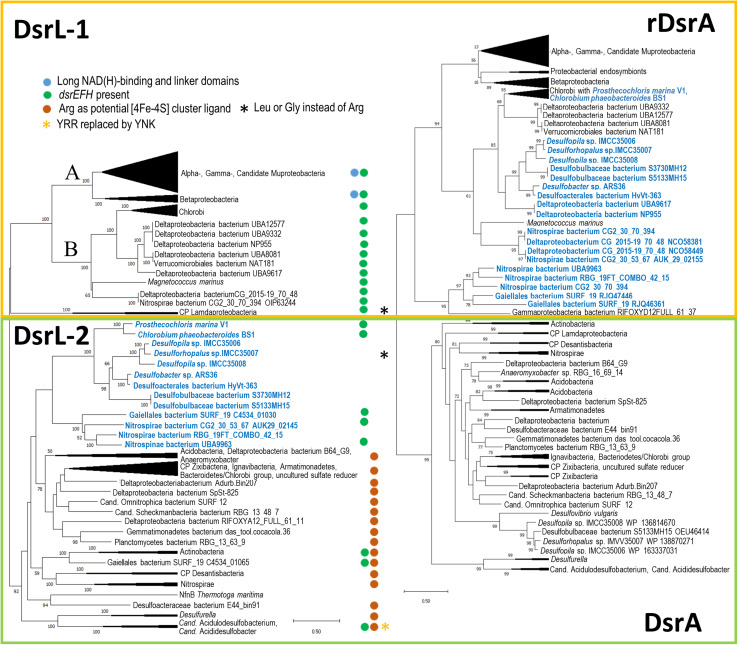
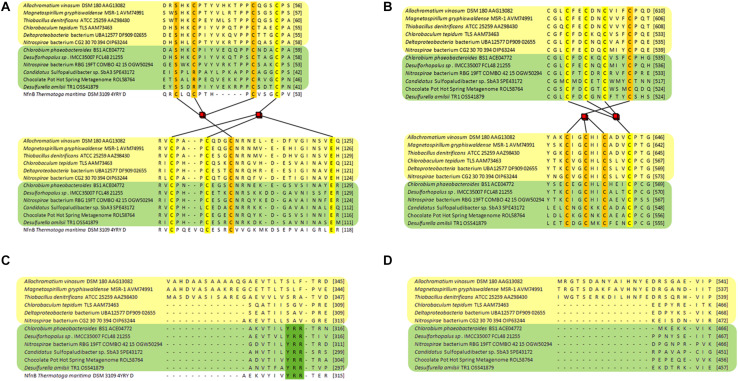
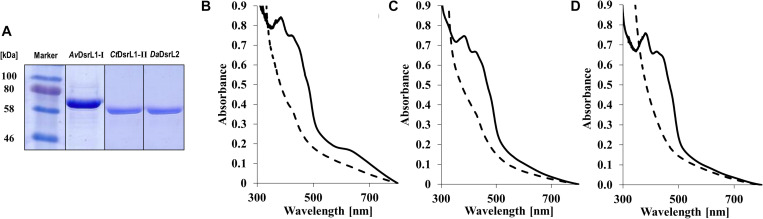
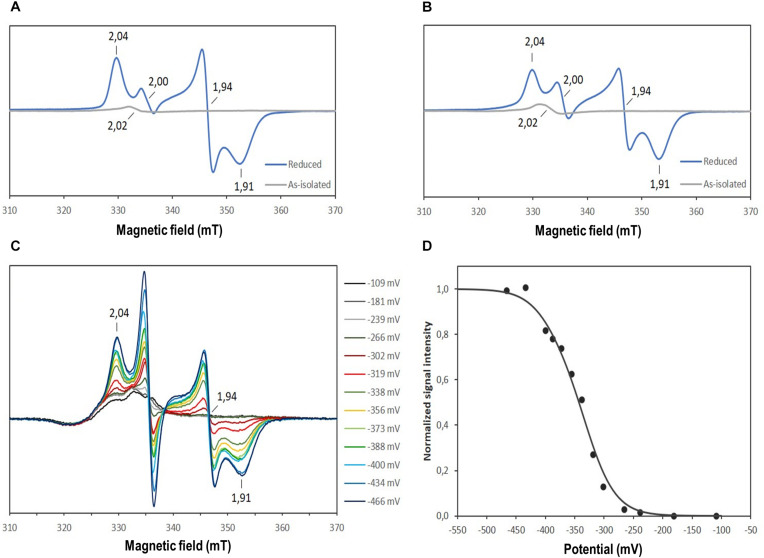
DsrAB-type dissimilatory sulfite reductase is a key enzyme of microbial sulfur-dependent energy metabolism. Sulfur oxidizers also contain DsrL, which is essential for sulfur oxidation in . This NAD(P)H oxidoreductase acts as physiological partner of oxidative-type rDsrAB. Recent analyses uncovered that DsrL is not confined to sulfur oxidizers but also occurs in (probable) sulfate/sulfur-reducing bacteria. Here, phylogenetic analysis revealed a separation into two major branches, DsrL-1, with two subgroups, and DsrL-2. When present in organisms with reductive-type DsrAB, DsrL is of type 2. In the majority of cases oxidative-type rDsrAB occurs with DsrL-1 but combination with DsrL-2-type enzymes is also observed. Three model DsrL proteins, DsrL-1A and DsrL-1B from the sulfur oxidizers and , respectively, as well as DsrL-2 from thiosulfate- and sulfur-reducing were kinetically characterized. DsrL-2 is active with NADP(H) but not with NAD(H) which we relate to a conserved YRR-motif in the substrate-binding domains of all DsrL-2 enzymes. In contrast, DsrL-1A has a strong preference for NAD(H) and the DsrL-1B enzyme is completely inactive with NADP(H). Thus, NAD as well as NADP are suitable electron acceptors for rDsrABL-1-catalyzed sulfur oxidation, while NADPH is required as electron donor for sulfite reduction. This observation can be related to the lower redox potential of the NADPH/NADP than the NADH/NAD couple under physiological conditions. Organisms with a and gene combination can be confidently identified as sulfur oxidizers while predictions for organisms with other combinations require much more caution and additional information sources.
DsrAB型异化亚硫酸盐还原酶是微生物硫依赖能量代谢的关键酶。硫氧化菌也含有DsrL,它对[具体生物名称]中的硫氧化至关重要。这种NAD(P)H氧化还原酶作为氧化型rDsrAB的生理伙伴。最近的分析发现,DsrL不仅存在于硫氧化菌中,也存在于(可能的)硫酸盐/硫还原菌中。在这里,系统发育分析揭示了其分为两个主要分支,即DsrL-1(有两个亚组)和DsrL-2。当存在于具有还原型DsrAB的生物体中时,DsrL属于2型。在大多数情况下,氧化型rDsrAB与DsrL-1同时出现,但也观察到与DsrL-2型酶的组合。对三种模型DsrL蛋白进行了动力学表征,分别是来自硫氧化菌[具体生物名称1]和[具体生物名称2]的DsrL-1A和DsrL-1B,以及来自硫代硫酸盐和硫还原菌[具体生物名称3]的DsrL-2。DsrL-2对NADP(H)有活性,但对NAD(H)无活性,我们将此与所有DsrL-2酶底物结合域中的保守YRR基序相关联。相比之下,DsrL-1A对NAD(H)有强烈偏好,而DsrL-1B酶对NADP(H)完全无活性。因此,NAD以及NADP都是rDsrABL-1催化硫氧化的合适电子受体,而亚硫酸盐还原需要NADPH作为电子供体。这一观察结果可能与生理条件下NADPH/NADP的氧化还原电位低于NADH/NAD电对有关。具有[具体基因名称1]和[具体基因名称2]基因组合的生物体可以被可靠地鉴定为硫氧化菌,而对于具有其他组合的生物体的预测则需要更加谨慎并借助更多信息来源。