Laboratory of Microbiology, Wageningen University, Stippeneng 4, 6708 WE, Wageningen, The Netherlands.
Instituto de Tecnologia Quimica e Biologica António Xavier, Universidade Nova de Lisboa, Av. da Republica-EAN, 2780-157, Oeiras, Portugal.
Environ Microbiol. 2019 Jan;21(1):209-225. doi: 10.1111/1462-2920.14442. Epub 2018 Nov 15.
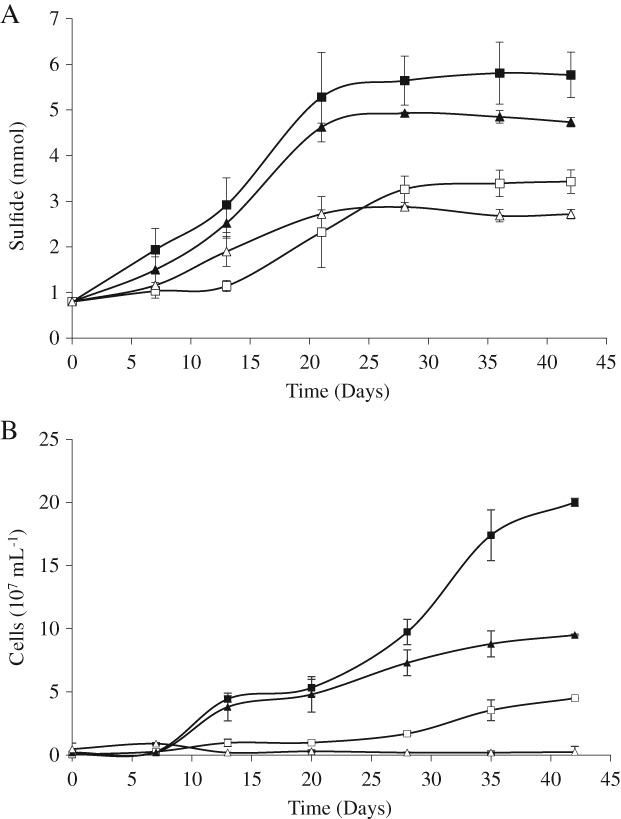
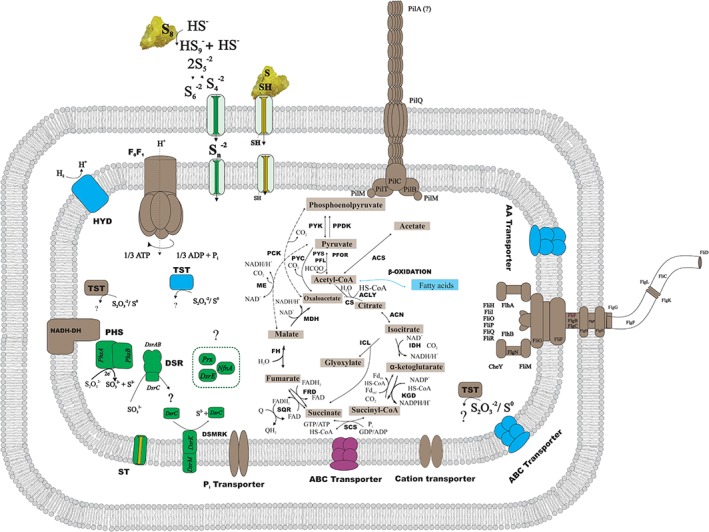
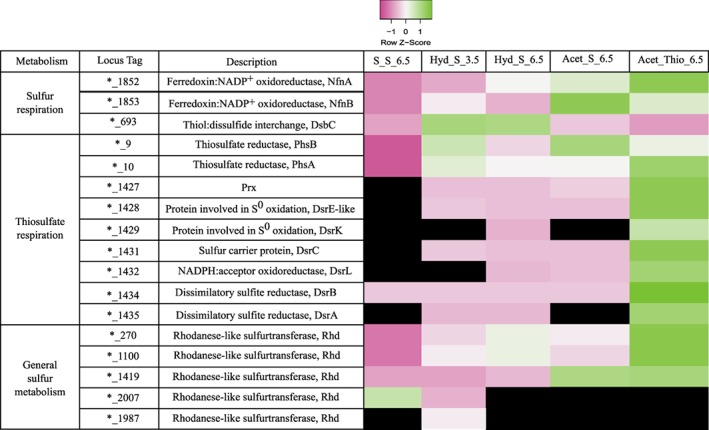
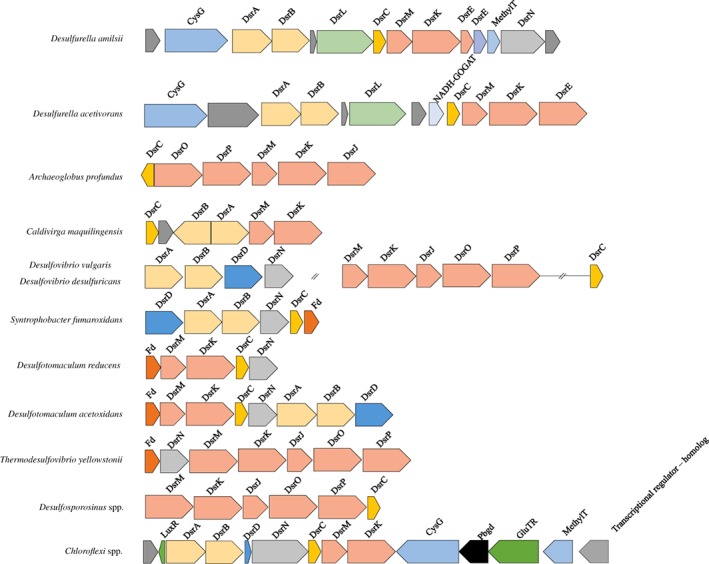
Many questions regarding proteins involved in microbial sulfur metabolism remain unsolved. For sulfur respiration at low pH, the terminal electron acceptor is still unclear. Desulfurella amilsii is a sulfur-reducing bacterium that respires elemental sulfur (S ) or thiosulfate, and grows by S disproportionation. Due to its versatility, comparative studies on D. amilsii may shed light on microbial sulfur metabolism. Requirement of physical contact between cells and S was analyzed. Sulfide production decreased by around 50% when S was trapped in dialysis membranes, suggesting that contact between cells and S is beneficial, but not strictly needed. Proteome analysis was performed under the aforementioned conditions. A Mo-oxidoreductase suggested from genome analysis to act as sulfur reductase was not detected in any growth condition. Thiosulfate and sulfite reductases showed increased abundance in thiosulfate-reducing cultures, while rhodanese-like sulfurtransferases were highly abundant in all conditions. DsrE and DsrL were abundantly detected during thiosulfate reduction, suggesting a modified mechanism of sulfite reduction. Proteogenomics suggest a different disproportionation pathway from what has been reported. This work points to an important role of rhodaneses in sulfur processes and these proteins should be considered in searches for sulfur metabolism in broader fields like meta-omics.
许多涉及微生物硫代谢的蛋白质的问题仍未解决。对于低 pH 值下的硫呼吸作用,末端电子受体仍不清楚。脱硫硫杆菌是一种能够呼吸元素硫(S )或硫代硫酸盐,并通过 S 歧化生长的硫还原菌。由于其多功能性,对 D. amilsii 的比较研究可能有助于了解微生物硫代谢。分析了细胞与 S 之间物理接触的要求。当 S 被截留到透析膜中时,硫化物的产生减少了约 50%,这表明细胞与 S 之间的接触是有益的,但不是严格必需的。在上述条件下进行了蛋白质组分析。从基因组分析中推测出一种作为硫还原酶的 Mo-氧化还原酶在任何生长条件下都未被检测到。硫代硫酸盐和亚硫酸盐还原酶在硫代硫酸盐还原培养物中丰度增加,而类似于 rhodanese 的硫转移酶在所有条件下都高度丰富。在硫代硫酸盐还原过程中大量检测到 DsrE 和 DsrL,表明亚硫酸盐还原的机制发生了改变。蛋白质基因组学表明歧化途径与已报道的不同。这项工作指出了 rhodaneses 在硫过程中的重要作用,并且应该在更广泛的领域(如宏基因组学)中寻找硫代谢时考虑这些蛋白质。