Hou Chen, Cai Hongshi, Zhu Yue, Huang Shuojin, Song Fan, Hou Jinsong
Department of Oral and Maxillofacial Surgery, Guanghua School of Stomatology, Hospital of Stomatology, Sun Yat-sen University, Guangzhou, China.
Guangdong Provincial Key Laboratory of Stomatology, Sun Yat-sen University, Guangzhou, China.
Front Oncol. 2020 Oct 16;10:558596. doi: 10.3389/fonc.2020.558596. eCollection 2020.
Autophagy, a highly conserved self-digesting process, has been deeply involved in the development and progression of oral squamous cell carcinoma (OSCC). However, the prognostic value of autophagy-related genes (ARGs) for OSCC still remains unclear. Our study set out to develop a multigene expression signature based on ARGs for individualized prognosis assessment in OSCC patients.
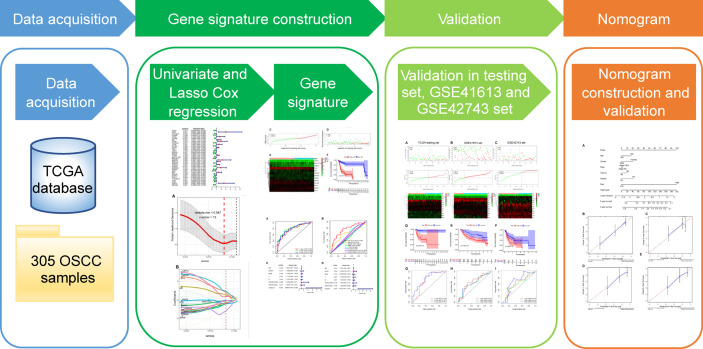
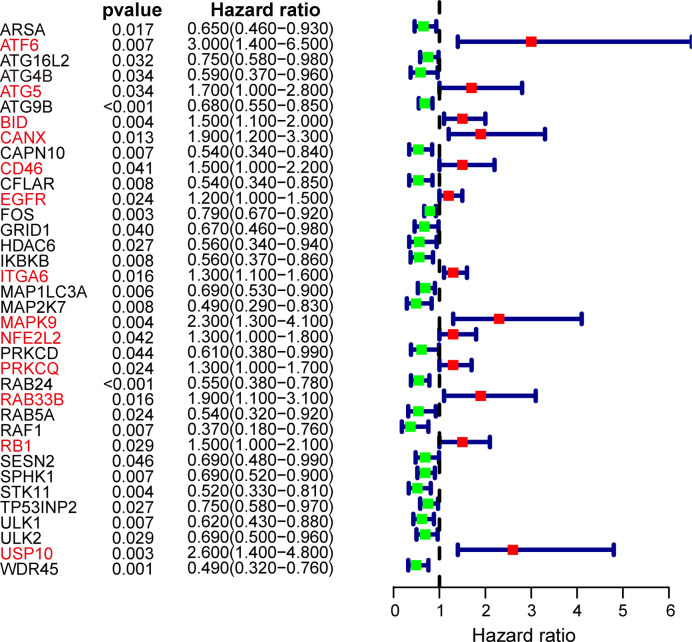
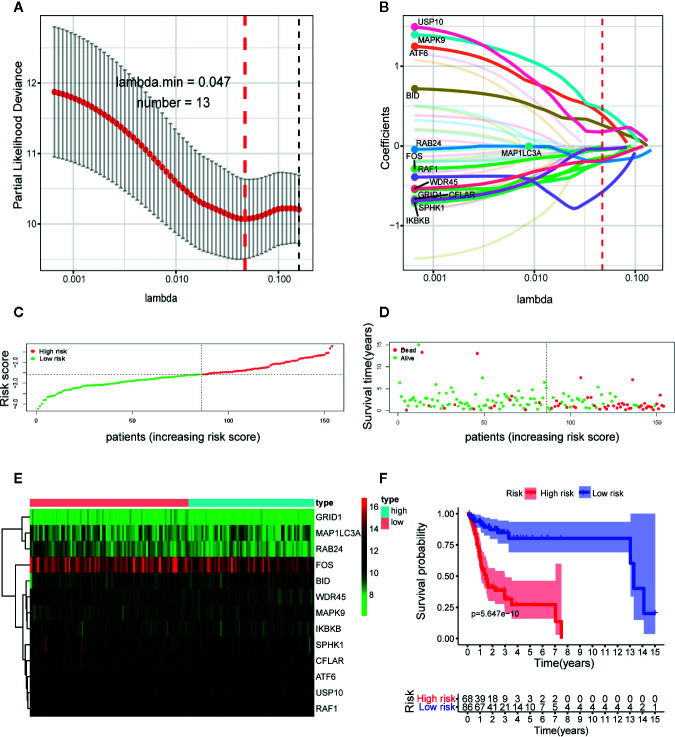
Based on The Cancer Genome Atlas (TCGA) database, we identified prognosis-related ARGs through univariate COX regression analysis. Then we performed the least absolute shrinkage and selection operator (LASSO) regression analysis to identify an optimal autophagy-related multigene signature with the subsequent validation in testing set, GSE41613 and GSE42743 datasets.
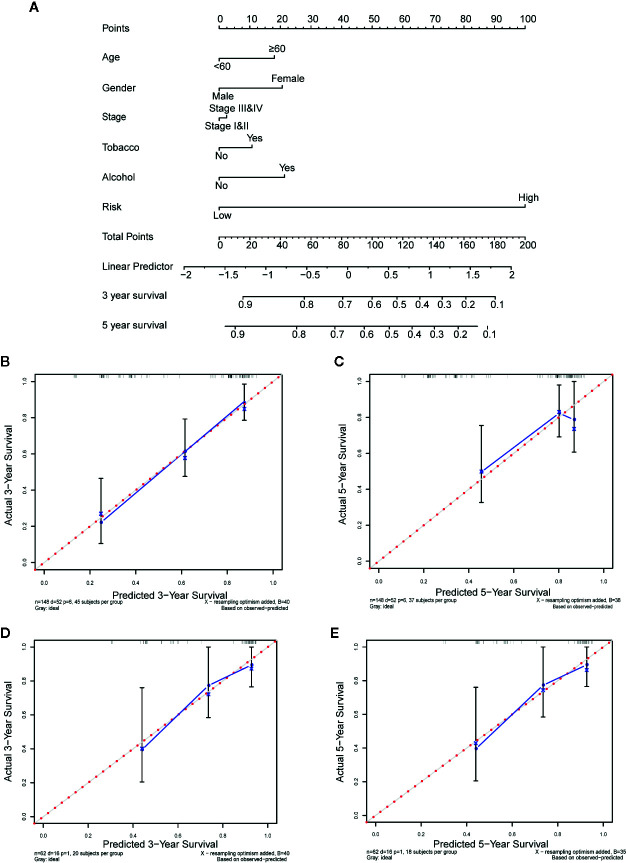
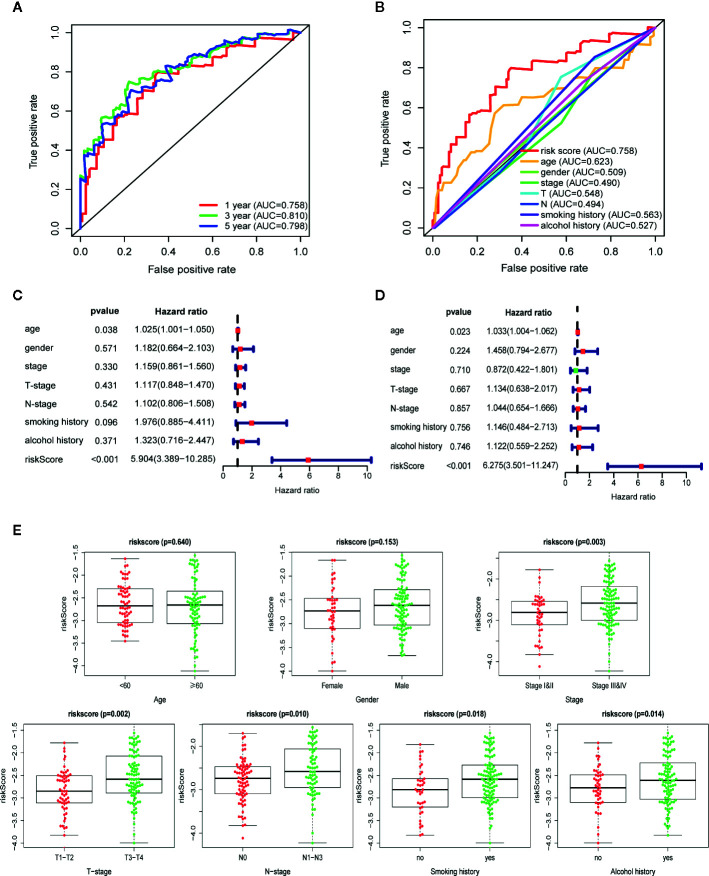
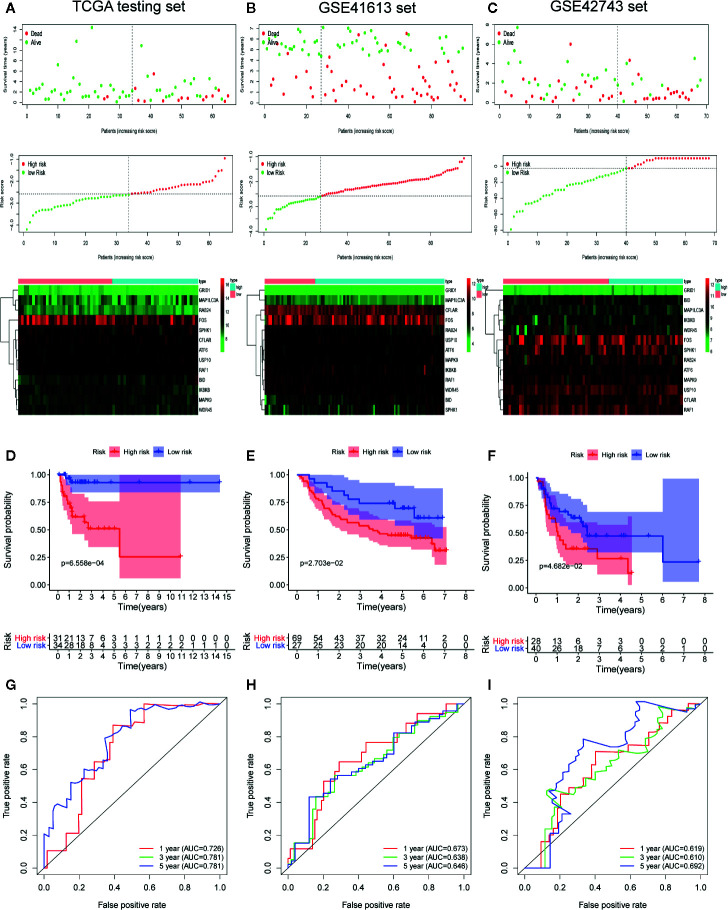
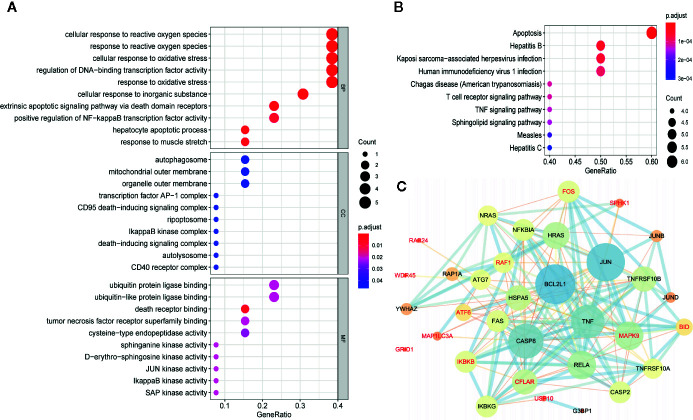
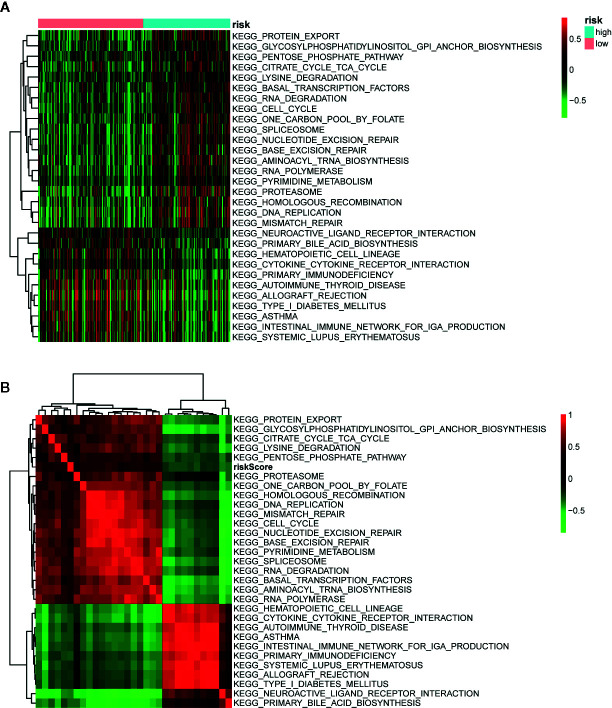
We identified 36 prognosis-related ARGs for OSCC. Subsequently, the multigene signature based on 13 prognostic ARGs was constructed and successfully divided OSCC patients into low and high-risk groups with significantly different overall survival in TCGA training set ( < 0.0001). The autophagy signature remained as an independent prognostic factor for OSCC in univariate and multivariate Cox regression analyses. The area under the curve (AUC) values of the receiver operating characteristic (ROC) curves for 1, 3, and 5-year survival were 0.758, 0.810, 0.798, respectively. Then the gene signature was validated in TCGA testing set, GSE41613 and GSE42743 datasets. Moreover, Gene Ontology (GO), Kyoto Encyclopedia of Genes and Genomes (KEGG) analysis, and single-sample gene set enrichment analysis (ssGSEA) revealed the underlying biological characteristics and signaling pathways associated with this signature in OSCC. Finally, we constructed a nomogram by combining the gene signature with multiple clinical parameters (age, gender, TNM-stage, tobacco, and alcohol history). The concordance index (C-index) and calibration plots demonstrated favorable predictive performance of our nomogram.
In summary, we identified and verified a 13-ARGs prognostic signature and nomogram, which provide individualized prognosis evaluation and show insight for potential therapeutic targets for OSCC.
自噬是一种高度保守的自我消化过程,已深度参与口腔鳞状细胞癌(OSCC)的发生和发展。然而,自噬相关基因(ARGs)对OSCC的预后价值仍不清楚。我们的研究旨在基于ARGs开发一种多基因表达特征,用于OSCC患者的个体化预后评估。
基于癌症基因组图谱(TCGA)数据库,我们通过单变量COX回归分析确定了与预后相关的ARGs。然后我们进行了最小绝对收缩和选择算子(LASSO)回归分析,以确定一个最佳的自噬相关多基因特征,并随后在测试集、GSE41613和GSE42743数据集中进行验证。
我们确定了36个与OSCC预后相关的ARGs。随后,构建了基于13个预后ARGs的多基因特征,并成功地将OSCC患者分为低风险和高风险组,在TCGA训练集中总体生存率有显著差异(<0.0001)。在单变量和多变量Cox回归分析中,自噬特征仍然是OSCC的独立预后因素。1、3和5年生存率的受试者操作特征(ROC)曲线下面积(AUC)值分别为0.758、0.810、0.798。然后在TCGA测试集、GSE41613和GSE42743数据集中对基因特征进行了验证。此外,基因本体(GO)、京都基因与基因组百科全书(KEGG)分析和单样本基因集富集分析(ssGSEA)揭示了OSCC中与该特征相关的潜在生物学特征和信号通路。最后,我们通过将基因特征与多个临床参数(年龄、性别、TNM分期、吸烟和饮酒史)相结合构建了一个列线图。一致性指数(C-index)和校准图显示我们的列线图具有良好的预测性能。
总之,我们鉴定并验证了一个13-ARGs预后特征和列线图,其提供了个体化预后评估,并为OSCC的潜在治疗靶点提供了见解。