The Department of Dermatology, Xiangya Hospital, Central South University, Changsha, Hunan, China.
Hunan Key Laboratory of Skin Cancer and Psoriasis, Changsha, Hunan, China.
BMC Cancer. 2021 Nov 22;21(1):1258. doi: 10.1186/s12885-021-08928-9.
Autophagy, a highly conserved lysosomal degradation pathway, is associated with the prognosis of melanoma. However, prognostic prediction models based on autophagy related genes (ARGs) have never been recognized in melanoma. In the present study, we aimed to establish a novel nomogram to predict the prognosis of melanoma based on ARGs signature and clinical parameters.
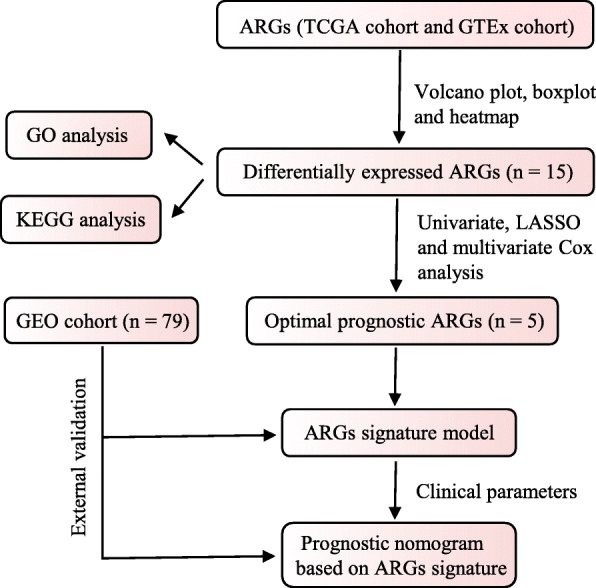
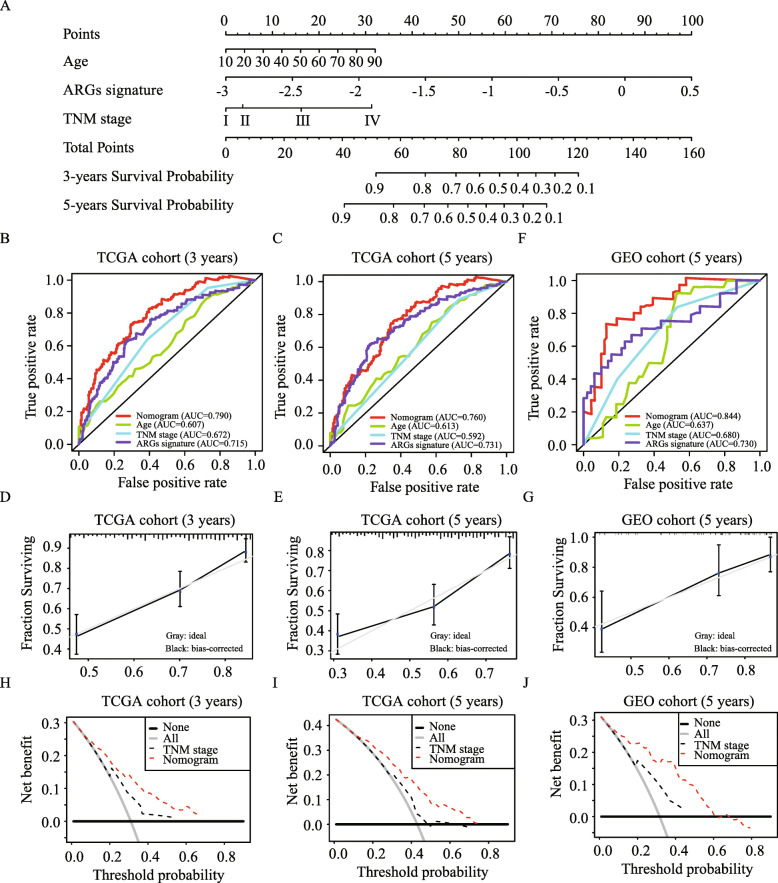
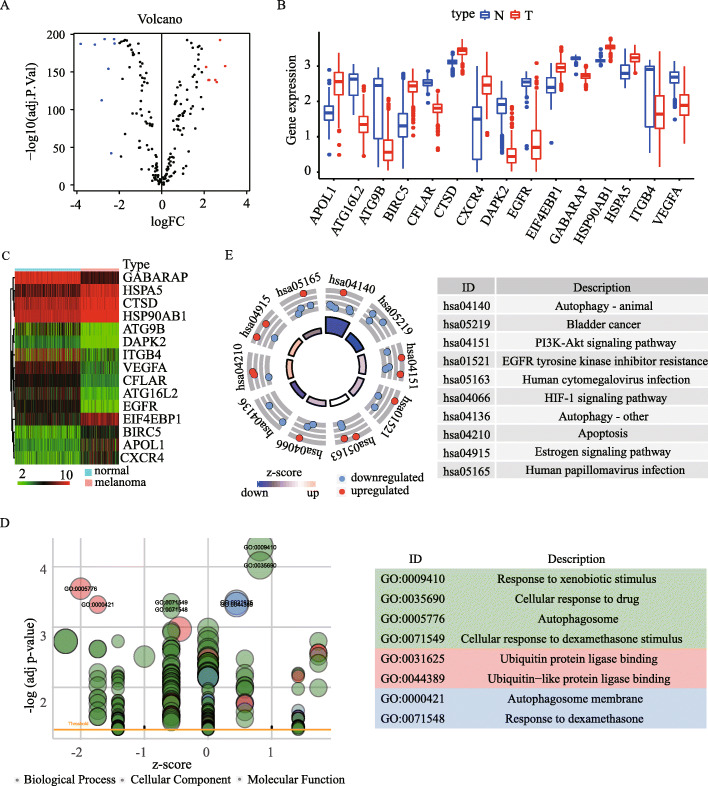
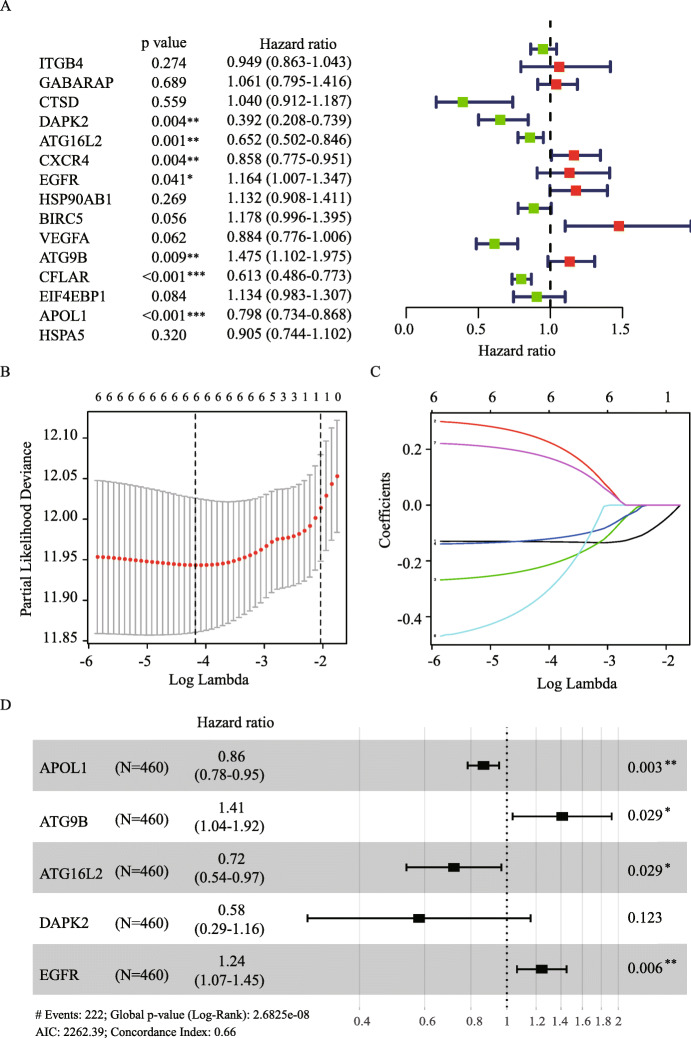
Data from The Cancer Genome Atlas (TCGA) and the Genotype-Tissue Expression (GTEx) databases were extracted to identify the differentially expressed ARGs. Univariate, least absolute shrinkage and selection operator (LASSO) and multivariate analysis were used to select the prognostic ARGs. ARGs signature, age and stage were then enrolled to establish a nomogram to predict the survival probabilities of melanoma. The nomogram was evaluated by concordance index (C-index), receiver operating characteristic (ROC) curve and calibration curve. Decision curve analysis (DCA) was performed to assess the clinical benefits of the nomogram and TNM stage model. The nomogram was validated in GEO cohorts.
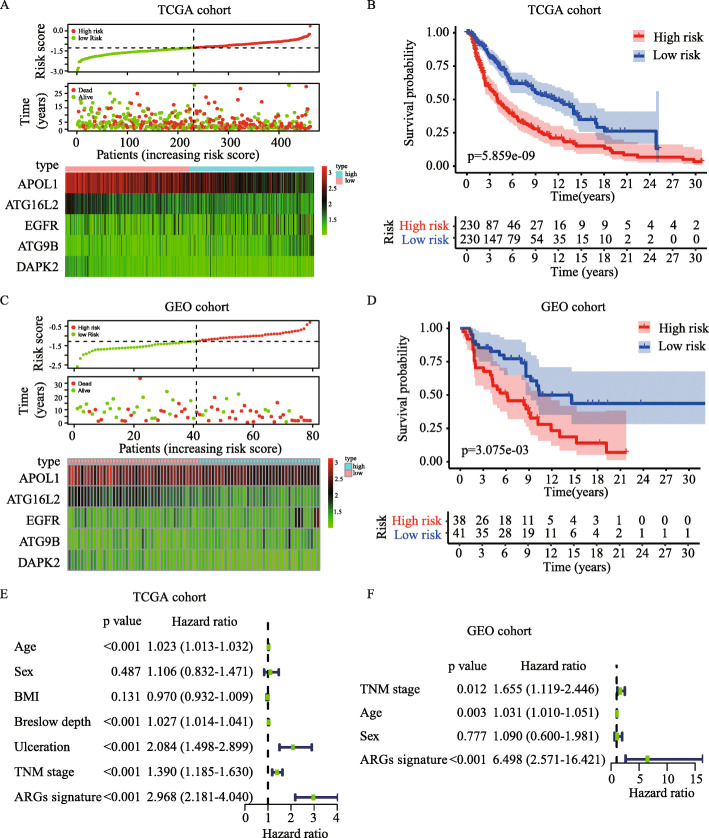
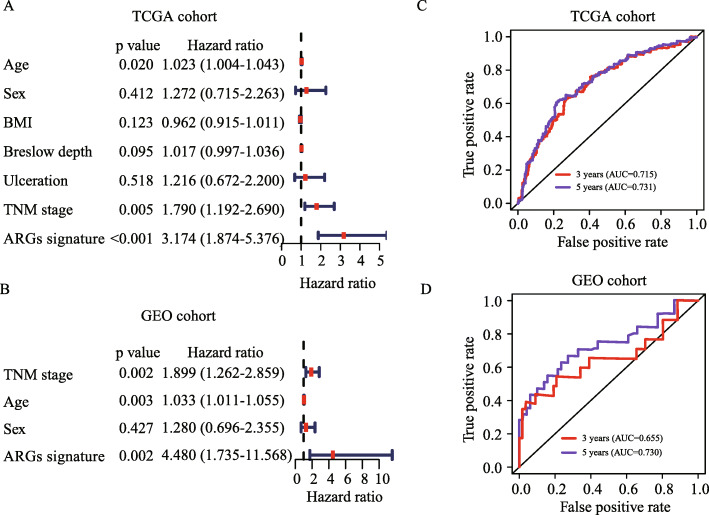
Five prognostic ARGs were selected to construct ARGs signature model and validated in the GEO cohort. Kaplan-Meier survival analysis suggested that patients in high-risk group had significantly worse overall survival than those in low-risk group in TCGA cohort (P = 5.859 × 10⁻⁹) and GEO cohort (P = 3.075 × 10⁻⁹). We then established and validated a novel promising prognostic nomogram through combining ARGs signature and clinical parameters. The C-index of the nomogram was 0.717 in TCGA training cohort and 0.738 in GEO validation cohort. TCGA/GEO-based ROC curve and decision curve analysis (DCA) demonstrated that the nomogram was better than traditional TNM staging system for melanoma prognosis.
We firstly developed and validated an ARGs signature based-nomogram for individualized prognosis prediction in melanoma patients, which could assist with decision making for clinicians.
自噬是一种高度保守的溶酶体降解途径,与黑色素瘤的预后相关。然而,基于自噬相关基因(ARGs)的预后预测模型在黑色素瘤中从未得到认可。本研究旨在基于 ARGs 特征和临床参数建立一种新的列线图来预测黑色素瘤的预后。
从癌症基因组图谱(TCGA)和基因型组织表达(GTEx)数据库中提取数据,以鉴定差异表达的 ARGs。采用单因素、最小绝对值收缩和选择算子(LASSO)和多因素分析筛选预后 ARGs。然后,将 ARGs 特征、年龄和分期纳入列线图,以预测黑色素瘤的生存概率。通过一致性指数(C-index)、接受者操作特征(ROC)曲线和校准曲线评估列线图的性能。决策曲线分析(DCA)用于评估列线图和 TNM 分期模型的临床获益。该列线图在 GEO 队列中进行了验证。
选择 5 个预后 ARGs 构建 ARGs 特征模型,并在 GEO 队列中进行验证。Kaplan-Meier 生存分析表明,TCGA 队列(P=5.859×10⁻⁹)和 GEO 队列(P=3.075×10⁻⁹)中高危组患者的总生存率明显低于低危组。然后,我们通过结合 ARGs 特征和临床参数建立并验证了一种新的有前途的预后列线图。列线图在 TCGA 训练队列中的 C-index 为 0.717,在 GEO 验证队列中的 C-index 为 0.738。TCGA/GEO 基于 ROC 曲线和决策曲线分析(DCA)表明,该列线图在预测黑色素瘤预后方面优于传统的 TNM 分期系统。
我们首次开发并验证了基于 ARGs 特征的列线图,用于黑色素瘤患者的个体化预后预测,这可以为临床医生的决策提供帮助。