Li Xinrui, Huang Zhiyuan, Zhu Lei, Yu Fei, Feng Minghao, Gu Aiqin, Jiang Jianxin, Wang Guangxue, Huang Dongya
Department of Neurology, Shanghai East Hospital, School of Medicine, Tongji University, Shanghai, China.
Research Center for Translational Medicine, Shanghai East Hospital, School of Medicine, Tongji University, Shanghai, China.
Front Genet. 2022 Jul 18;13:905751. doi: 10.3389/fgene.2022.905751. eCollection 2022.
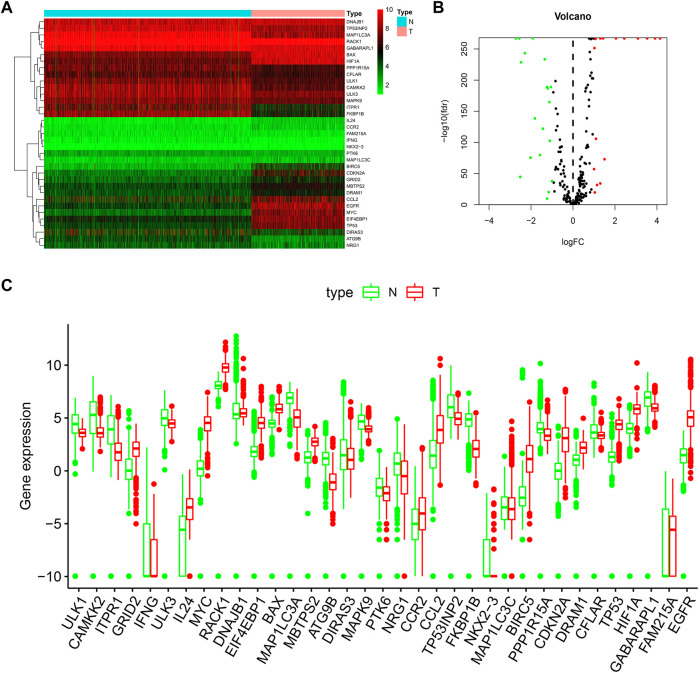
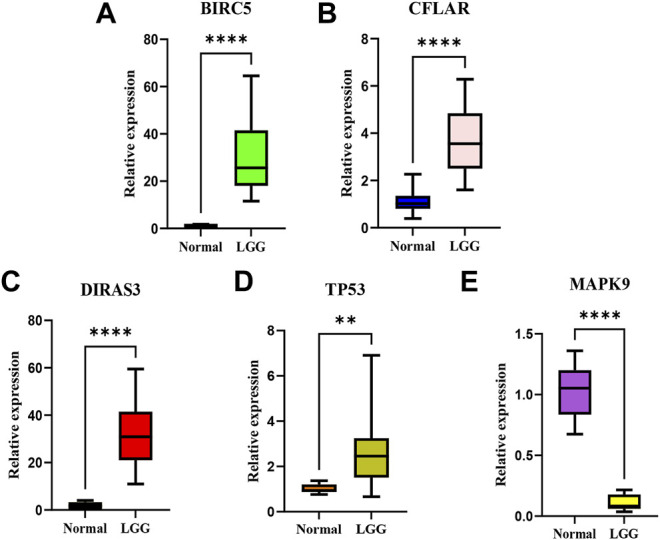
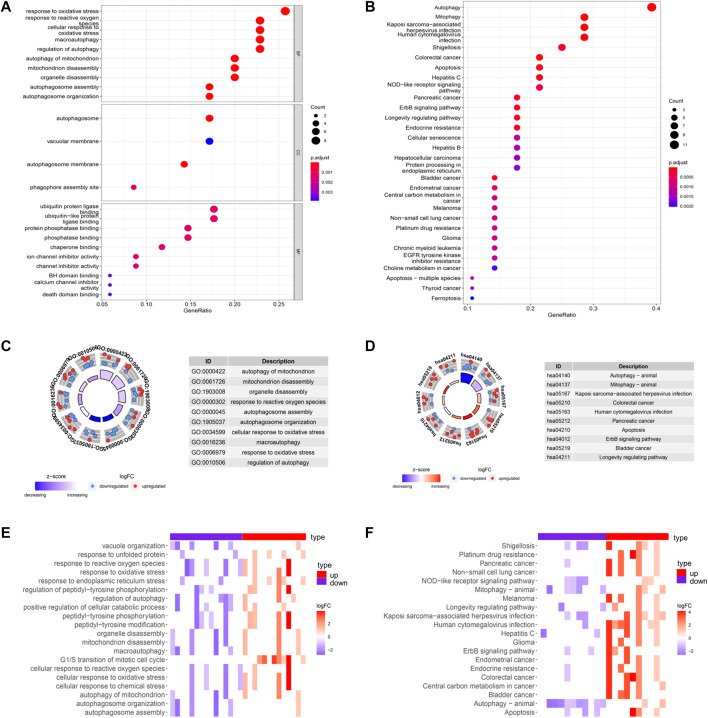
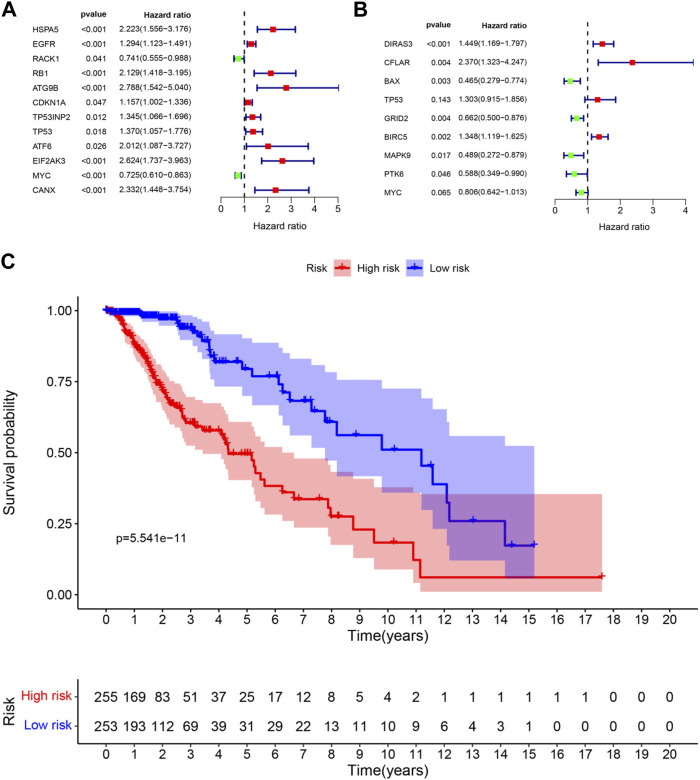
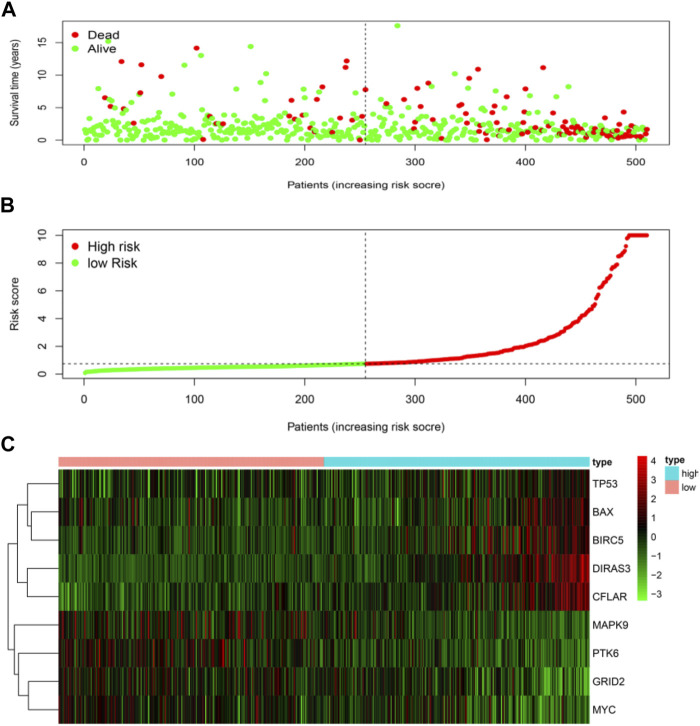
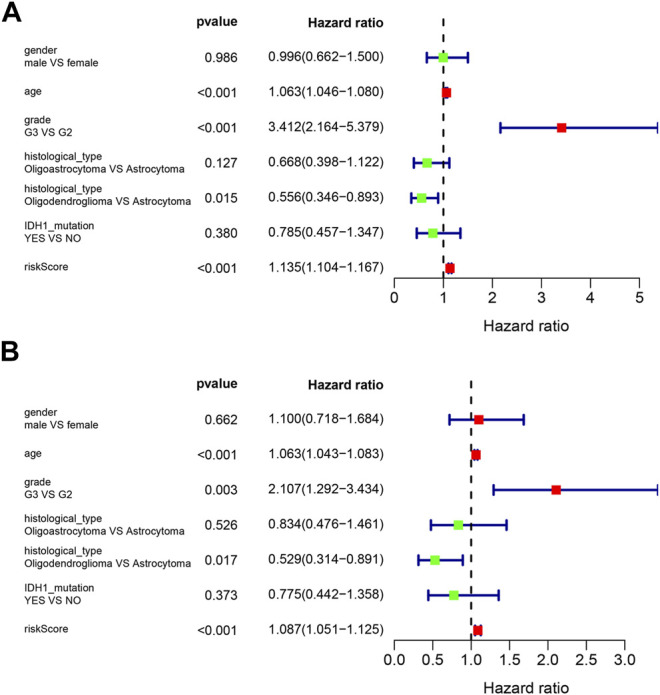
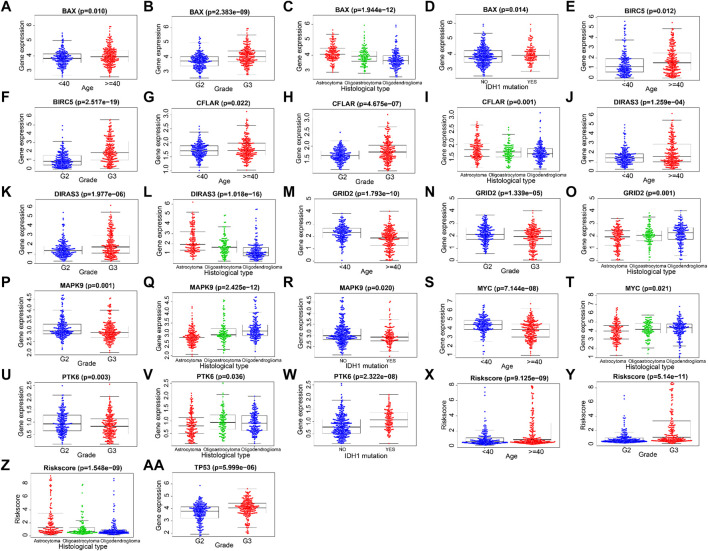
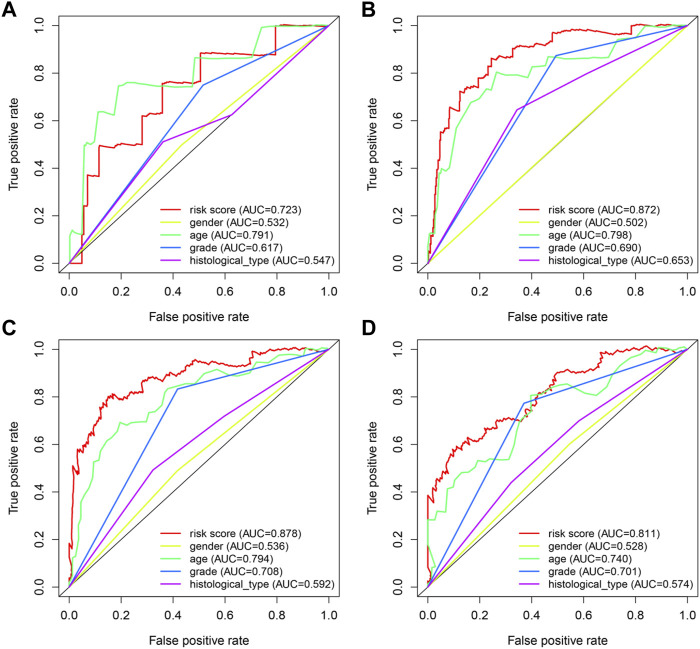
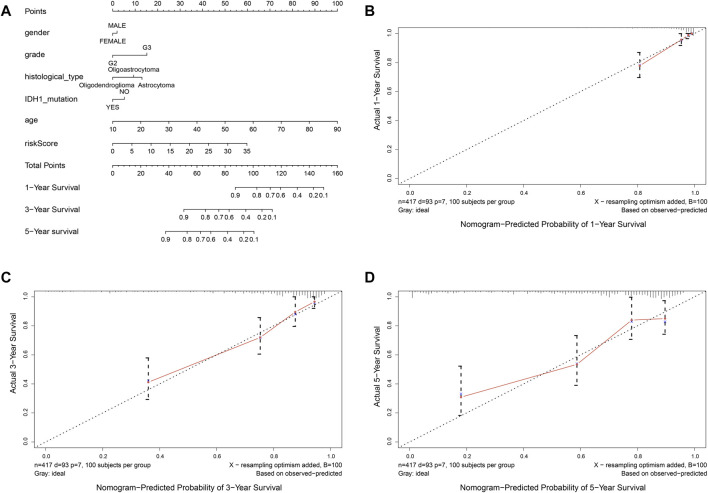
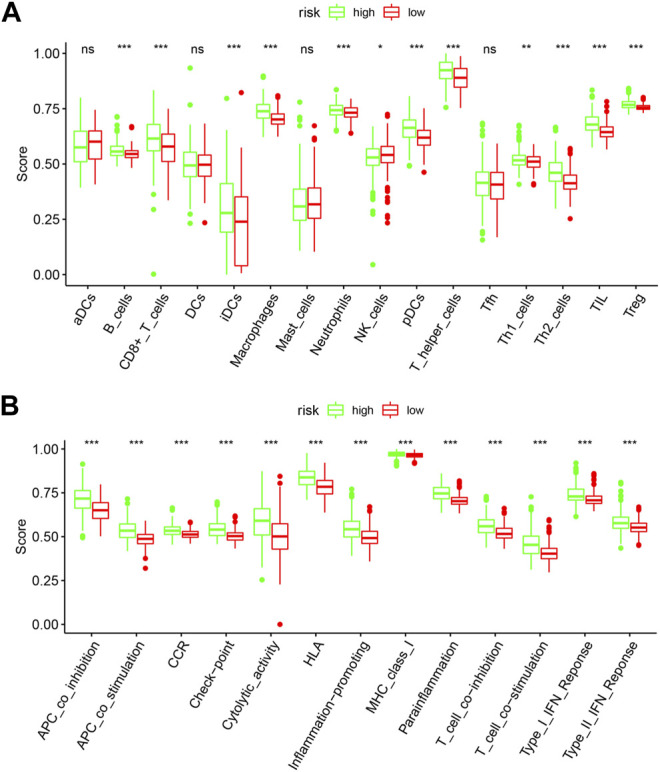
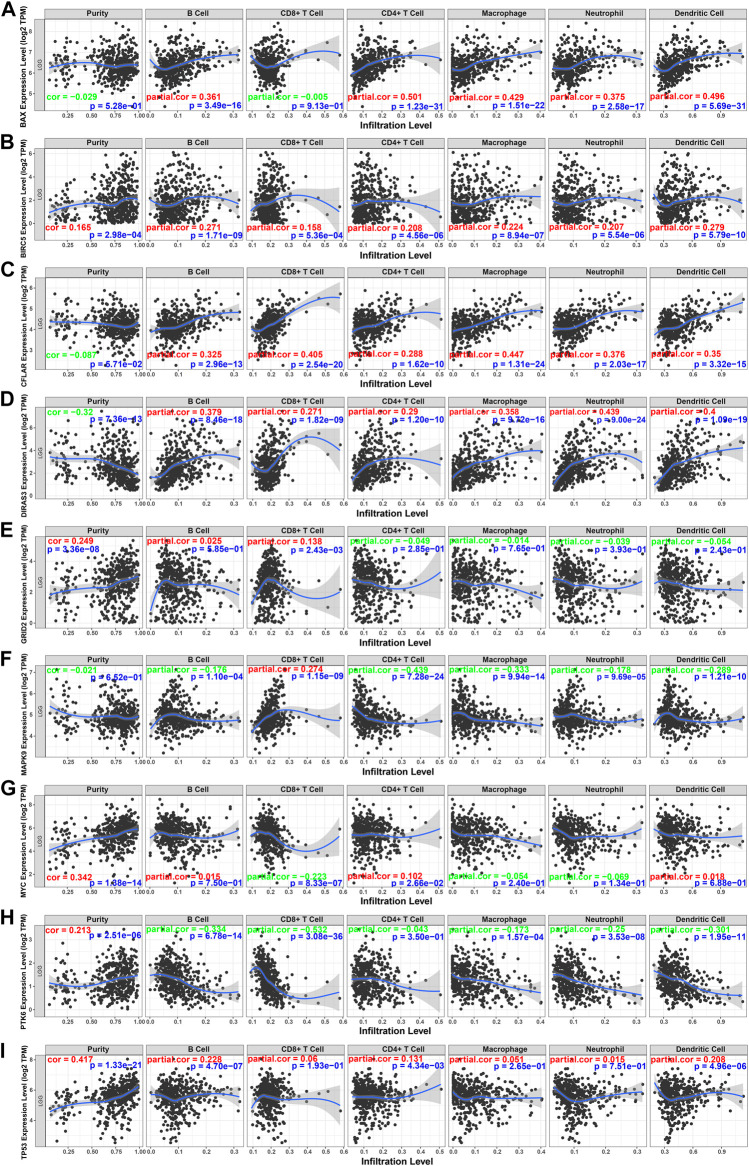
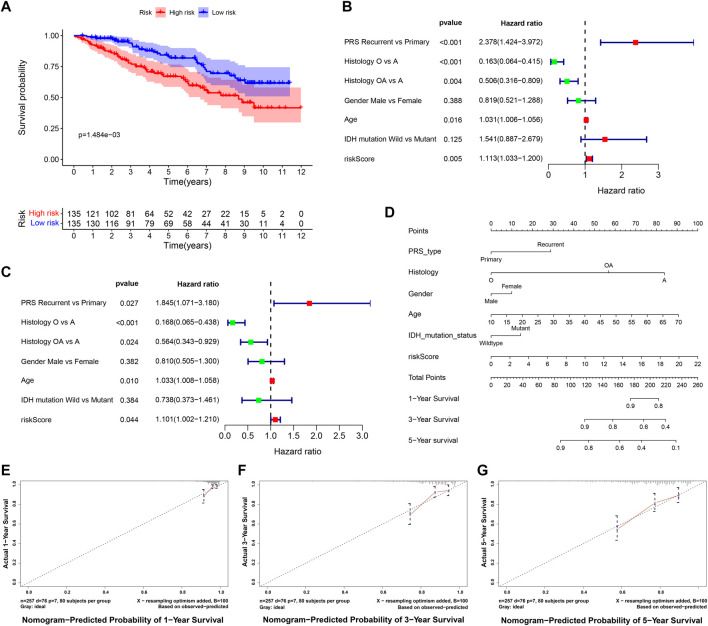
Autophagy plays a vital role in cancer development. However, the prognostic value of autophagy-related genes (ARGs) in low-grade gliomas (LGG) is unclear. This research aimed to investigate whether ARGs correlated with overall survival (OS) in LGG patients. RNA-sequencing data were obtained from The Cancer Genome Atlas (TCGA) TARGET GTEx database. Gene Ontology and Kyoto Encyclopedia of Genes and Genomes enrichment analysis of ARGs were performed by the "clusterprofile" R package. Cox regression with the wald χ test was employed to identify prognostic significant ARGs. Next, the receiver operator characteristic curves were established to evaluate the feasibility of risk score ( ) and other clinical risk factors to predict prognosis. A nomogram was constructed. Correlations between clinical features and ARGs were further verified by a -test or Kruskal-Wallis test. In addition, the correlations between autophagy and immune cells were assessed through the single-sample gene set enrichment analysis (ssGSEA) and tumor immune estimation resource database. Last, the prediction model was verified by LGG data downloaded from the Chinese Glioma Genome Atlas (CGGA) database. Overall, 35 DE-ARGs were identified. Functional enrichment analysis showed that these genes were mainly related to oxidative stress and regulation of autophagy. Nine ARGs (, , , , , , , , and ) were significantly associated with OS. Age (Hazard ratio (HR) = 1.063, 95% CI: 1.046-1.080), grade (HR = 3.412, 95% CI: 2.164-5.379), histological type (HR = 0.556, 95% CI: 0.346-0.893), and risk score (HR = 1.135, 95% CI: 1.104-1.167) were independent prognostic risk factors (all < 0.05). In addition, , , , , and risk scores were found to correlate significantly with age and tumor grade (all < 0.05). Immune cell enrichment analysis demonstrated that the types of immune cells and their expression levels in the high-risk group were significantly different from those in the low-risk group (all < 0.05). A prognostic nomogram was constructed to predict 1-, 3-, and 5-year survival, and the prognostic value of sorted ARGs were verified in the CGGA database and clinical samples. Our findings suggest that the 9 DE-ARGs' risk score model could serve as diagnostic and prognostic biomarkers. The prognostic nomograms could be useful for individualized survival prediction and improved treatment strategies.
自噬在癌症发展中起着至关重要的作用。然而,自噬相关基因(ARGs)在低级别胶质瘤(LGG)中的预后价值尚不清楚。本研究旨在调查ARGs是否与LGG患者的总生存期(OS)相关。从癌症基因组图谱(TCGA)、TARGET和GTEx数据库中获取RNA测序数据。通过“clusterprofile”R包对ARGs进行基因本体论和京都基因与基因组百科全书富集分析。采用带有wald χ检验的Cox回归来识别具有预后意义的ARGs。接下来,建立受试者工作特征曲线以评估风险评分及其他临床风险因素预测预后的可行性。构建了列线图。通过t检验或Kruskal-Wallis检验进一步验证临床特征与ARGs之间的相关性。此外,通过单样本基因集富集分析(ssGSEA)和肿瘤免疫估计资源数据库评估自噬与免疫细胞之间的相关性。最后,通过从中国胶质瘤基因组图谱(CGGA)数据库下载的LGG数据验证预测模型。总体而言,共鉴定出35个差异表达的ARGs。功能富集分析表明,这些基因主要与氧化应激和自噬调节有关。9个ARGs(具体基因未列出)与OS显著相关。年龄(风险比(HR)=1.063,95%置信区间:1.046 - 1.080)、分级(HR = 3.412,95%置信区间:2.164 - 5.379)、组织学类型(HR = 0.556,95%置信区间:0.346 - 0.893)和风险评分(HR = 1.135,95%置信区间:1.104 - 1.167)是独立的预后风险因素(均P < 0.05)。此外,发现某些基因及风险评分与年龄和肿瘤分级显著相关(均P < 0.05)。免疫细胞富集分析表明,高危组免疫细胞的类型及其表达水平与低危组显著不同(均P < 0.05)。构建了一个预后列线图以预测1年、3年和5年生存率,并在CGGA数据库和临床样本中验证了分类后的ARGs的预后价值。我们的研究结果表明,9个差异表达ARGs的风险评分模型可作为诊断和预后生物标志物。预后列线图可能有助于个性化生存预测和改进治疗策略。