Department of Dental Hygiene, College of Health Science, Gachon University, Incheon 21936, Korea.
Department of Oral and Maxillofacial Radiology, School of Dentistry, IHBR, Kyungpook National University, 2177, Dalgubeol-daero, Jung-gu, Daegu 41940, Korea.
Int J Mol Sci. 2020 Nov 10;21(22):8423. doi: 10.3390/ijms21228423.
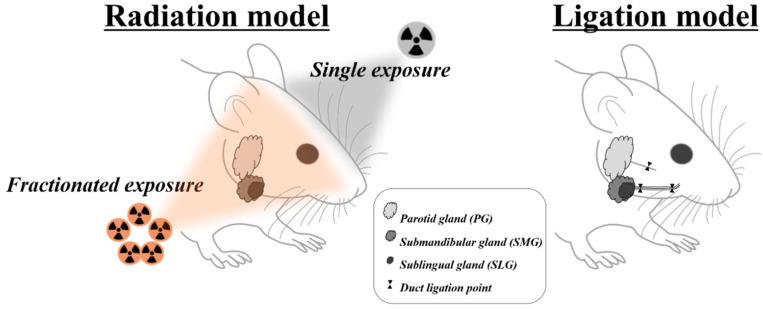
Salivary secretory disorders are life-disrupting pathologic conditions with a high prevalence, especially in the geriatric population. Both patients and clinicians frequently feel helpless and get frustrated by the currently available therapeutic strategies, which consist mainly of palliative managements. Accordingly, to unravel the underlying mechanisms and to develop effective and curative strategies, several animal models have been developed and introduced. Experimental findings from these models have contributed to answer biological and biomedical questions. This review aims to provide various methodological considerations used for the examination of pathological fundamentals in salivary disorders using animal models and to summarize the obtained findings. The information provided in this review could provide plausible solutions for overcoming salivary disorders and also suggest purpose-specific experimental animal systems.
唾液分泌障碍是一种扰乱生活的病理状况,患病率很高,尤其是在老年人群中。患者和临床医生经常对目前可用的治疗策略感到无助和沮丧,这些策略主要包括姑息治疗。因此,为了揭示潜在机制并开发有效和治愈的策略,已经开发并引入了几种动物模型。这些模型的实验结果有助于回答生物学和生物医学问题。本综述旨在提供使用动物模型检查唾液分泌障碍病理基础的各种方法学考虑因素,并总结所获得的结果。本文提供的信息可以为克服唾液分泌障碍提供合理的解决方案,并为特定目的的实验动物系统提供建议。