Messina Fernando A, Marin Emmanuel, Caceres Diego H, Romero Mercedes, Depardo Roxana, Priarone Maria M, Rey Laura, Vázquez Mariana, Verweij Paul E, Chiller Tom M, Santiso Gabriela
Unidad de Micología, Hospital de Infecciosas F. J. Muñiz B.A. Uspallata 2272, C1282 CABA, Argentina.
Mycotic Diseases Branch, Centers for Disease Control and Prevention (CDC), Atlanta, GA 30333, USA.
J Fungi (Basel). 2020 Nov 10;6(4):275. doi: 10.3390/jof6040275.
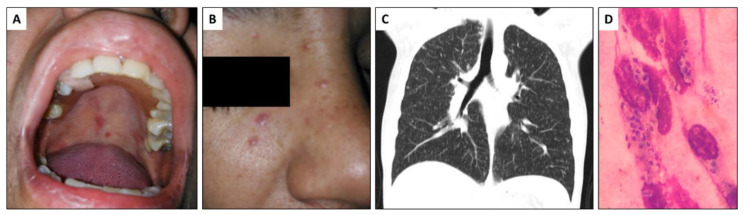
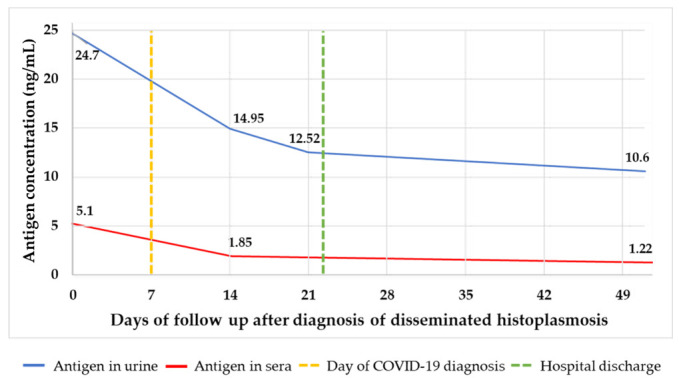
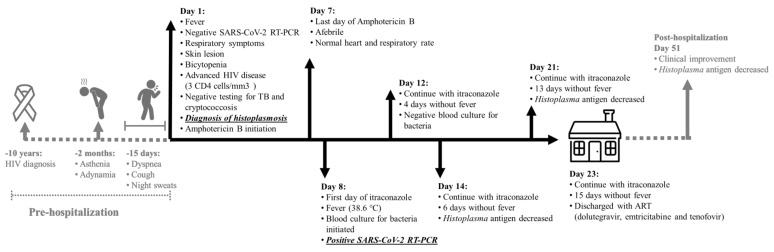
The disease caused by the new SARS-CoV-2, known as Coronavirus disease 2019 (COVID-19), was first identified in China in December 2019 and rapidly spread around the world. Coinfections with fungal pathogens in patients with COVID-19 add challenges to patient care. We conducted a literature review on fungal coinfections in patients with COVID-19. We describe a report of a patient with disseminated histoplasmosis who was likely infected with SARS-CoV-2 and experienced COVID-19 during hospital care in Buenos Aires, Argentina. This patient presented with advanced HIV disease, a well-known factor for disseminated histoplasmosis; on the other hand, we suspected that COVID-19 was acquired during hospitalization but there is not enough evidence to support this hypothesis. Clinical correlation and the use of specific and COVID-19 rapid diagnostics assays were key to the timely diagnosis of both infections, permitting appropriate treatment and patient care.
由新型严重急性呼吸综合征冠状病毒2(SARS-CoV-2)引起的疾病,即2019冠状病毒病(COVID-19),于2019年12月在中国首次被发现,并迅速在全球传播。COVID-19患者合并真菌病原体感染给患者护理带来了挑战。我们对COVID-19患者的真菌合并感染进行了文献综述。我们描述了一例播散性组织胞浆菌病患者的报告,该患者可能感染了SARS-CoV-2,并在阿根廷布宜诺斯艾利斯住院治疗期间出现了COVID-19症状。该患者患有晚期艾滋病,这是播散性组织胞浆菌病的一个众所周知的因素;另一方面,我们怀疑COVID-19是在住院期间感染的,但没有足够的证据支持这一假设。临床关联以及使用特定的COVID-19快速诊断检测方法是及时诊断这两种感染的关键,从而能够进行适当的治疗和患者护理。