Department of Environmental Science, Rhodes University, Grahamstown, 6140, South Africa.
Departmento de Ciências Biológicas, Universidade Eduardo Mondlane CP 257, Maputo, Moçambique.
Sci Rep. 2020 Nov 12;10(1):19725. doi: 10.1038/s41598-020-76654-6.
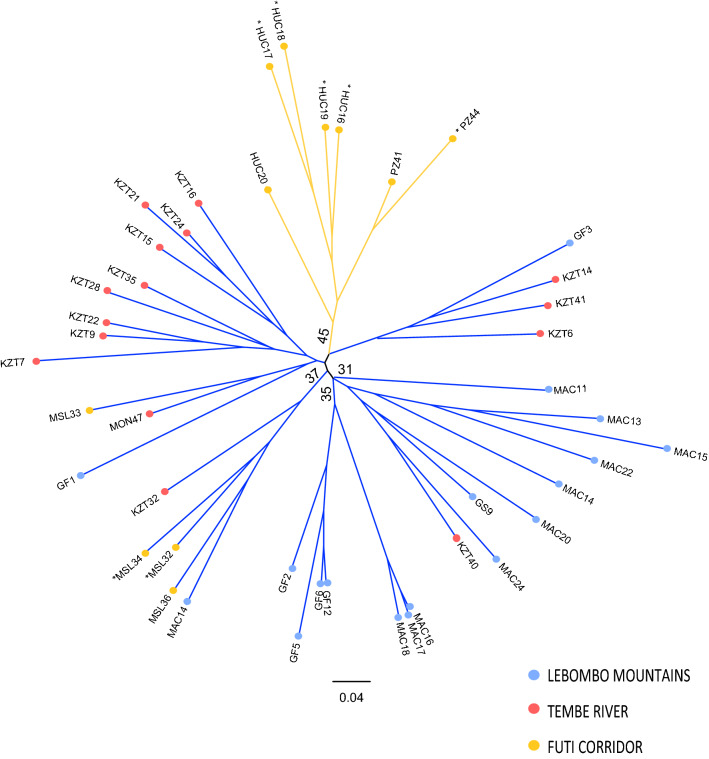
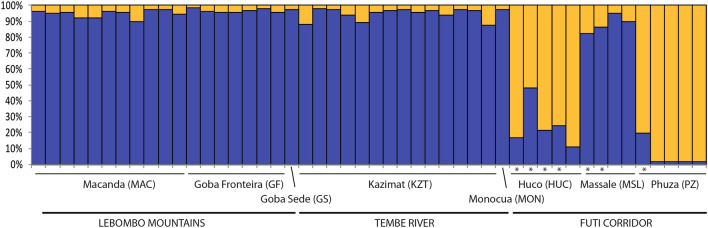
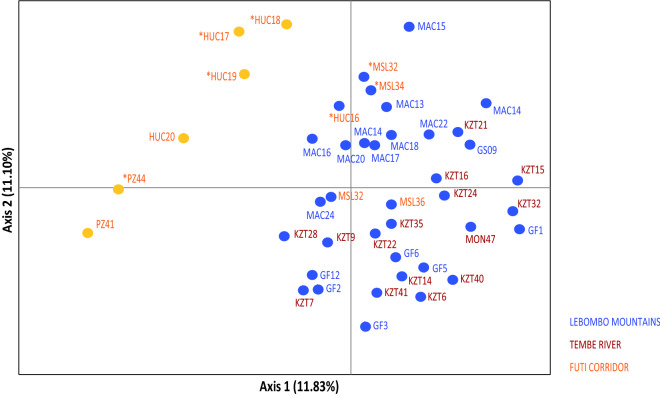
The pepper-bark tree (Warburgia salutaris) is one of the most highly valued medicinal plant species worldwide. Native to southern Africa, this species has been extensively harvested for the bark, which is widely used in traditional health practices. Illegal harvesting coupled with habitat degradation has contributed to fragmentation of populations and a severe decline in its distribution. Even though the species is included in the IUCN Red List as Endangered, genetic data that would help conservation efforts and future re-introductions are absent. We therefore developed new molecular markers to understand patterns of genetic diversity, structure, and gene flow of W. salutaris in one of its most important areas of occurrence (Mozambique). In this study, we have shown that, despite fragmentation and overexploitation, this species maintains a relatively high level of genetic diversity supporting the existence of random mating. Two genetic groups were found corresponding to the northern and southern locations. Our study suggests that, if local extinctions occurred in Mozambique, the pepper-bark tree persisted in sufficient numbers to retain a large proportion of genetic diversity. Management plans should concentrate on maintaining this high level of genetic variability through both in and ex-situ conservation actions.
胡椒树(Warburgia salutaris)是全球最具价值的药用植物物种之一。原产于南非,该物种的树皮被广泛用于传统保健实践,因此被大量采集。非法采集加上栖息地退化导致其种群碎片化,分布范围严重缩小。尽管该物种被列入 IUCN 红色名录为濒危物种,但缺乏有助于保护工作和未来重新引入的遗传数据。因此,我们开发了新的分子标记来了解胡椒树在其最重要的分布地区之一(莫桑比克)的遗传多样性、结构和基因流模式。在这项研究中,我们表明,尽管存在碎片化和过度开发,该物种仍然保持着相对较高的遗传多样性,支持随机交配的存在。发现了两个遗传群体,分别对应于北部和南部的位置。我们的研究表明,如果莫桑比克发生局部灭绝,胡椒树仍然以足够的数量存在,保留了很大一部分遗传多样性。管理计划应集中精力通过就地和迁地保护措施来维持这种高水平的遗传变异性。