Department of Biochemistry and Molecular Genetics, School of Medicine, University of Alabama at Birmingham, Birmingham, AL, 35294, USA.
Department of Cell Developmental and Integrative Biology, School of Medicine, University of Alabama at Birmingham, Birmingham, AL, 35294, USA.
Sci Rep. 2020 Nov 12;10(1):19710. doi: 10.1038/s41598-020-76705-y.
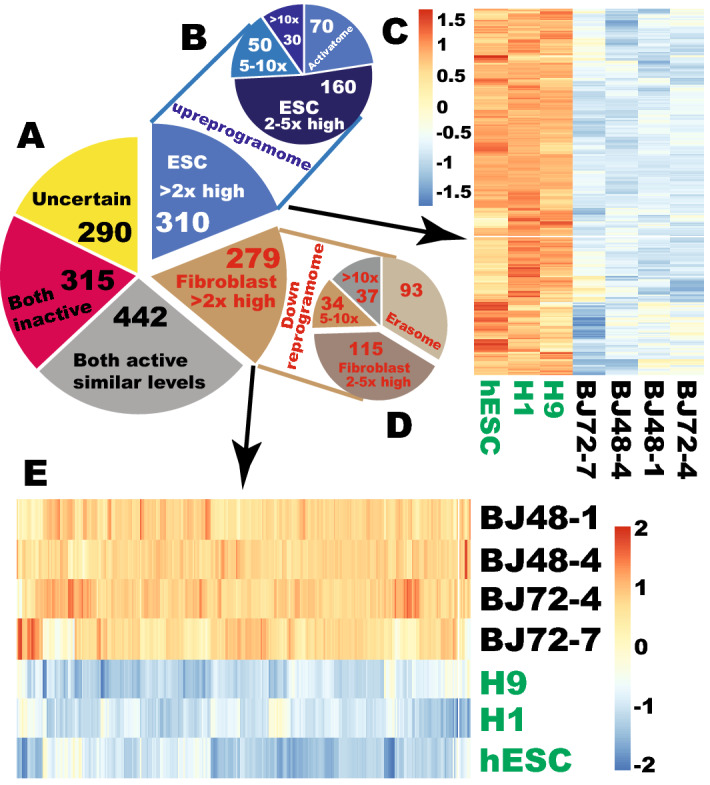
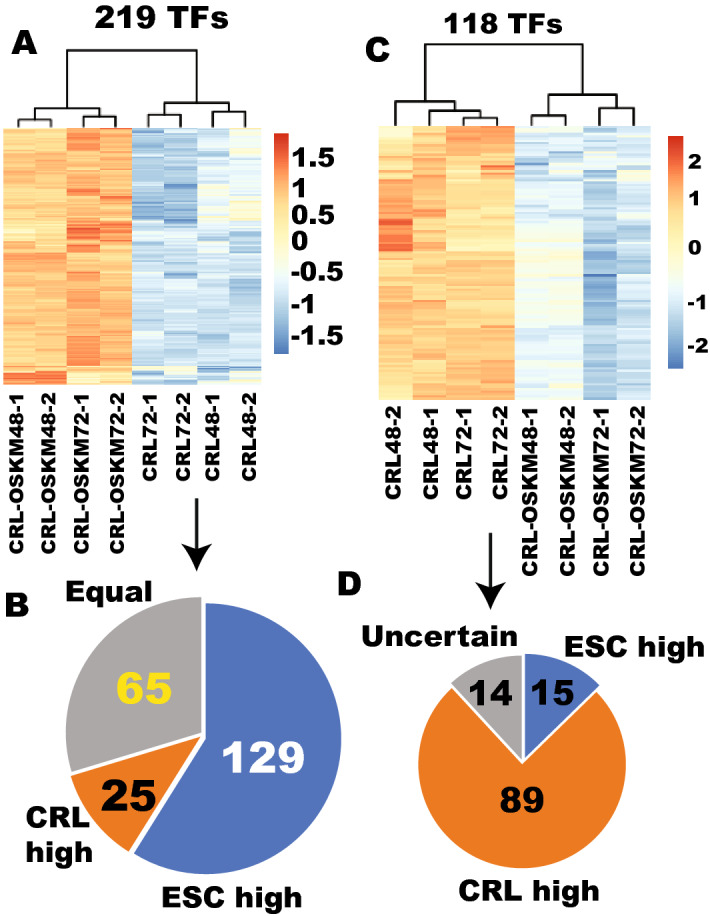
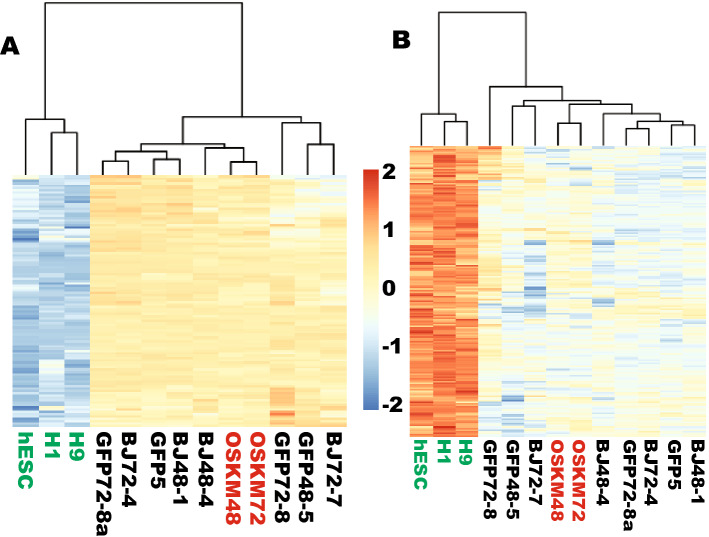
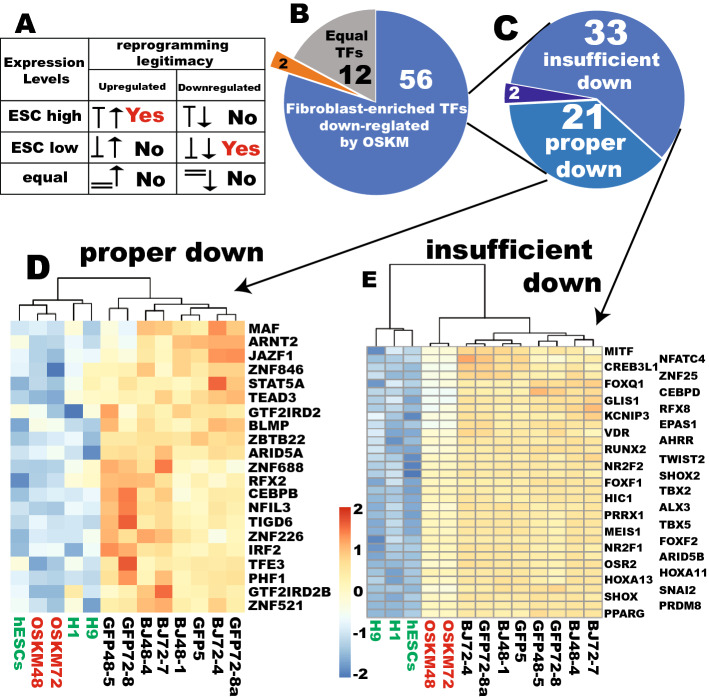
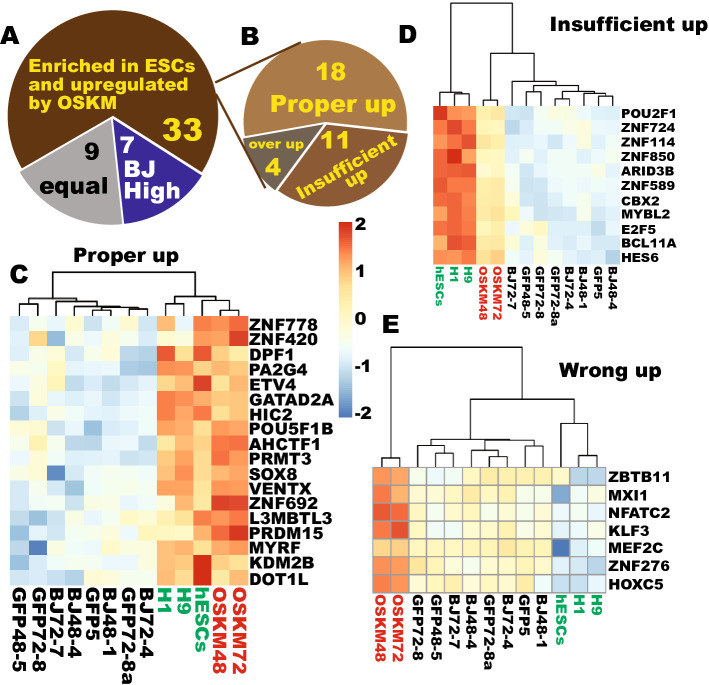
The four transcription factors OCT4, SOX2, KLF4, and MYC (OSKM) together can convert human fibroblasts to induced pluripotent stem cells (iPSCs). It is, however, perplexing that they can do so only for a rare population of the starting cells with a long latency. Transcription factors (TFs) define identities of both the starting fibroblasts and the end product, iPSCs, and are also of paramount importance for the reprogramming process. It is critical to upregulate or activate the iPSC-enriched TFs while downregulate or silence the fibroblast-enriched TFs. This report explores the initial TF responses to OSKM as the molecular underpinnings for both the potency aspects and the limitation sides of the OSKM reprogramming. The authors first defined the TF reprogramome, i.e., the full complement of TFs to be reprogrammed. Most TFs were resistant to OSKM reprogramming at the initial stages, an observation consistent with the inefficiency and long latency of iPSC reprogramming. Surprisingly, the current analyses also revealed that most of the TFs (at least 83 genes) that did respond to OSKM induction underwent legitimate reprogramming. The initial legitimate transcriptional responses of TFs to OSKM reprogramming were also observed in the reprogramming fibroblasts from a different individual. Such early biased legitimate reprogramming of the responsive TFs aligns well with the robustness aspect of the otherwise inefficient and stochastic OSKM reprogramming.
四个转录因子 OCT4、SOX2、KLF4 和 MYC(OSKM)可以将人成纤维细胞转化为诱导多能干细胞(iPSCs)。然而,令人困惑的是,它们只能对起始细胞中的一小部分具有长潜伏期的细胞进行转化。转录因子(TFs)定义了起始成纤维细胞和终产物 iPSCs 的身份,对于重编程过程也至关重要。上调或激活富含 iPSC 的 TFs,同时下调或沉默富含成纤维细胞的 TFs 是至关重要的。本报告探讨了 OSKM 对 TF 的初始反应,作为 OSKM 重编程的效力和限制方面的分子基础。作者首先定义了 TF 重编程组,即需要重编程的完整 TF 组。大多数 TF 在初始阶段对 OSKM 重编程具有抗性,这一观察结果与 iPSC 重编程的效率低下和潜伏期长一致。令人惊讶的是,目前的分析还表明,大多数对 OSKM 诱导有反应的 TF(至少 83 个基因)确实经历了合法的重编程。在来自不同个体的重编程成纤维细胞中也观察到了 TF 对 OSKM 重编程的初始合法转录反应。这种对响应性 TF 的早期偏向性合法重编程与 otherwiseinefficient 和随机的 OSKM 重编程的稳健性方面很好地吻合。