Department of Renal Medicine, Royal Infirmary of Edinburgh, EH16 4SA and University/BHF Centre for Cardiovascular Science, The Queen's Medical Research Institute, University of Edinburgh, EH16 4TJ, U.K.
Clin Sci (Lond). 2020 Nov 13;134(21):2893-2895. doi: 10.1042/CS20201092.
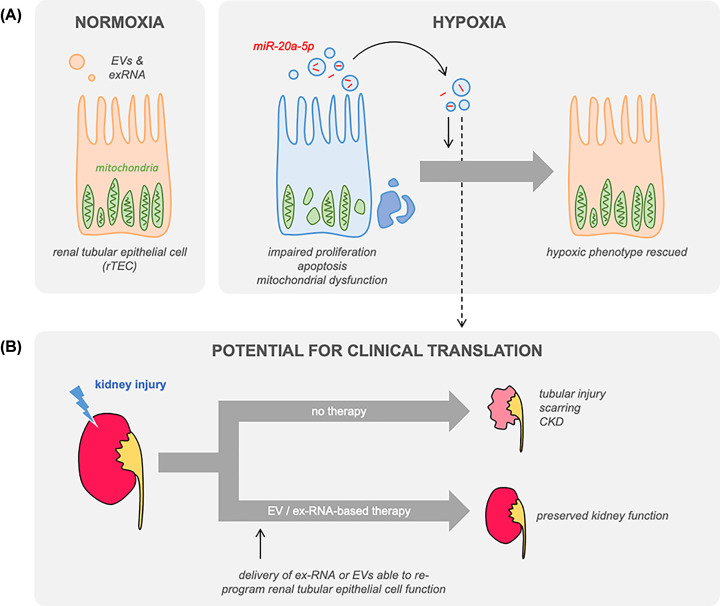
We have known for just over a decade that functional RNA is shuttled between cells (Nat. Cell Biol. (2007) 9, 654-659). In that short time, there have been countless reports of extracellular RNA (exRNA) and extracellular vesicles (EVs) participating in diverse biological processes in development (Dev. Cell (2017) 40, 95-103), homoeostasis (Nature (2017) 542, 450-455) and disease (Nature (2017) 546, 498-503). Unsurprisingly - as these disciplines are still in their infancies - most of this work is still in the 'discovery biology' phase. However, exRNA and EVs show promise as disease biomarkers and could be harnessed in novel therapies.
我们仅在十多年前就已经知道,功能性 RNA 会在细胞间穿梭(《自然细胞生物学》(2007 年)9 期,654-659)。在这短短的时间里,已经有无数关于细胞外 RNA(exRNA)和细胞外囊泡(EVs)参与发育(《发育细胞》(2017 年)40 期,95-103)、体内平衡(《自然》(2017 年)542 期,450-455)和疾病(《自然》(2017 年)546 期,498-503)中多种生物学过程的报道。毫不奇怪——由于这些学科仍处于起步阶段——这些工作大多仍处于“发现生物学”阶段。然而,exRNA 和 EVs 作为疾病生物标志物具有很大的潜力,并且可以应用于新型疗法。