Department of Internal Medicine I, Ulm University Hospital, Ulm, Germany.
Institute of Molecular Virology, Ulm University Medical Center, Ulm, Germany.
Cell Mol Gastroenterol Hepatol. 2021;11(4):935-948. doi: 10.1016/j.jcmgh.2020.11.003. Epub 2020 Nov 10.
The COVID-19 pandemic has spread worldwide and poses a severe health risk. While most patients present mild symptoms, descending pneumonia can lead to severe respiratory insufficiency. Up to 50% of patients show gastrointestinal symptoms like diarrhea or nausea, intriguingly associating with prolonged symptoms and increased severity. Thus, models to understand and validate drug efficiency in the gut of COVID-19 patients are of urgent need.
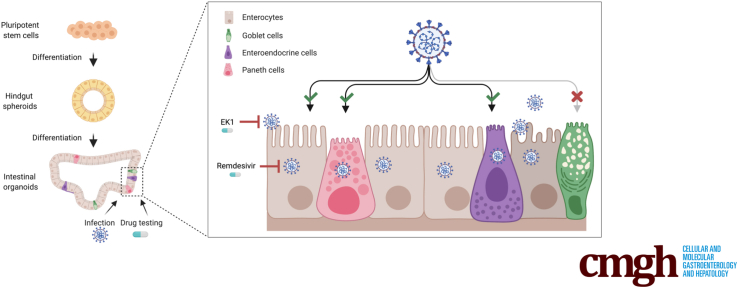
Human intestinal organoids derived from pluripotent stem cells (PSC-HIOs) have led, due to their complexity in mimicking human intestinal architecture, to an unprecedented number of successful disease models including gastrointestinal infections. Here, we employed PSC-HIOs to dissect SARS-CoV-2 pathogenesis and its inhibition by remdesivir, one of the leading drugs investigated for treatment of COVID-19.
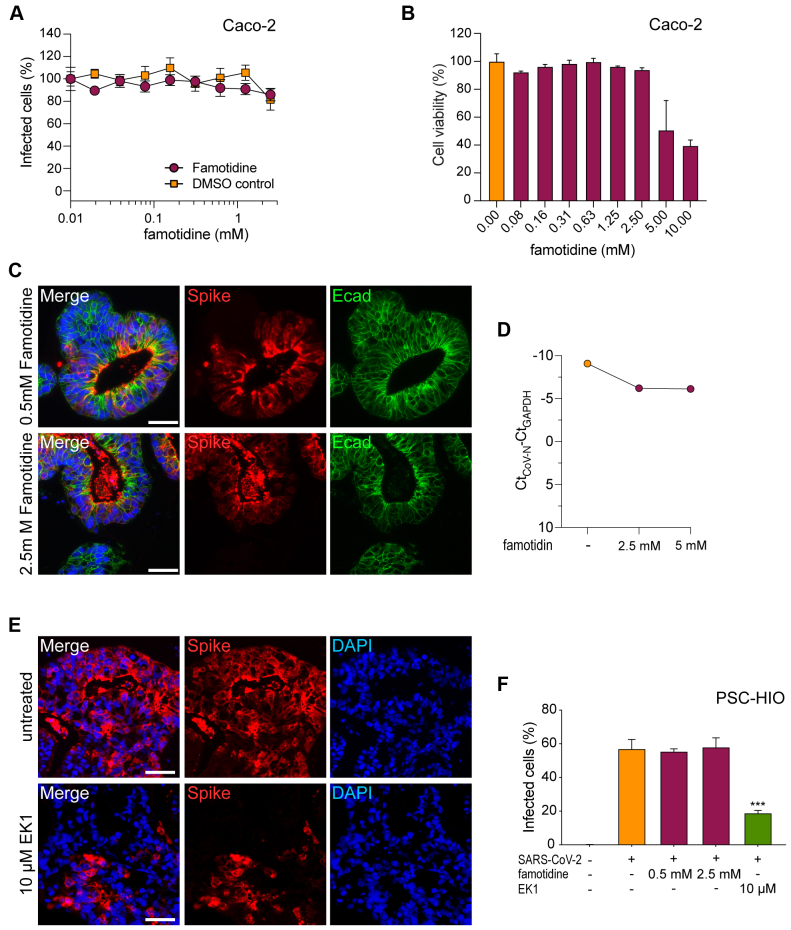
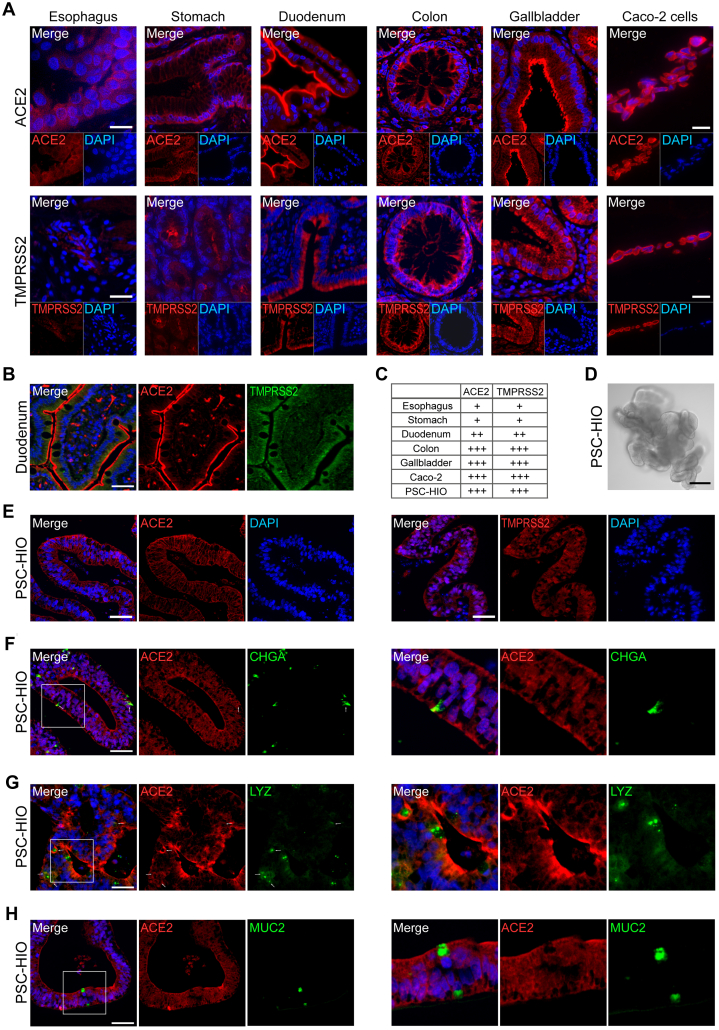
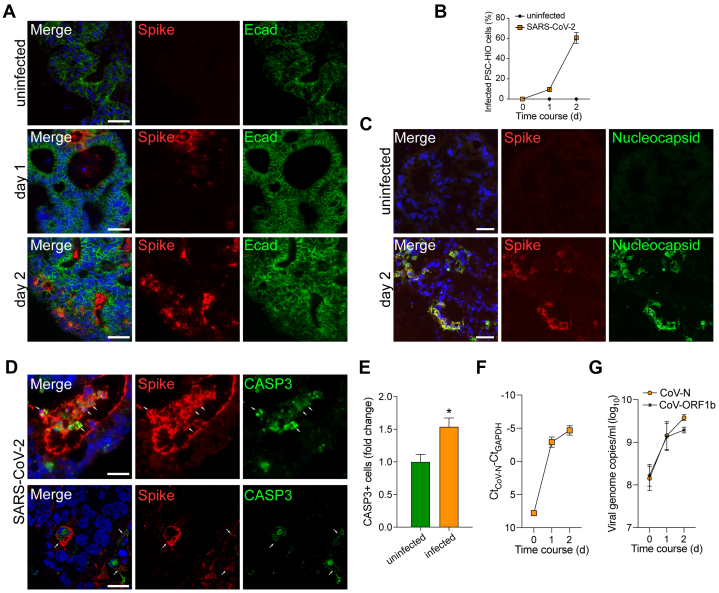
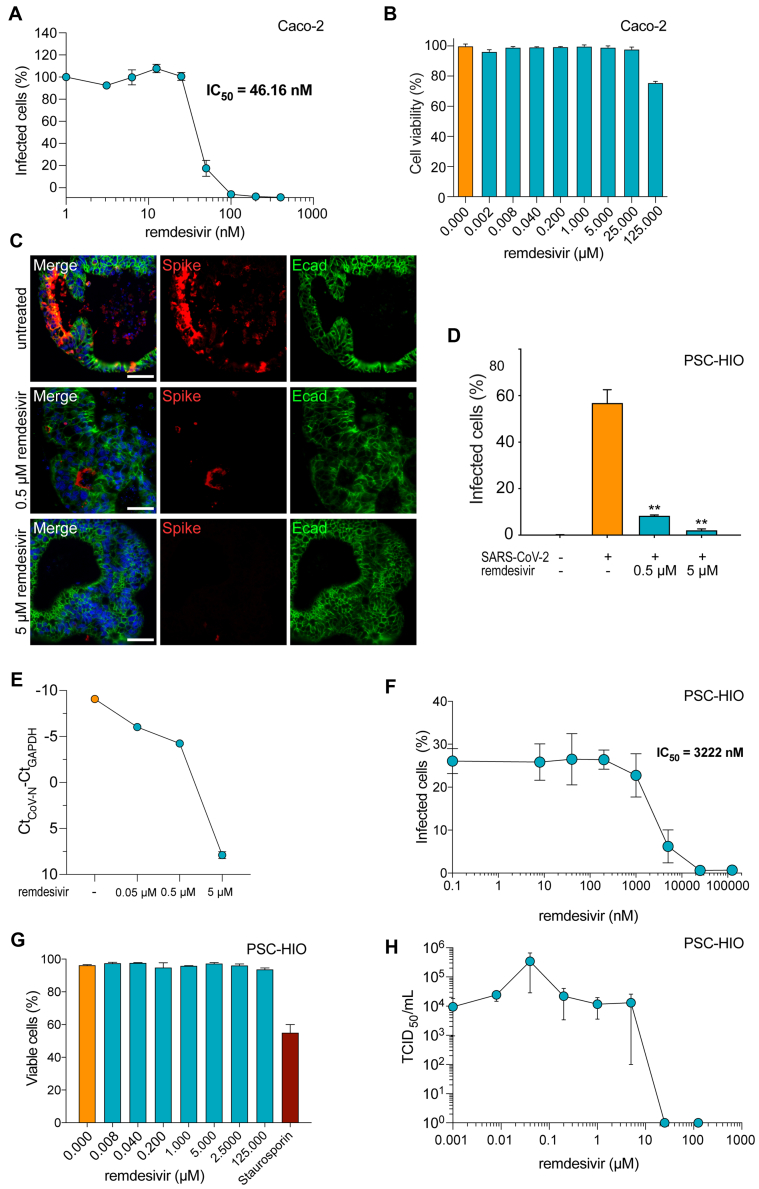
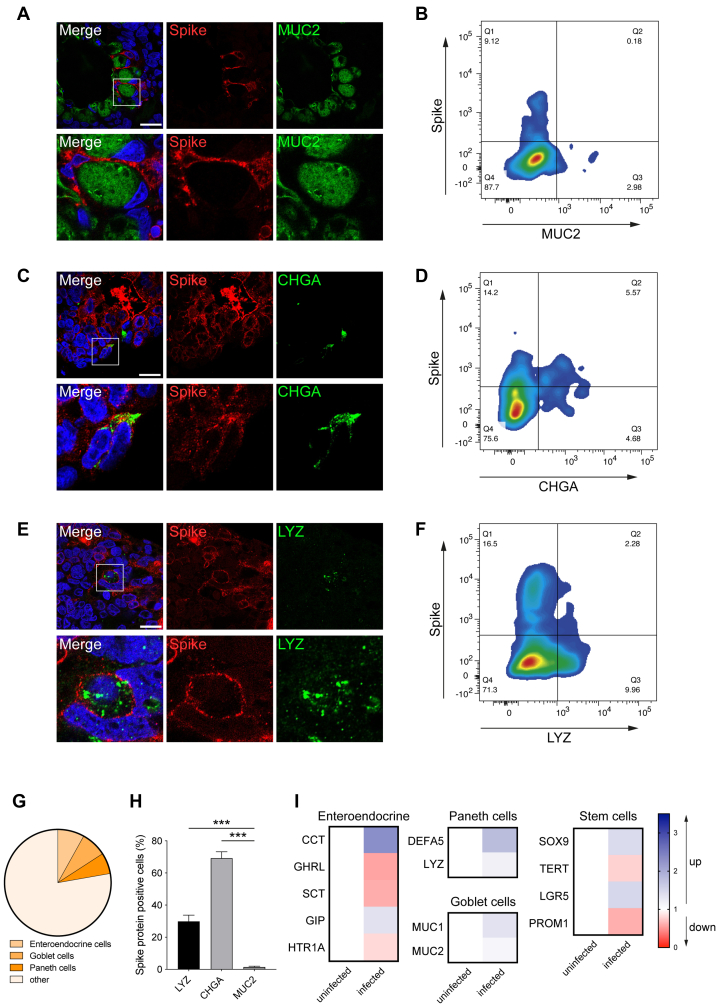
Immunostaining for viral entry receptor ACE2 and SARS-CoV-2 spike protein priming protease TMPRSS2 showed broad expression in the gastrointestinal tract with highest levels in the intestine, the latter faithfully recapitulated by PSC-HIOs. Organoids could be readily infected with SARS-CoV-2 followed by viral spread across entire PSC-HIOs, subsequently leading to organoid deterioration. However, SARS-CoV-2 spared goblet cells lacking ACE2 expression. Importantly, we challenged PSC-HIOs for drug testing capacity. Specifically, remdesivir effectively inhibited SARS-CoV-2 infection dose-dependently at low micromolar concentration and rescued PSC-HIO morphology.
Thus, PSC-HIOs are a valuable tool to study SARS-CoV-2 infection and to identify and validate drugs especially with potential action in the gut.
COVID-19 疫情在全球范围内蔓延,对健康构成严重威胁。虽然大多数患者表现出轻症,但下呼吸道肺炎可导致严重呼吸衰竭。多达 50%的患者出现腹泻或恶心等胃肠道症状,有趣的是,这些症状与持续时间延长和病情加重有关。因此,需要建立模型来理解和验证 COVID-19 患者肠道中药物的疗效。
多能干细胞(PSC)衍生的人肠道类器官(PSC-HIOs)由于其在模拟人类肠道结构方面的复杂性,导致了包括胃肠道感染在内的大量成功疾病模型。在这里,我们利用 PSC-HIOs 来剖析 SARS-CoV-2 的发病机制及其抑制剂瑞德西韦对 COVID-19 的治疗作用。
免疫组化显示,病毒进入受体 ACE2 和 SARS-CoV-2 刺突蛋白前体蛋白酶 TMPRSS2 在胃肠道中有广泛表达,其中肠道中的表达水平最高,PSC-HIOs 中也忠实再现了这一点。PSC-HIOs 很容易被 SARS-CoV-2 感染,随后病毒在整个 PSC-HIOs 中传播,导致类器官恶化。然而,SARS-CoV-2 对缺乏 ACE2 表达的杯状细胞没有影响。重要的是,我们利用 PSC-HIOs 进行了药物测试能力的挑战。具体来说,瑞德西韦以低微摩尔浓度剂量依赖性地有效抑制 SARS-CoV-2 感染,并挽救了 PSC-HIO 的形态。
因此,PSC-HIOs 是研究 SARS-CoV-2 感染以及鉴定和验证药物的有价值的工具,特别是对肠道有潜在作用的药物。