Center for Regenerative Medicine of Boston University and Boston Medical Center, Boston, MA 02118, USA; Department of Microbiology, Boston University School of Medicine, Boston, MA 02118, USA.
National Emerging Infectious Diseases Laboratories, Boston University, Boston, MA 02118, USA; Department of Microbiology, Boston University School of Medicine, Boston, MA 02118, USA.
Stem Cell Reports. 2021 Apr 13;16(4):940-953. doi: 10.1016/j.stemcr.2021.02.019.
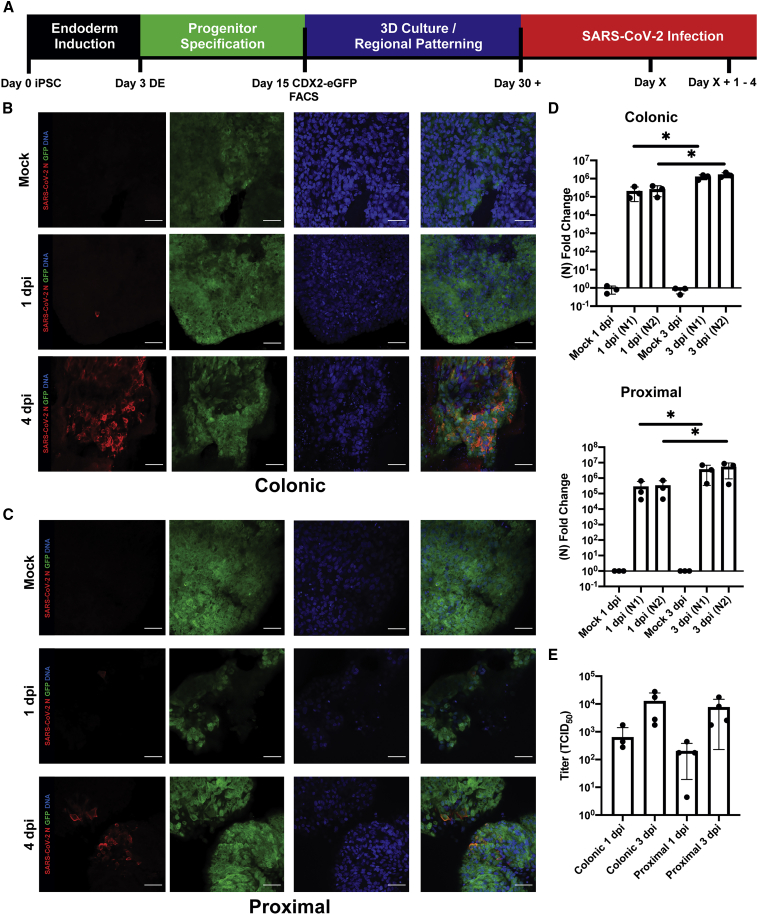
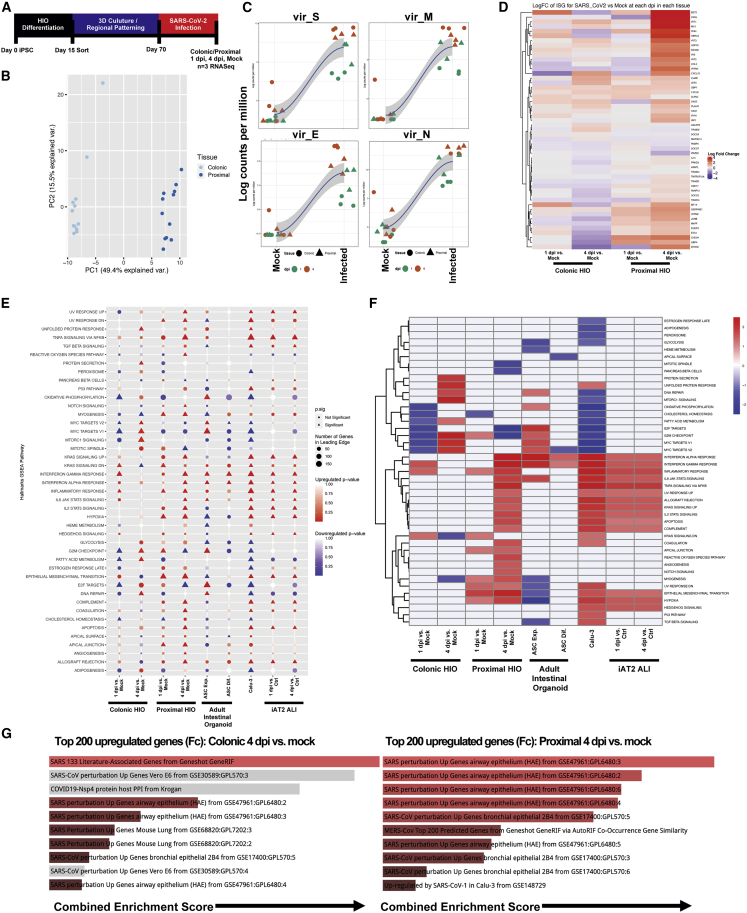
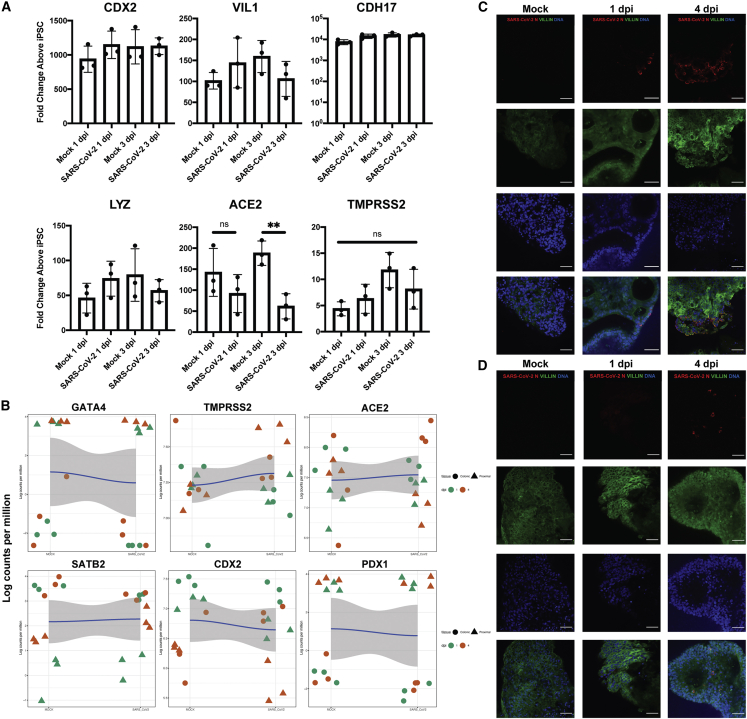
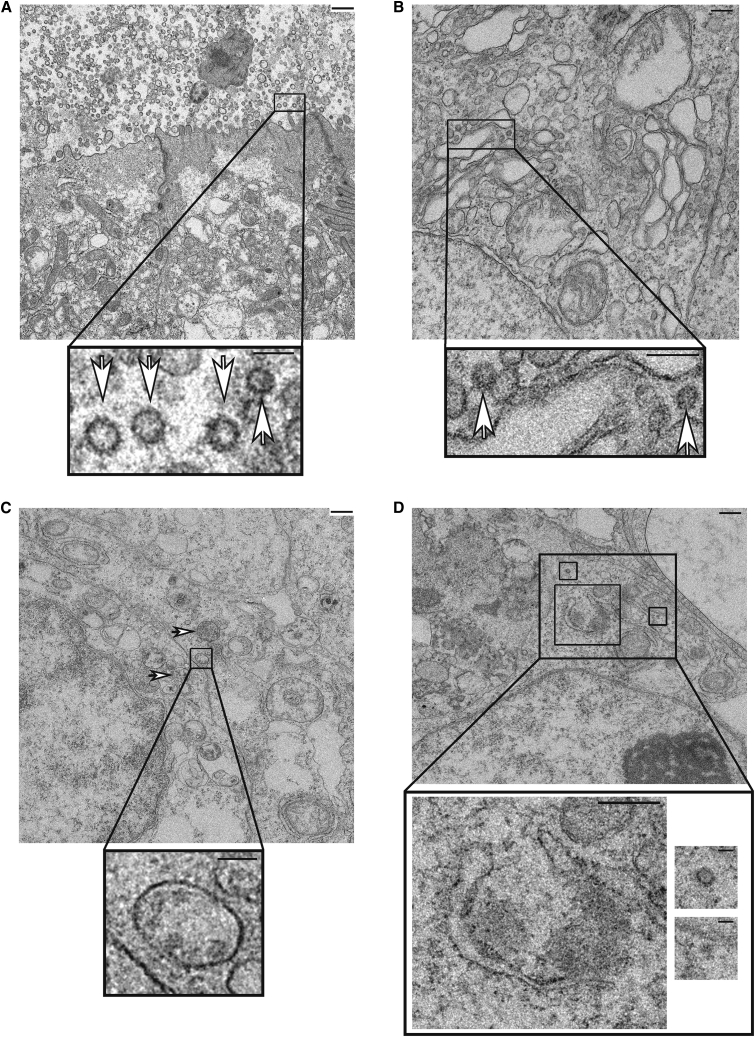
Severe acute respiratory syndrome coronavirus 2 (SARS-CoV-2) infection leading to coronavirus disease 2019 (COVID-19) usually results in respiratory disease, but extrapulmonary manifestations are of major clinical interest. Intestinal symptoms of COVID-19 are present in a significant number of patients, and include nausea, diarrhea, and viral RNA shedding in feces. Human induced pluripotent stem cell-derived intestinal organoids (HIOs) represent an inexhaustible cellular resource that could serve as a valuable tool to study SARS-CoV-2 as well as other enteric viruses that infect the intestinal epithelium. Here, we report that SARS-CoV-2 productively infects both proximally and distally patterned HIOs, leading to the release of infectious viral particles while stimulating a robust transcriptomic response, including a significant upregulation of interferon-related genes that appeared to be conserved across multiple epithelial cell types. These findings illuminate a potential inflammatory epithelial-specific signature that may contribute to both the multisystemic nature of COVID-19 as well as its highly variable clinical presentation.
严重急性呼吸综合征冠状病毒 2(SARS-CoV-2)感染导致 2019 年冠状病毒病(COVID-19),通常导致呼吸道疾病,但肺外表现具有重要的临床意义。COVID-19 的肠道症状存在于相当数量的患者中,包括恶心、腹泻和粪便中病毒 RNA 的脱落。人诱导多能干细胞衍生的肠类器官(HIOs)代表着一种无穷无尽的细胞资源,可作为研究 SARS-CoV-2 以及其他感染肠上皮的肠道病毒的有价值的工具。在这里,我们报告 SARS-CoV-2 可有效地感染近端和远端模式化的 HIOs,导致释放感染性病毒颗粒,同时刺激强烈的转录组反应,包括干扰素相关基因的显著上调,这些基因似乎在多种上皮细胞类型中都保守存在。这些发现阐明了一种潜在的炎症性上皮特异性特征,可能导致 COVID-19 的多系统性质及其高度可变的临床表现。