Department of Cardiology, The First Affiliated Hospital of Wenzhou Medical University, Wenzhou 325000, China.
Department of Hypoxia Medical Research Laboratory, Wenzhou Medical University, Wenzhou 325000, China.
Aging (Albany NY). 2020 Nov 13;12(21):22112-22121. doi: 10.18632/aging.104065.
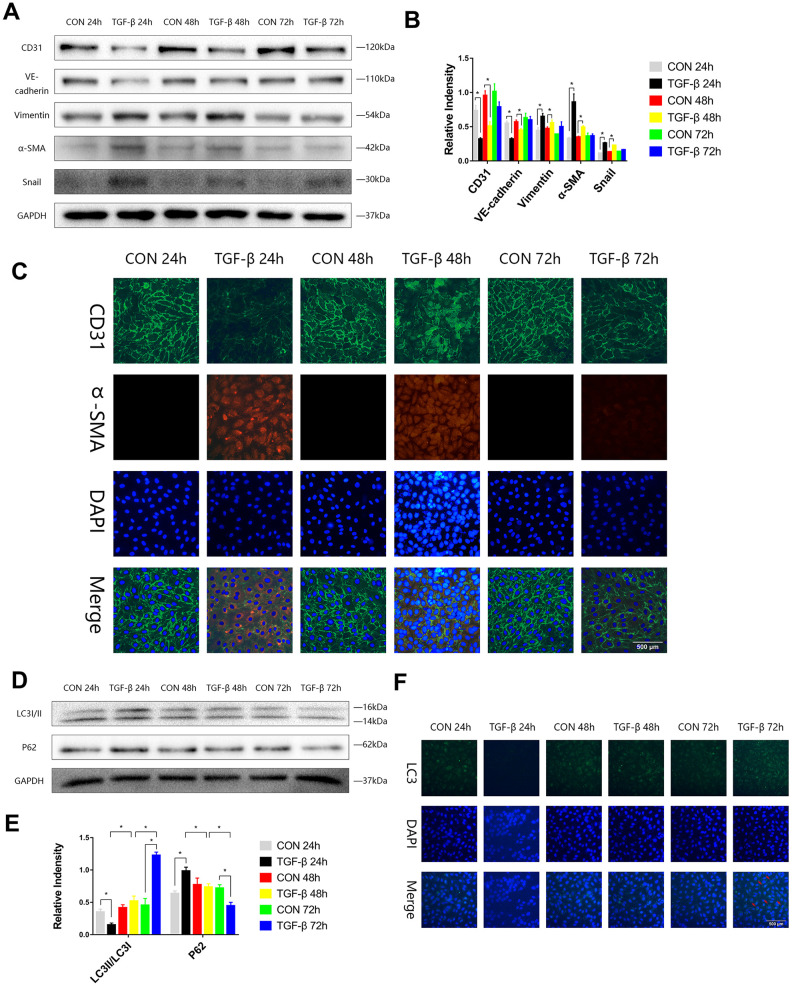
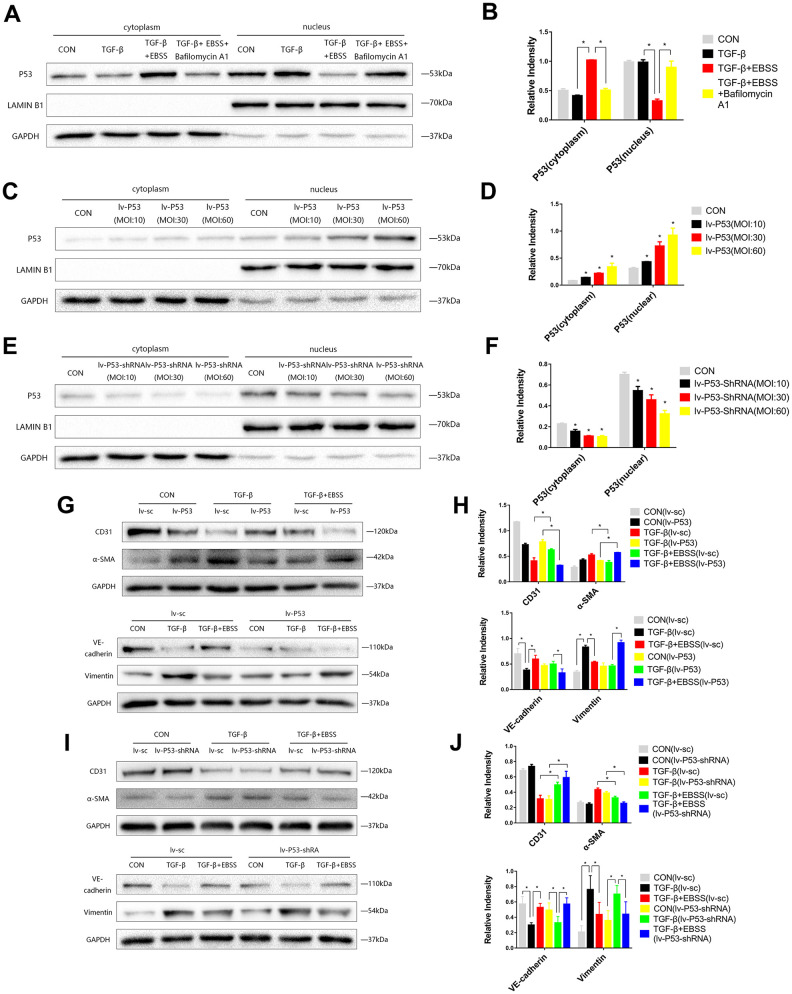
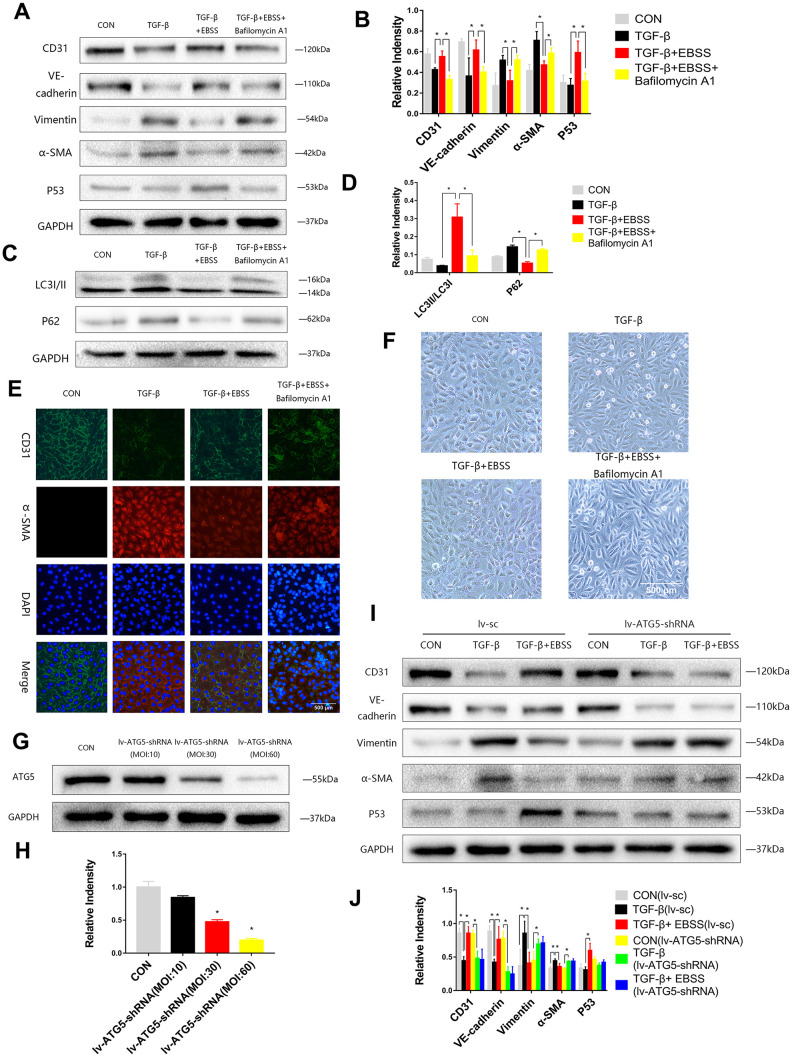
Mesenchymal-to-endothelial transition (MEndT) is one of the mechanisms that influences cardiac fibrosis, which is a key process in cardiac remodeling. It has been reported that autophagy inhibits endothelial cell transition. However, whether autophagy could modulate MEndT in cardiac fibrosis has not yet been investigated. Here, we discussed the association between autophagy and MEndT and its possible mechanism. In this study, we induced endothelial-to-mesenchymal transition using transforming growth factor-β to generate mesenchymal cells and fibroblasts in wild-type human umbilical vein endothelial cells and cells with p53 knockout or overexpression. Then, autophagy was induced by Earle's balanced salt solution (EBSS) and was inhibited by bafilomycin A1 or lentivirus-ATG5-shRNA. The expression levels of MEndT and the autophagy markers CD31, VE-Cadherin, Vimentin, α-SMA, LC3, p62 and p53 were examined. We found that activation of autophagy could promote MEndT and increase cytoplasmic and total expression of p53, that but nuclear p53 expression was decreased, and that inhibition of autophagy activation could reverse the effect of EBSS. Moreover, after knockout of nuclear p53, autophagy promoted MEndT, while autophagy inhibited MEndT in p53 overexpressing cells. Our results demonstrate that autophagy modulate MEndT by nuclear p53 provide a new strategy for the treatment of fibrosis diseases.
间质向内皮细胞转化(MEndT)是影响心脏纤维化的机制之一,而心脏纤维化是心脏重构的关键过程。有报道称自噬能抑制内皮细胞的转化。然而,自噬是否能调节心脏纤维化中的 MEndT 尚未被研究过。在这里,我们讨论了自噬与 MEndT 之间的关联及其可能的机制。在这项研究中,我们使用转化生长因子-β诱导内皮细胞向间质细胞转化,在野生型人脐静脉内皮细胞和 p53 敲除或过表达的细胞中产生间充质细胞和成纤维细胞。然后,用 Earle 平衡盐溶液(EBSS)诱导自噬,并通过巴弗洛霉素 A1 或慢病毒-ATG5-shRNA 抑制自噬。检测 MEndT 及自噬标志物 CD31、VE-Cadherin、Vimentin、α-SMA、LC3、p62 和 p53 的表达水平。我们发现,自噬的激活可以促进 MEndT,并增加细胞质和总 p53 的表达,而核 p53 的表达减少,而自噬激活的抑制可以逆转 EBSS 的作用。此外,在敲除核 p53 后,自噬促进 MEndT,而在 p53 过表达的细胞中,自噬抑制 MEndT。我们的结果表明,自噬通过核 p53 调节 MEndT,为纤维化疾病的治疗提供了一种新策略。