Nanjing Maternity and Child Health Care Institute, Women's Hospital of Nanjing Medical University, Nanjing Maternity and Child Health Care Hospital, Nanjing, China.
Department of Child Health Care, Women's Hospital of Nanjing Medical University, Nanjing Maternity and Child Health Care Hospital, Nanjing, China.
Front Endocrinol (Lausanne). 2020 Oct 29;11:565483. doi: 10.3389/fendo.2020.565483. eCollection 2020.
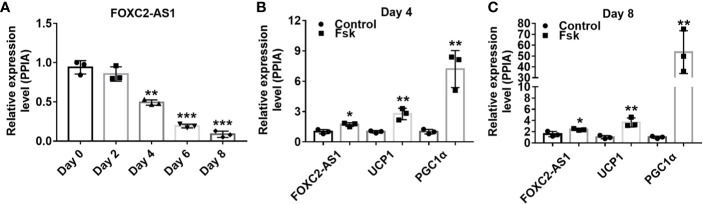
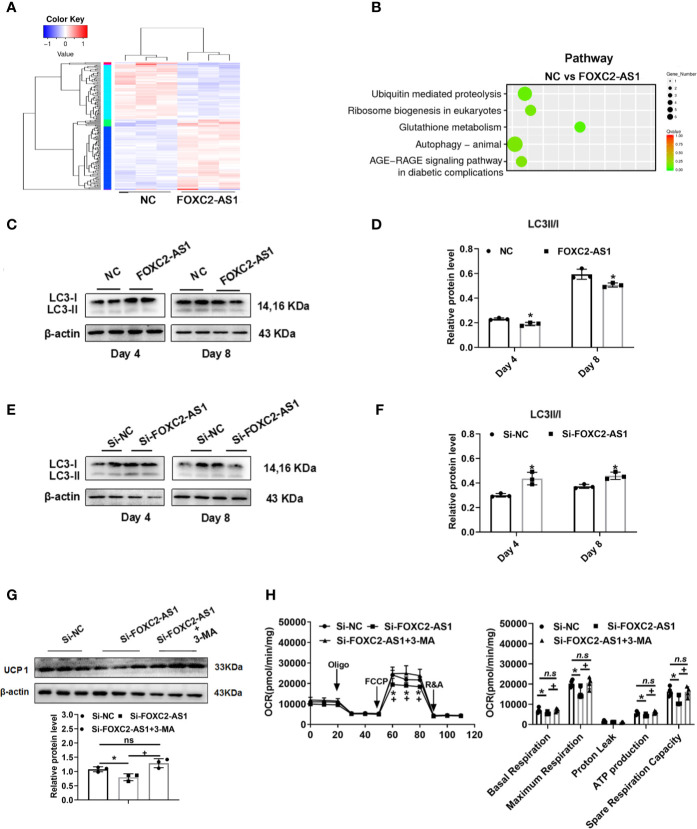
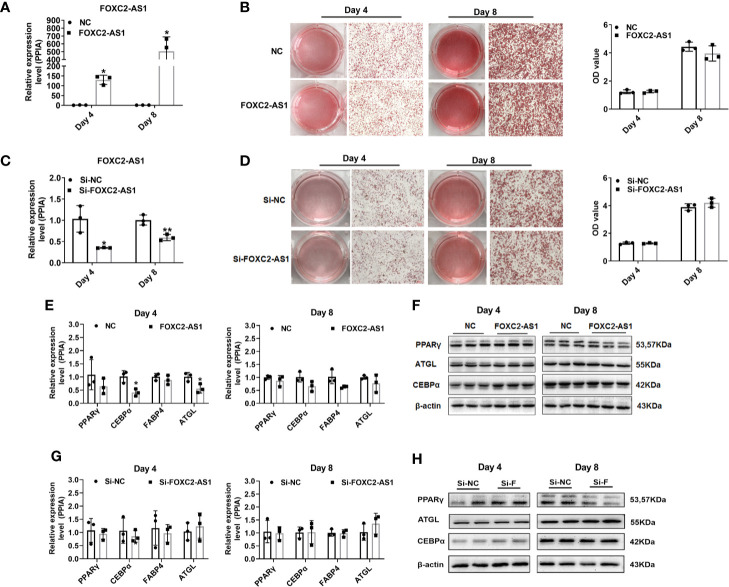
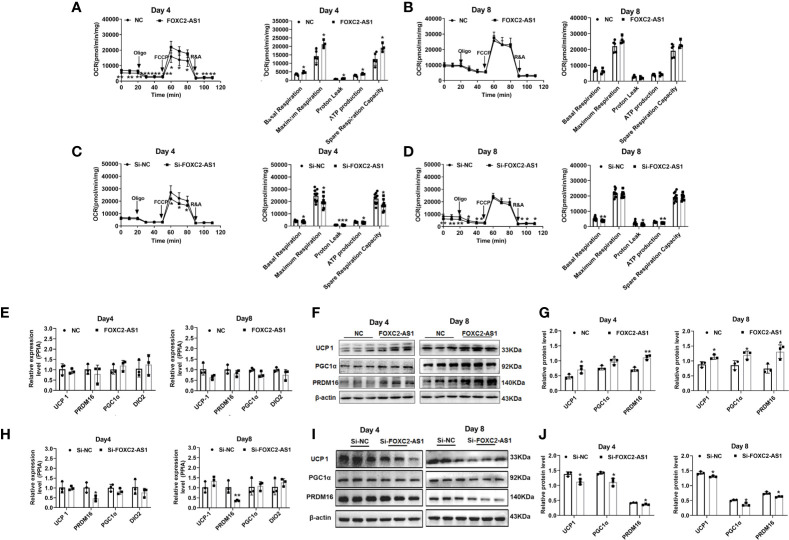
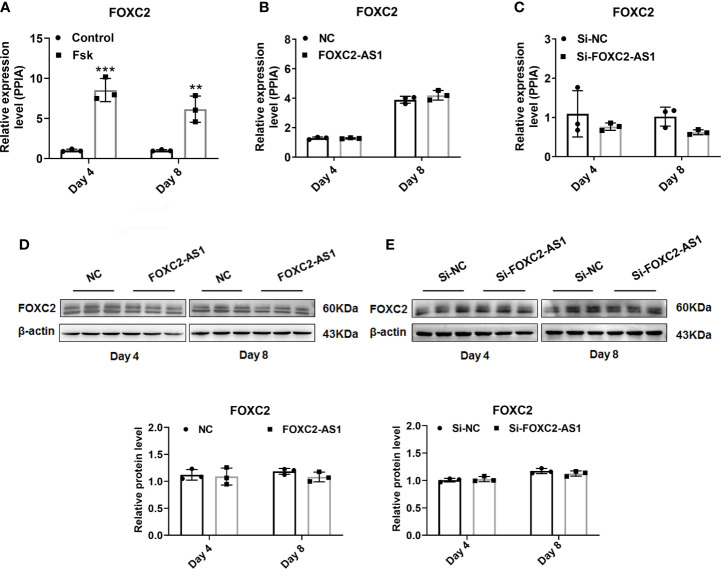
Obesity has become a worldwide epidemic, and obesity-related problems are becoming more severe in public health. Increasing brown adipose tissue (BAT) mass or/and activity in mice and humans has been demonstrated to help lose weight and improve whole-body metabolism. Studies on the conversion of white adipose tissue (WAT) to BAT under certain conditions have provided new possibilities for treating obesity and the related disorders. It has been established that long non-coding RNAs (lncRNAs) play an important role in the regulation of mouse adipocyte differentiation and thermogenic programs; however, the function and potential mechanism of lncRNA in the process of human white adipocyte browning remains unclear. In the present study, we identified a lncRNA called Forkhead Box C2 antisense RNA 1 (FOXC2-AS1), which was first identified in osteosarcoma, and it was highly expressed in human adipocytes but decreased during the white adipocyte differentiation program. FOXC2-AS1 expression was also induced by the thermogenic agent forskolin. Lentivirus-mediated overexpression of FOXC2-AS1 in human white adipocytes did not affect lipid drop accumulation, but significantly promoted the browning phenotype, as revealed by the increased respiratory capacity and the enhanced protein expression levels of brown adipocyte-specific markers. In contrast, inhibiting FOXC2-AS1 with small interfering RNA led to attenuated thermogenic capacity in human white adipocytes. RNA-sequencing analysis and western blot were used to identify a possible regulatory role of the autophagy signaling pathway in FOXC2-AS1 to mediate white-to-brown adipocyte conversion. The autophagy inhibitor 3-methyladenine restored the reduced UCP1 protein level and thermogenic capacity caused by inhibiting FOXC2-AS1. Overall, the present study characterized the potential role of FOXC2-AS1 and further identified a lncRNA-mediated mechanism for inducing browning of human white adipocytes and maintaining thermogenesis, further providing a potential strategy for treating obesity and related disorder.
肥胖已成为全球性流行病,肥胖相关问题在公共卫生领域日益严重。研究表明,增加小鼠和人类棕色脂肪组织(BAT)的质量和/或活性有助于减肥和改善全身代谢。在某些条件下将白色脂肪组织(WAT)转化为 BAT 的研究为治疗肥胖症和相关疾病提供了新的可能性。已经确定长链非编码 RNA(lncRNA)在调节小鼠脂肪细胞分化和产热程序中发挥重要作用;然而,lncRNA 在人类白色脂肪细胞棕色化过程中的功能和潜在机制尚不清楚。在本研究中,我们鉴定了一种称为叉头框 C2 反义 RNA 1(FOXC2-AS1)的 lncRNA,该 lncRNA最初在骨肉瘤中被鉴定出来,在人类脂肪细胞中高表达,但在白色脂肪细胞分化程序中减少。FOXC2-AS1 的表达也被热激剂 forskolin 诱导。慢病毒介导的 FOXC2-AS1 在人白色脂肪细胞中的过表达不影响脂滴积累,但显著促进了棕色表型,表现为呼吸能力增加和棕色脂肪细胞特异性标志物的蛋白表达水平增强。相反,用小干扰 RNA 抑制 FOXC2-AS1 导致人白色脂肪细胞的产热能力减弱。RNA 测序分析和 Western blot 用于鉴定自噬信号通路在 FOXC2-AS1 介导的白色脂肪细胞向棕色脂肪细胞转化中的可能调节作用。自噬抑制剂 3-甲基腺嘌呤恢复了抑制 FOXC2-AS1 引起的 UCP1 蛋白水平和产热能力降低。总之,本研究描述了 FOXC2-AS1 的潜在作用,并进一步鉴定了 lncRNA 介导的诱导人白色脂肪细胞棕色化和维持产热的机制,为治疗肥胖症和相关疾病提供了潜在策略。