An Joon Soo, Hong Seong-Heon, Somers Elisabeth, Lee Jayho, Kim Byung-Yong, Woo Donghee, Kim Suk Won, Hong Hee-Jeon, Jo Shin-Il, Shin Jongheon, Oh Ki-Bong, Oh Dong-Chan
Natural Products Research Institute, College of Pharmacy, Seoul National University, Seoul, South Korea.
Department of Biological and Medical Sciences, Faculty of Health and Life Sciences, Oxford Brookes University, Oxford, United Kingdom.
Front Microbiol. 2020 Oct 30;11:599911. doi: 10.3389/fmicb.2020.599911. eCollection 2020.
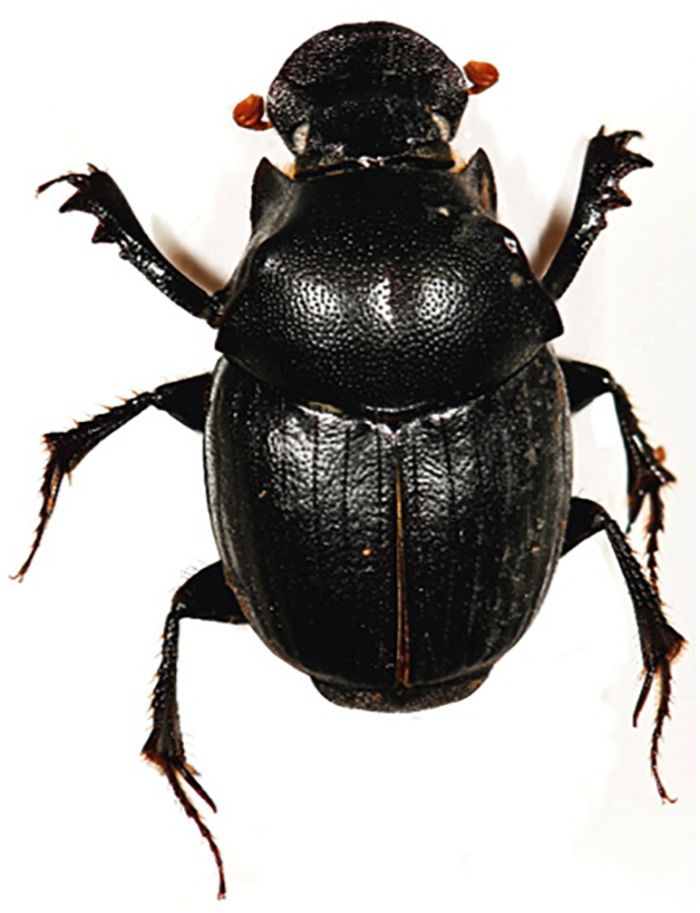
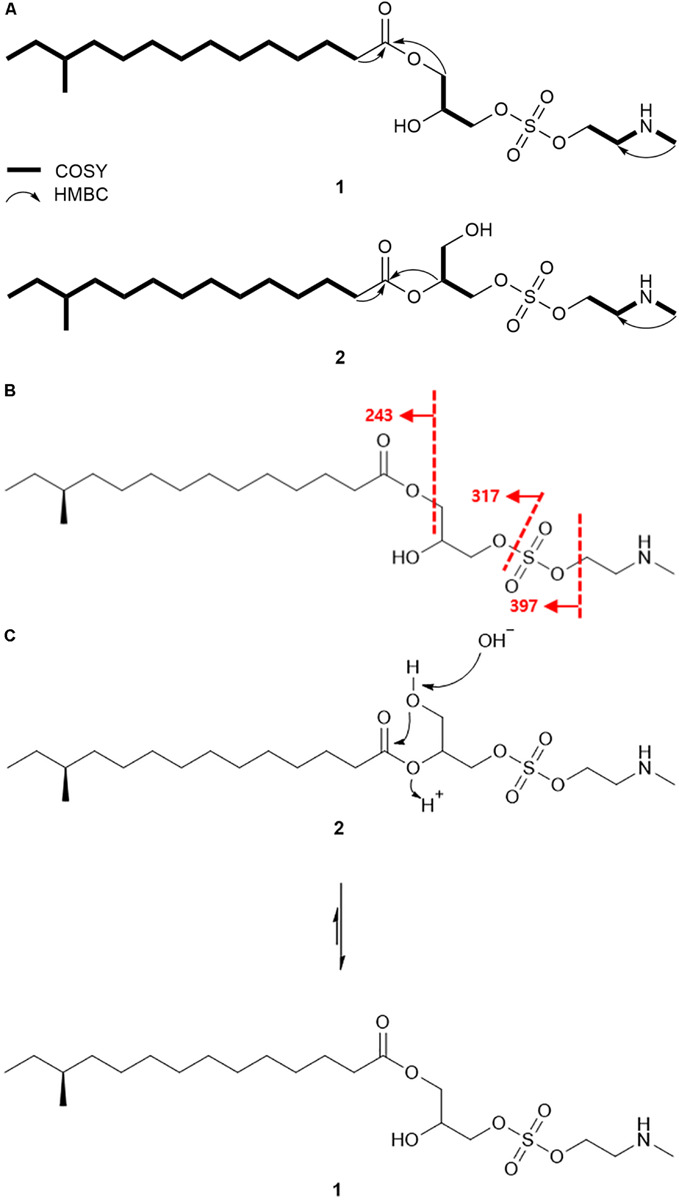
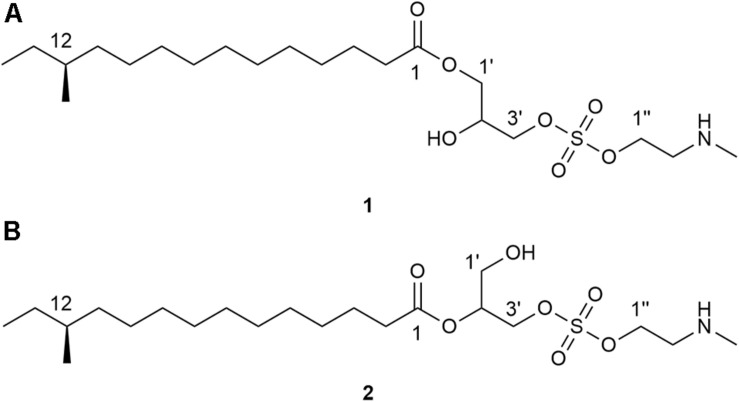
Symbiotic microorganisms associated with insects can produce a wide array of metabolic products, which provide an opportunity for the discovery of useful natural products. Selective isolation of bacterial strains associated with the dung beetle, , identified two strains, of which the antibiotic-producing sp. PTH23 inhibited the growth of sp. CCARM 9248, which is most closely related to the well-known entomopathogen, . A comprehensive chemical investigation based on antibiotic activity discovered two new antibiotics, named lenzimycins A and B (-), which inhibited growth of sp. CCARM 9248. The H and C NMR, MS, MS/MS, and IR analyses elucidated the structures of and , which comprised a novel combination of fatty acid (12-methyltetradecanoic acid), glycerol, sulfate, and -methyl ethanolamine. Furthermore, the acid hydrolysis of revealed the absolute configuration of 12-methyltetradecanoic acid as 12 by comparing its optical rotation value with authentic ()- and ()-12-methyltetradecanoic acid. In addition to inhibition of sp. CCARM 9248, lenzimycins A and B were found to inhibit the growth of some human pathogenic bacteria, including and certain strains of Furthermore, the present study elucidated that lenzimycins A and B activated a reporter system designed to detect the bacterial cell envelope stress, thereby indicating an activity against the integrity of the bacterial cell wall.
与昆虫相关的共生微生物能够产生种类繁多的代谢产物,这为发现有用的天然产物提供了契机。对与蜣螂相关的细菌菌株进行选择性分离,鉴定出了两株菌株,其中产抗生素的嗜麦芽窄食单胞菌PTH23抑制了与著名昆虫病原体蜡蚧轮枝菌关系最为密切的CCARM 9248菌株的生长。基于抗生素活性进行的全面化学研究发现了两种新抗生素,命名为伦齐霉素A和B(-),它们抑制了CCARM 9248菌株的生长。氢核磁共振、碳核磁共振、质谱、串联质谱和红外光谱分析阐明了伦齐霉素A和B的结构,它们由脂肪酸(12-甲基十四烷酸)、甘油、硫酸盐和β-甲基乙醇胺的新颖组合构成。此外,通过将伦齐霉素A的旋光值与纯的(+)-和(-)-12-甲基十四烷酸进行比较,其酸水解揭示了12-甲基十四烷酸的绝对构型为12。除了抑制CCARM 9248菌株外,还发现伦齐霉素A和B能抑制一些人类病原菌的生长,包括金黄色葡萄球菌和某些大肠杆菌菌株。此外,本研究阐明伦齐霉素A和B激活了一个旨在检测细菌细胞包膜应激的报告系统,从而表明其对细菌细胞壁完整性具有活性。