
选择有效抗生素以减少尿路致病性细胞内细菌。
Selection of Effective Antibiotics for Uropathogenic Intracellular Bacteria Reduction.
机构信息
Departamento de Microbiología, Instituto de Investigaciones Biológicas Clemente Estable, Montevideo, Uruguay.
Departamento de Bacteriología y Virología, Facultad de Medicina, Universidad de la República, Montevideo, Uruguay.
出版信息
Front Cell Infect Microbiol. 2020 Oct 21;10:542755. doi: 10.3389/fcimb.2020.542755. eCollection 2020.
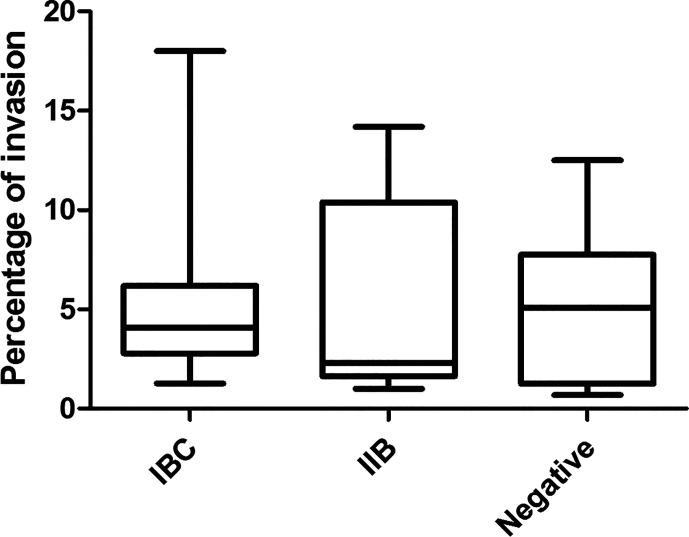
Urinary tract infections (UTI) are one of the most frequent bacterial infections in humans, being Uropathogenic (UPEC), the most common etiological agent. The ability of UPEC to invade urothelial cells and to form intracellular bacterial communities (IBC) has been described. Therefore, UPEC can persist in the urinary tract producing recurrent infections, resisting antibiotic activity. The objective of the present work was to analyze the ability of a collection of UPEC clinical isolates to invade bladder epithelial cells in vitro and the activity of different classes of antibiotics on intracellular bacteria. We selected 23 UPEC clinical isolates that had been previously detected intracellularly in desquamated bladder epithelial cells from patients' urine. A cellular invasion assay using the T24 bladder cell line was used. Intracellular bacteria was confirmed by laser confocal microscopy. All the strains were able to invade the cells with different percentages of intracellular bacterial survival (0.7 to 18%). However, no significant relationship was found between the percentage of in vitro infection and the presence of IBC in desquamated urine cells. In vitro, intracellular bacteria were confirmed in four representative strains by confocal laser microscopy. Ceftriaxone, ciprofloxacin and, azithromycin in vitro activity on intracellular bacteria were evaluated. Amikacin was used as a negative control. All the antibiotics tested, except amikacin, significantly decreased the number of intracellular bacteria. Ciprofloxacin was the antibiotic that induced the highest decrease percentage. Conclusions: All UPEC clinical isolates could invade bladder epithelial cells in vitro. Ceftriaxone, ciprofloxacin, and azithromycin can reduce the percentage of intracellular bacteria in vitro. In vivo studies are needed to confirm the utility of these antibiotics for intracellular bacteria reduction in UTI.
尿路感染(UTI)是人类最常见的细菌感染之一,其中尿路致病性大肠杆菌(UPEC)是最常见的病原体。已经描述了 UPEC 侵袭尿路上皮细胞并形成细胞内细菌群落(IBC)的能力。因此,UPEC 可以在泌尿道中持续存在,导致反复感染,抵抗抗生素的活性。本研究的目的是分析一组 UPEC 临床分离株在体外侵袭膀胱上皮细胞的能力以及不同类别的抗生素对细胞内细菌的活性。我们选择了 23 株先前在患者尿液中脱落的膀胱上皮细胞中被检测到细胞内的 UPEC 临床分离株。使用 T24 膀胱细胞系进行细胞侵袭测定。通过激光共聚焦显微镜确认细胞内细菌。所有菌株均能以不同的细胞内细菌存活率(0.7 至 18%)侵袭细胞。然而,在体外感染百分比与脱落尿液细胞中 IBC 的存在之间未发现显著关系。通过共聚焦激光显微镜,在四个代表性菌株中确认了细胞内细菌。评估了头孢曲松、环丙沙星和阿奇霉素对细胞内细菌的体外活性。阿米卡星被用作阴性对照。除阿米卡星外,所有测试的抗生素均显著降低了细胞内细菌的数量。环丙沙星是诱导细胞内细菌减少百分比最高的抗生素。结论:所有 UPEC 临床分离株均可在体外侵袭膀胱上皮细胞。头孢曲松、环丙沙星和阿奇霉素可降低细胞内细菌的百分比。需要进行体内研究以确认这些抗生素在减少 UTI 细胞内细菌方面的效用。




 Zotero 插件