Tao Yinping, Hinduja Srichand, Heinemann Robert, Gomes Anselmo, Bártolo Paulo Jorge
Department of Mechanical, Aerospace and Civil Engineering, The University of Manchester, Manchester M13 9PL, UK.
SET Europe Ltd., 15/17 Seddon Place, Stanley Industrial Estate, Skelmersdale, Lancashire WN8 8EB, UK.
Polymers (Basel). 2020 Nov 12;12(11):2664. doi: 10.3390/polym12112664.
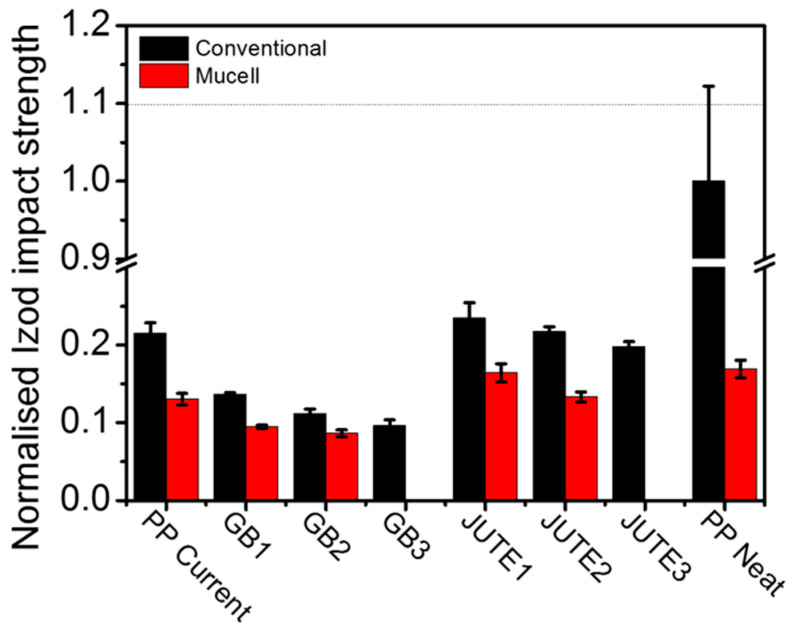
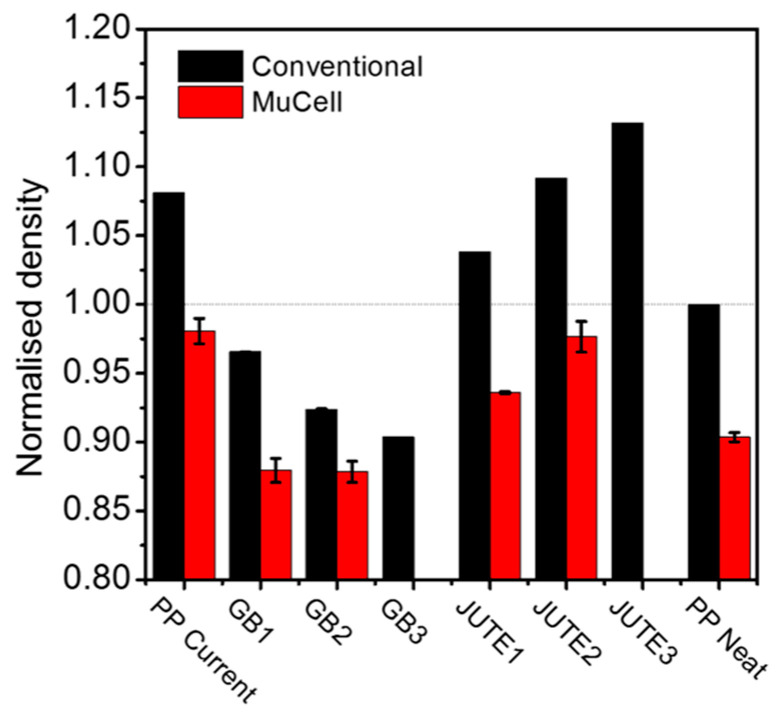
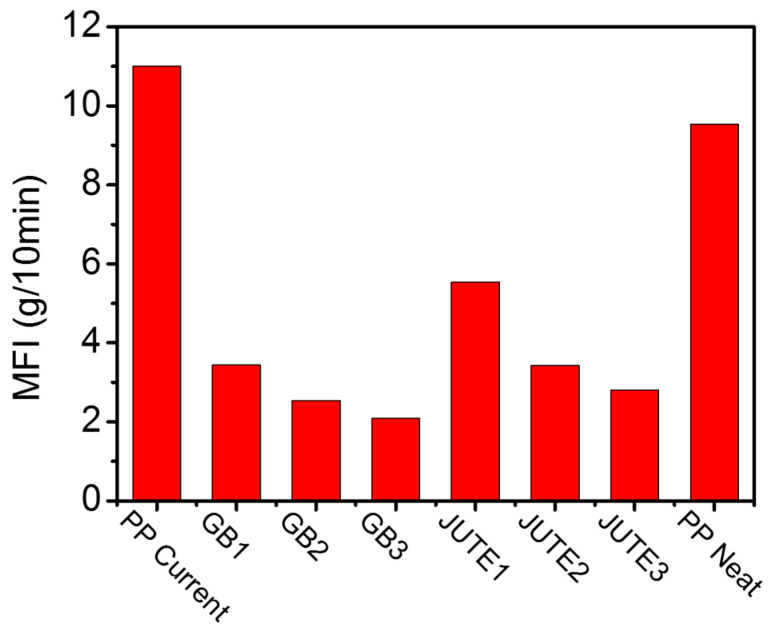
Lightweighting is one of the key solutions to reduce the carbon footprint of vehicles. Nowadays, it is still challenging to achieve this target because there is a conflict between the cost and final material performance, as well as the fact that many lightweight solutions are restricted to laboratory or small-scale production. In this work, a commercially feasible strategy was adopted to fabricate materials for lightweight applications. Hollow glass bubbles, jute fibres, and rubber powder were used as fillers with polypropylene as the base polymer. Various samples were fabricated using conventional and MuCell injection moulding. Their performance was then characterised by their density and morphological, mechanical, and rheological properties. A comparison among hybrid fillers/polypropylene compounds with and without MuCell technology was investigated. The filler hybridisation resulted in not only a density reduction of up to approximately 10%, but also improved tensile/flexural modulus and strength. The use of MuCell led to a further reduction in density of roughly 10%. Meanwhile, although some compounds fabricated by MuCell exhibited some deterioration in their tensile yield strength, tensile modulus, and impact strength, they maintained acceptable mechanical properties for automotive applications.
轻量化是减少车辆碳足迹的关键解决方案之一。如今,实现这一目标仍具有挑战性,因为成本与最终材料性能之间存在冲突,而且许多轻量化解决方案仅限于实验室或小规模生产。在这项工作中,采用了一种商业上可行的策略来制造用于轻量化应用的材料。空心玻璃微珠、黄麻纤维和橡胶粉被用作填料,聚丙烯作为基础聚合物。使用传统注塑成型和微发泡注塑成型制造了各种样品。然后通过密度、形态、机械和流变性能对它们的性能进行表征。研究了有无微发泡技术的混合填料/聚丙烯复合材料之间的比较。填料杂交不仅使密度降低了约10%,还提高了拉伸/弯曲模量和强度。微发泡技术的使用使密度进一步降低了约10%。同时,尽管一些通过微发泡技术制造的复合材料在拉伸屈服强度、拉伸模量和冲击强度方面出现了一些劣化,但它们仍保持了适用于汽车应用的机械性能。