Department of Planning, Aalborg University, 9000 Aalborg, Denmark.
Int J Environ Res Public Health. 2020 Nov 12;17(22):8383. doi: 10.3390/ijerph17228383.
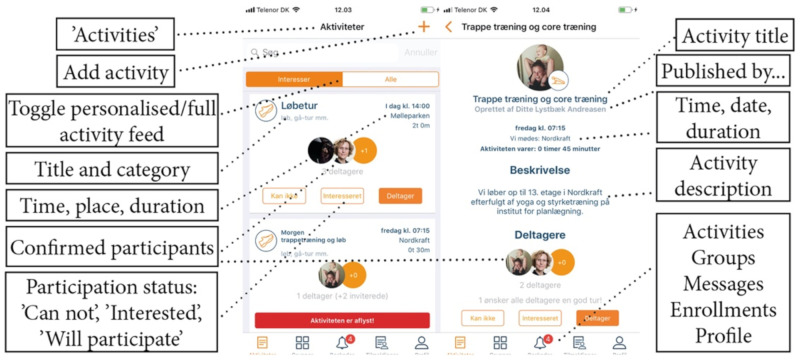
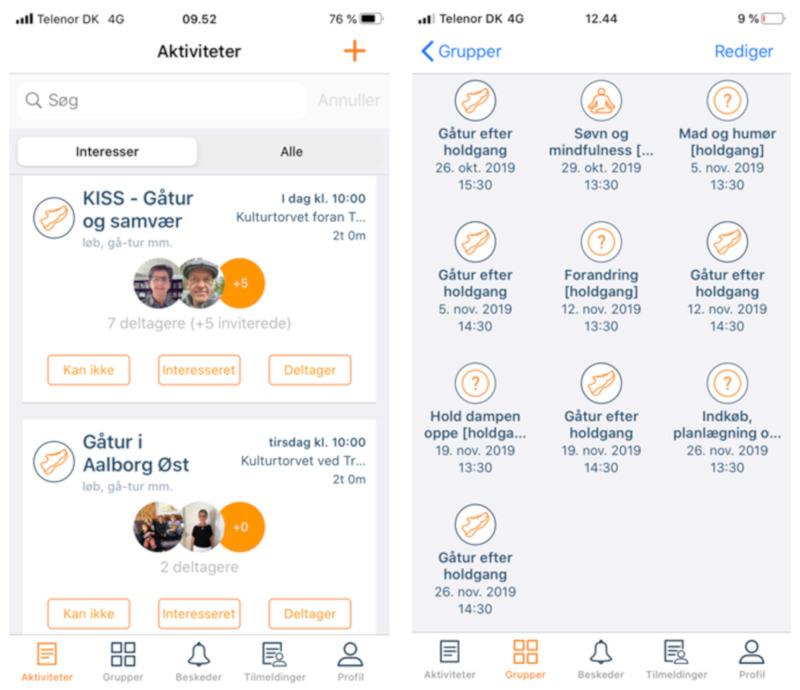
Mobile applications targeting people engaged in physical activity have increased. However, while research has identified social support as a key factor for people's engagement in physical activity, most mobile health (mHealth) applications are designed for individual use. In this paper, we report on a research study exploring opportunities for designing mHealth to facilitate social support around physical activity. A mHealth application was designed, and pilot tested for eight weeks with healthcare professionals (n = 3) and two groups of citizens (n = 20) who were motivated but challenged physically due to various health conditions. Data was collected via online monitoring of the use of the mHealth application during the pilot test and via qualitative interviews with the participants before and after. The results support the idea that designing for social health support is important but so is identifying key challenges related to (i) the facilitation of technology-mediated social health support, especially to a target group that is living with health challenges, and (ii) finding a balance between social and health agendas that bring social support to the foreground for the participants.
针对参与体力活动的人群的移动应用程序越来越多。然而,尽管研究已经确定社会支持是人们参与体力活动的关键因素,但大多数移动健康 (mHealth) 应用程序都是为个人使用而设计的。在本文中,我们报告了一项研究,探讨了设计 mHealth 以促进体力活动周围的社会支持的机会。设计了一个 mHealth 应用程序,并在试点测试中对医疗保健专业人员 (n=3) 和两组有动力但因各种健康状况而身体受限的公民 (n=20) 进行了为期八周的试点测试。通过在线监测试点测试期间使用 mHealth 应用程序的数据和通过参与者在试点测试前后的定性访谈收集数据。结果支持这样一种观点,即设计社会健康支持很重要,但确定与 (i) 促进技术介导的社会健康支持相关的关键挑战也很重要,特别是对于那些患有健康挑战的目标群体,以及 (ii) 在将社会支持置于首位的社会和健康议程之间找到平衡,这对参与者很重要。