Bartlett Yvonne Kiera, Webb Thomas L, Hawley Mark S
Manchester Centre for Health Psychology, Manchester Academic Health Science Centre, The School of Health Sciences, University of Manchester, Manchester, United Kingdom.
Department of Psychology, University of Sheffield, Sheffield, United Kingdom.
J Med Internet Res. 2017 Apr 20;19(4):e124. doi: 10.2196/jmir.6616.
People with chronic obstructive pulmonary disease (PwCOPD) often experience breathlessness and fatigue, making physical activity challenging. Although many persuasive technologies (such as mobile phone apps) have been designed to support physical activity among members of the general population, current technologies aimed at PwCOPD are underdeveloped and only use a limited range of persuasive technology design principles.
The aim of this study was to explore how acceptable different persuasive technology design principles were considered to be in supporting and encouraging physical activity among PwCOPD.
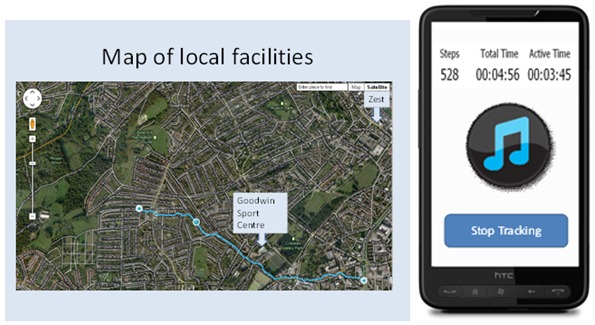
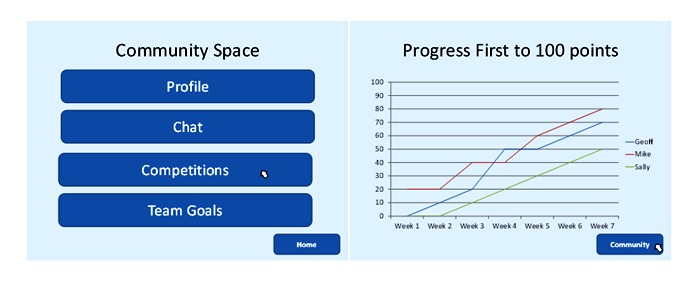
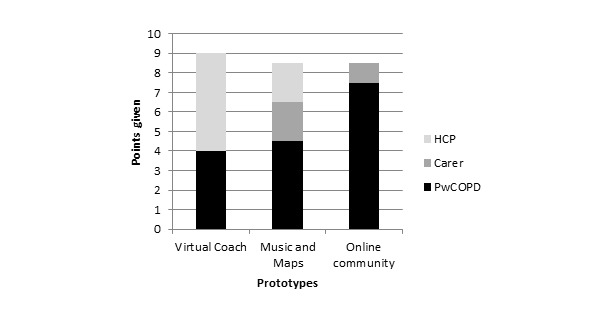
Three prototypes for mobile apps using different persuasive technology design principles as defined by the persuasive systems design (PSD) model-namely, dialogue support, primary task support, and social support-were developed. Opinions of these prototypes were explored through 28 interviews with PwCOPD, carers, and the health care professionals (HCPs) involved in their care and questionnaires completed by 87 PwCOPD. Participants also ranked how likely individual techniques (eg, competition) would be to convince them to use a technology designed to support physical activity. Data were analyzed using framework analysis, Friedman tests, and Wilcoxon signed rank tests and a convergent mixed methods design was used to integrate findings.
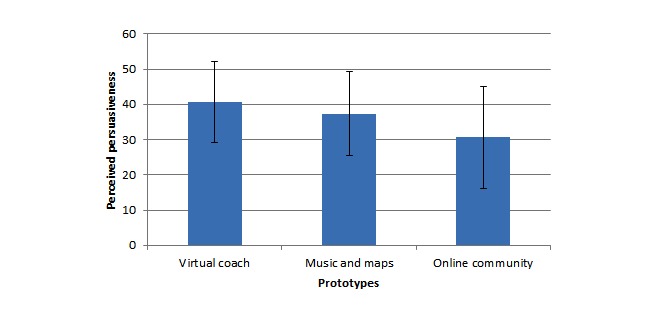
The prototypes for mobile apps were received positively by participants. The prototype that used a dialogue support approach was identified as the most likely to be used or recommended by those interviewed, and was perceived as more persuasive than both of the other prototypes (Z=-3.06, P=.002; Z=-5.50, P<.001) by those who completed the questionnaire. PwCOPD identified dialogue support and primary task support techniques as more likely to convince them to use a technology than social support techniques (Z=-5.00, P<.001; Z=-4.92, P<.001, respectively). Opinions of social support techniques such as competition and collaboration were divided.
Dialogue support and primary task support approaches are considered to be both acceptable and likely to be persuasive by PwCOPD, carers, and HCPs. In the future, these approaches should be considered when designing apps to encourage physical activity by PwCOPD.
慢性阻塞性肺疾病患者(PwCOPD)经常会感到呼吸急促和疲劳,这使得体育活动具有挑战性。尽管已经设计了许多有说服力的技术(如手机应用程序)来支持普通人群的体育活动,但目前针对PwCOPD的技术尚不完善,且仅使用了有限范围的有说服力的技术设计原则。
本研究的目的是探讨不同的有说服力的技术设计原则在支持和鼓励PwCOPD患者进行体育活动方面被认为的可接受程度。
开发了三款使用说服系统设计(PSD)模型定义的不同有说服力的技术设计原则的移动应用程序原型,即对话支持、主要任务支持和社会支持。通过对28名PwCOPD患者、护理人员以及参与其护理的医疗保健专业人员(HCP)进行访谈,并由87名PwCOPD患者完成问卷,来探究对这些原型的看法。参与者还对个别技术(如竞争)说服他们使用旨在支持体育活动的技术的可能性进行了排名。使用框架分析、弗里德曼检验和威尔科克森符号秩检验对数据进行分析,并采用收敛性混合方法设计来整合研究结果。
移动应用程序原型受到了参与者的积极评价。采用对话支持方法的原型被认为是最有可能被受访者使用或推荐的,并且在完成问卷的受访者中,它被认为比其他两个原型更具说服力(Z = -3.06,P = 0.002;Z = -5.50,P < 0.001)。PwCOPD患者认为对话支持和主要任务支持技术比社会支持技术更有可能说服他们使用某项技术(分别为Z = -5.00,P < 0.001;Z = -4.92,P < 0.001)。对于竞争和协作等社会支持技术的看法存在分歧。
对话支持和主要任务支持方法被PwCOPD患者、护理人员和HCP认为是既可以接受又可能具有说服力的。未来,在设计鼓励PwCOPD患者进行体育活动的应用程序时应考虑这些方法。