Department of Oncology, Cambridge University Hospitals NHS Foundation Trust, Cambridge, UK.
Department of Medicine, Royal Marsden Hospital NHS Trust, London, UK.
Gut. 2021 Sep;70(9):1632-1641. doi: 10.1136/gutjnl-2020-322658. Epub 2020 Nov 16.
Epidermal growth factor receptor (EGFR) inhibition may be effective in biomarker-selected populations of advanced gastro-oesophageal adenocarcinoma (aGEA) patients. Here, we tested the association between outcome and copy number (CN) in pretreatment tissue and plasma cell-free DNA (cfDNA) of patients enrolled in a randomised first-line phase III clinical trial of chemotherapy or chemotherapy plus the anti-EGFR monoclonal antibody panitumumab in aGEA (NCT00824785).
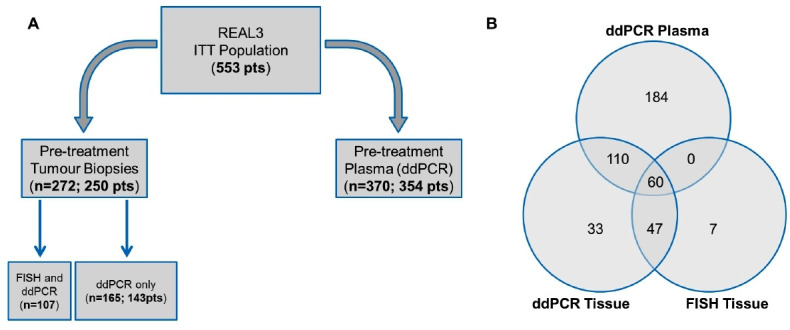
CN by either fluorescence in situ hybridisation (n=114) or digital-droplet PCR in tissues (n=250) and plasma cfDNAs (n=354) was available for 474 (86%) patients in the intention-to-treat (ITT) population. Tissue and plasma low-pass whole-genome sequencing was used to screen for coamplifications in receptor tyrosine kinases. Interaction between chemotherapy and EGFR inhibitors was modelled in patient-derived organoids (PDOs) from aGEA patients.
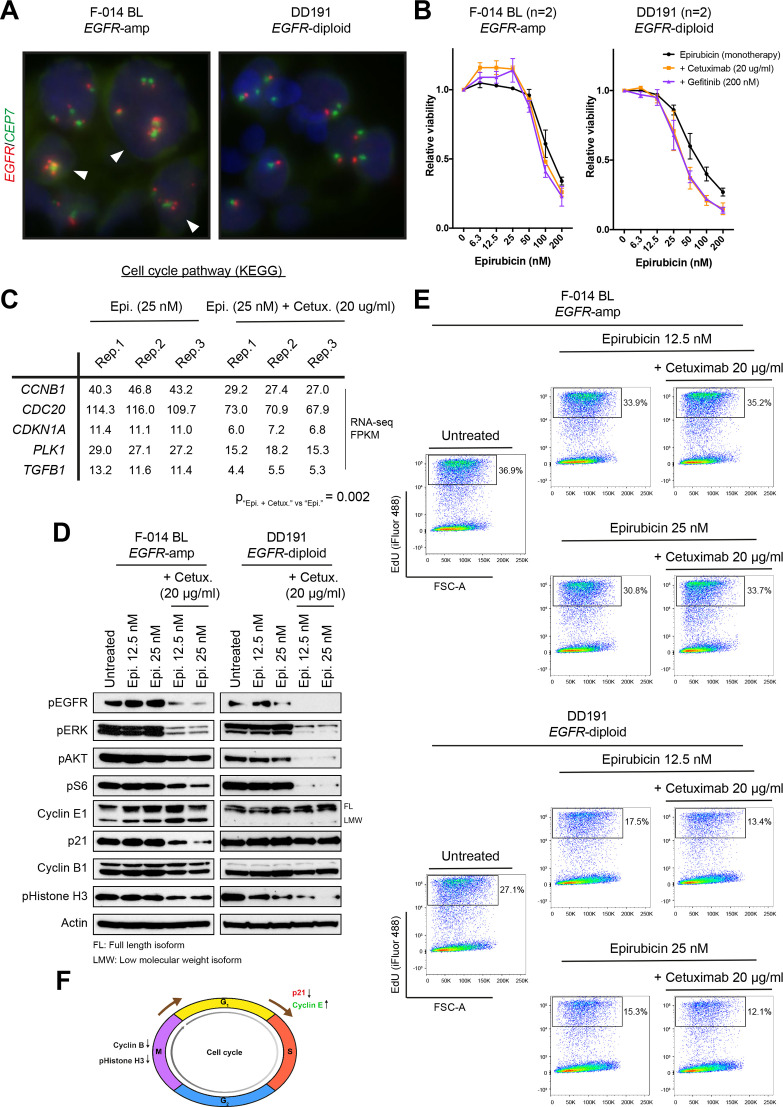
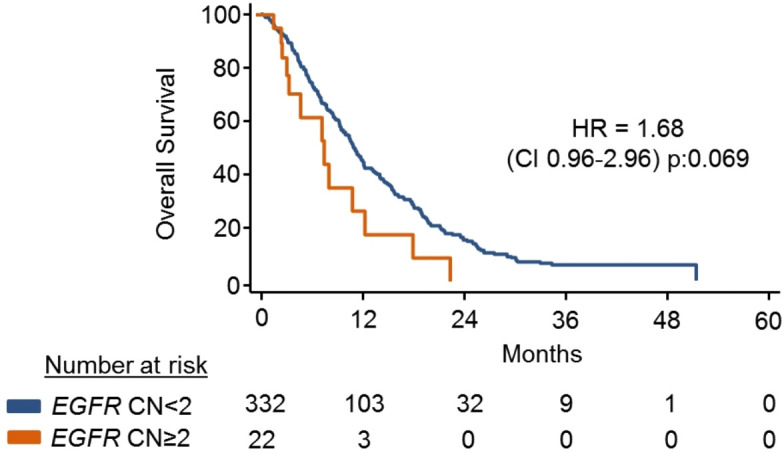
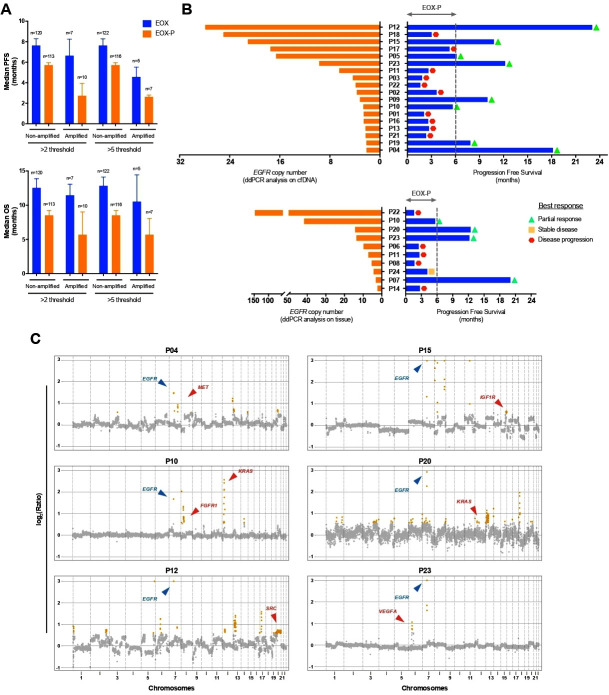
amplification in cfDNA correlated with poor survival in the ITT population and similar trends were observed when the analysis was conducted in tissue and plasma by treatment arm. EGFR inhibition in combination with chemotherapy did not correlate with improved survival, even in patients with significant CN gains. Addition of anti-EGFR inhibitors to the chemotherapy agent epirubicin in PDOs, resulted in a paradoxical increase in viability and accelerated progression through the cell cycle, associated with p21 and cyclin B1 downregulation and cyclin E1 upregulation, selectively in organoids from -amplified aGEA.
CN can be accurately measured in tissue and liquid biopsies and may be used for the selection of aGEA patients. EGFR inhibitors may antagonise the antitumour effect of anthracyclines with important implications for the design of future combinatorial trials.
表皮生长因子受体 (EGFR) 抑制可能对生物标志物选择的晚期胃食管腺癌 (aGEA) 患者有效。在这里,我们测试了接受化疗或化疗联合抗 EGFR 单克隆抗体 panitumumab 一线治疗的随机 III 期临床试验中 aGEA 患者的预处理组织和血浆无细胞 DNA (cfDNA) 中 EGFR 拷贝数 (CN) 与结果之间的关联(NCT00824785)。
组织 (n=250) 和血浆 cfDNA (n=354) 的荧光原位杂交 (n=114) 或数字液滴 PCR 的 CN 可用于意向治疗 (ITT) 人群中的 474 (86%) 名患者。受体酪氨酸激酶的共扩增使用组织和血浆低通全基因组测序进行筛选。从 aGEA 患者衍生的类器官 (PDO) 中对化疗和 EGFR 抑制剂之间的相互作用进行建模。
cfDNA 中的扩增与 ITT 人群的不良生存相关,当按治疗臂在组织和血浆中进行分析时,也观察到类似的趋势。EGFR 抑制剂联合化疗与改善生存无关,即使在具有显著 CN 增益的患者中也是如此。在 PDOs 中,将抗 EGFR 抑制剂添加到化疗药物表阿霉素中,导致活力的反常增加,并加速细胞周期的进展,与 p21 和细胞周期蛋白 B1 的下调以及细胞周期蛋白 E1 的上调相关,仅在来自 -扩增的 aGEA 的类器官中观察到这种情况。
CN 可以在组织和液体活检中准确测量,并可用于选择 aGEA 患者。EGFR 抑制剂可能拮抗蒽环类药物的抗肿瘤作用,对未来联合试验的设计具有重要意义。