School of Economics and Finance, Queensland University of Technology, Brisbane, Australia.
Centre for Behavioural Economics, Society and Technology (BEST), Brisbane, Australia.
Sci Rep. 2020 Nov 16;10(1):19931. doi: 10.1038/s41598-020-76763-2.
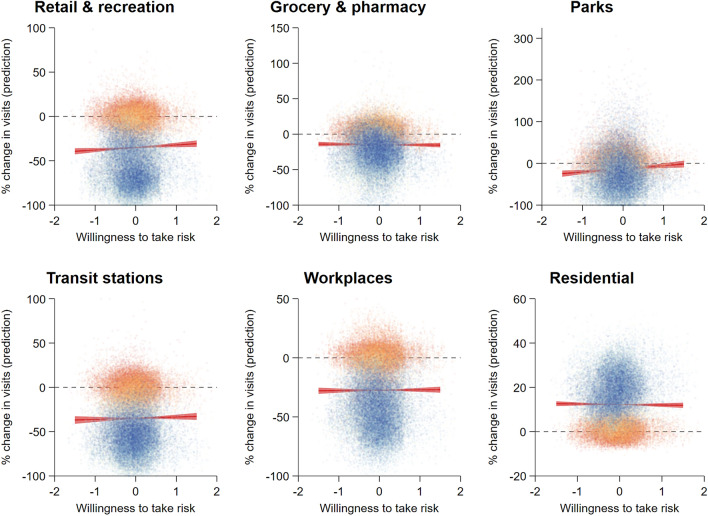
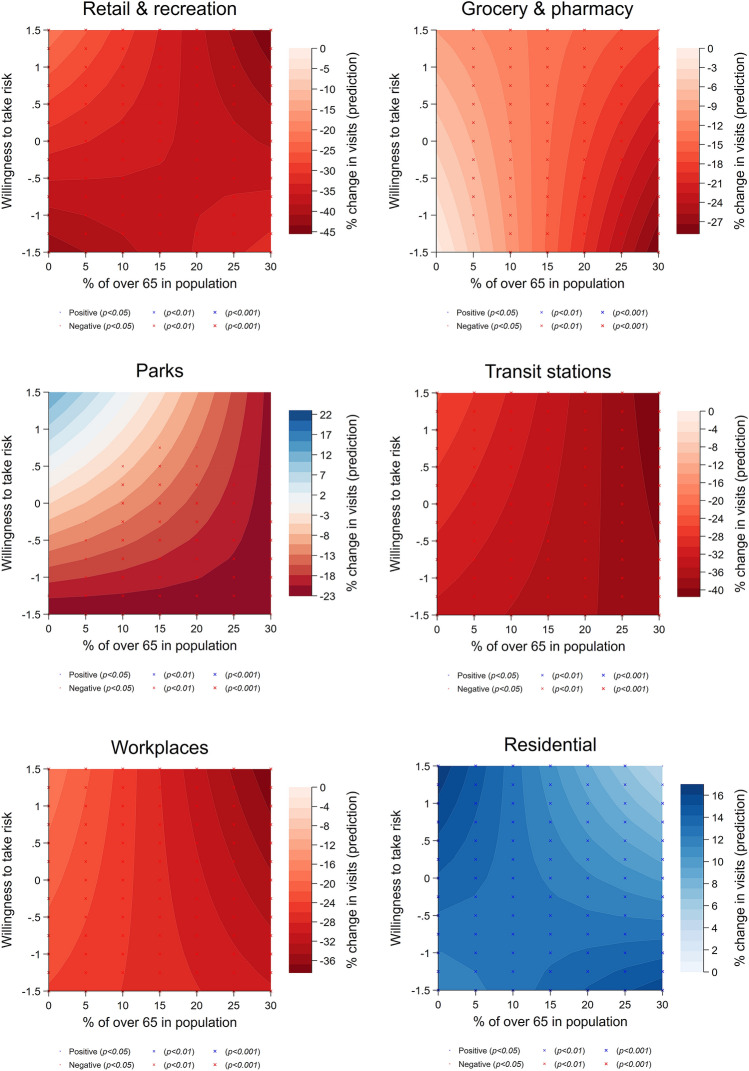
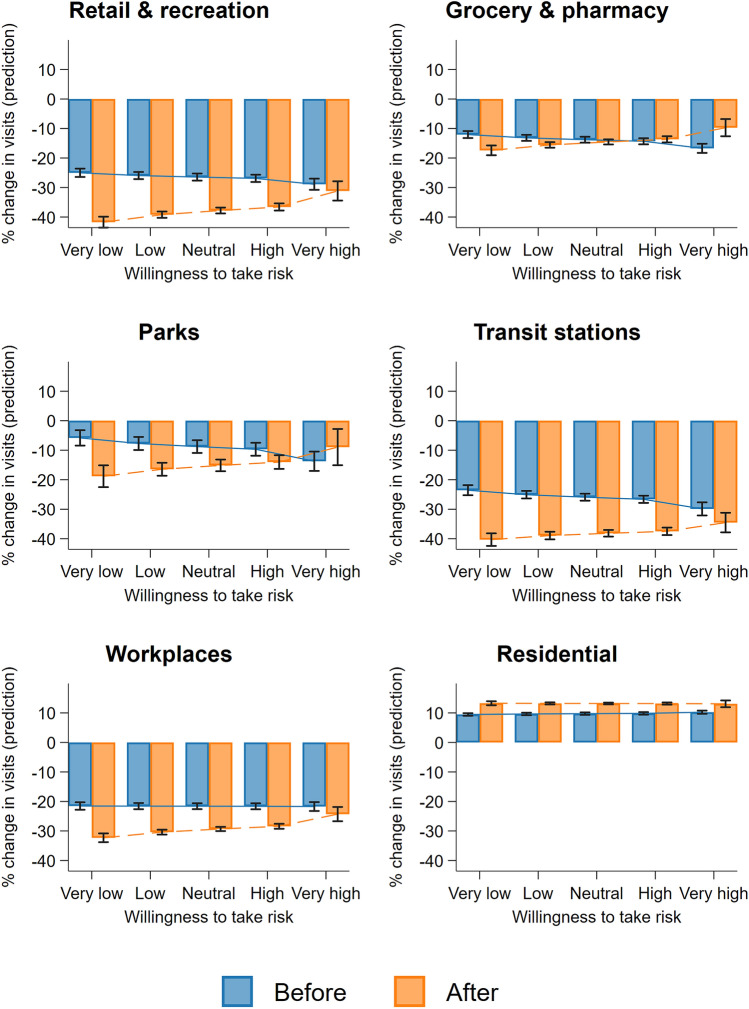
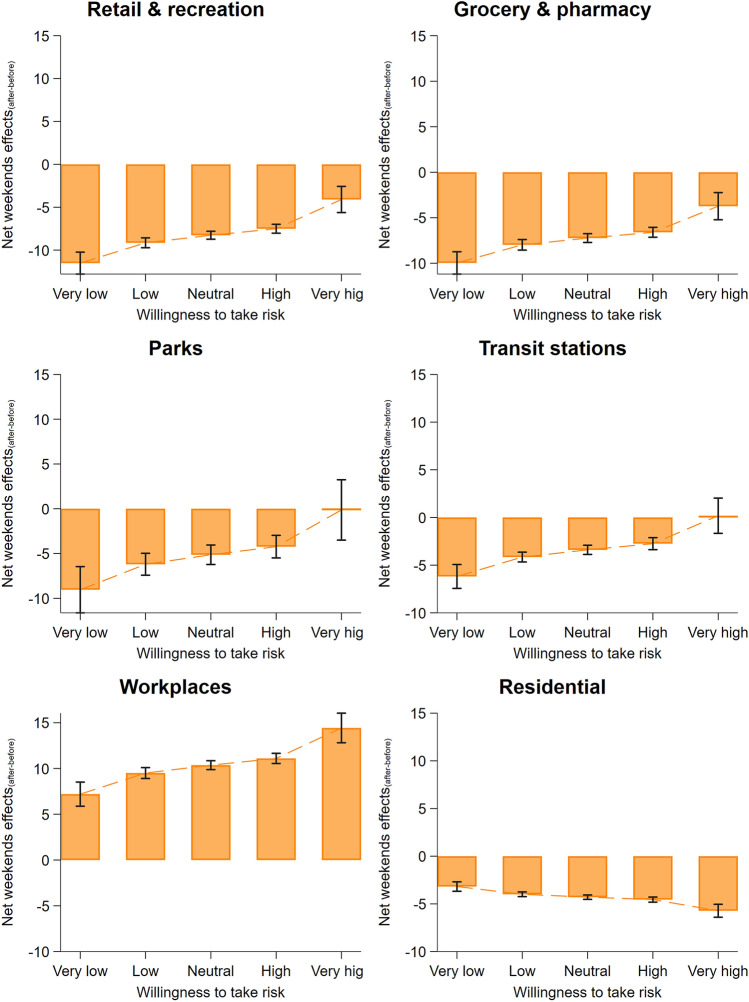
Behavioural responses to pandemics are less shaped by actual mortality or hospitalisation risks than they are by risk attitudes. We explore human mobility patterns as a measure of behavioural responses during the COVID-19 pandemic. Our results indicate that risk-taking attitudes are a critical factor in predicting reductions in human mobility and social confinement around the globe. We find that the sharp decline in mobility after the WHO (World Health Organization) declared COVID-19 to be a pandemic can be attributed to risk attitudes. Our results suggest that regions with risk-averse attitudes are more likely to adjust their behavioural activity in response to the declaration of a pandemic even before official government lockdowns. Further understanding of the basis of responses to epidemics, e.g., precautionary behaviour, will help improve the containment of the spread of the virus.
人类对大流行病的行为反应与其说是受实际死亡率或住院风险的影响,不如说是受风险态度的影响。我们探讨了 COVID-19 大流行期间作为行为反应衡量标准的人类流动模式。我们的研究结果表明,冒险态度是预测全球范围内人类流动性和社会隔离减少的关键因素。我们发现,在世界卫生组织(WHO)宣布 COVID-19 为大流行病后,流动性的急剧下降可归因于风险态度。我们的研究结果表明,具有避险态度的地区更有可能在政府正式封锁之前,根据大流行病的宣布调整其行为活动。进一步了解对流行病的反应基础,例如预防行为,将有助于控制病毒的传播。