Sarkar Bishajit, Ullah Md Asad, Araf Yusha, Rahman Mohammad Shahedur
COVID Research Cell (CRC), Wazed Miah Science Research Centre (WMSRC), Jahangirnagar University, Savar, Dhaka, Bangladesh.
Department of Biotechnology and Genetic Engineering, Faculty of Biological Sciences, Jahangirnagar University, Savar, Dhaka, Bangladesh.
Inform Med Unlocked. 2020;21:100478. doi: 10.1016/j.imu.2020.100478. Epub 2020 Nov 11.
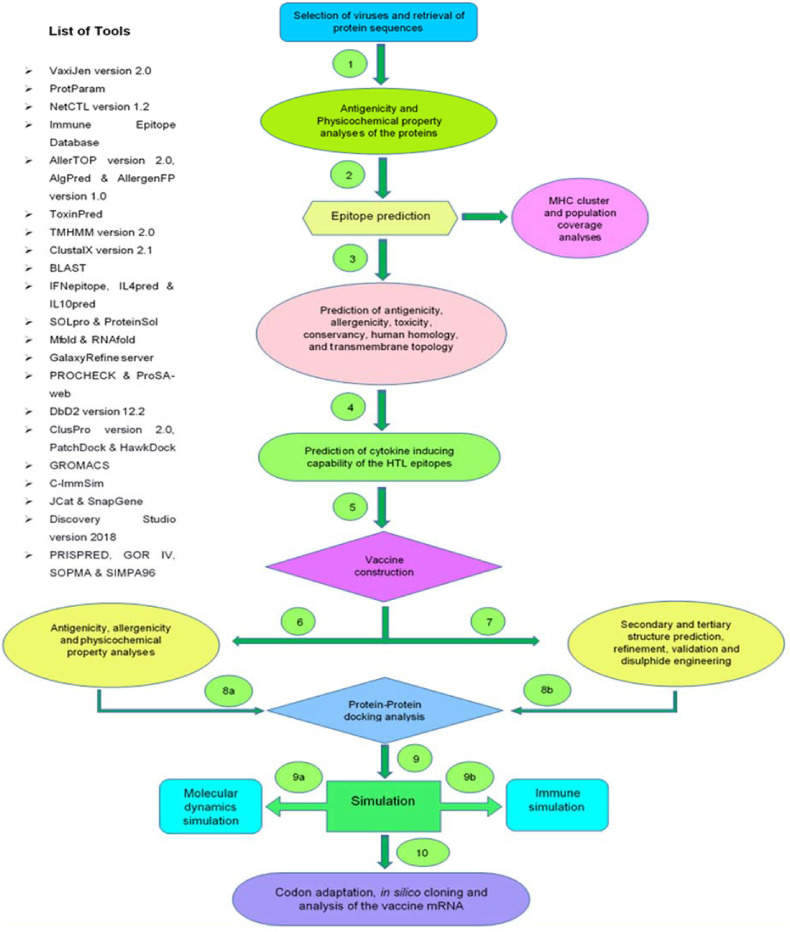
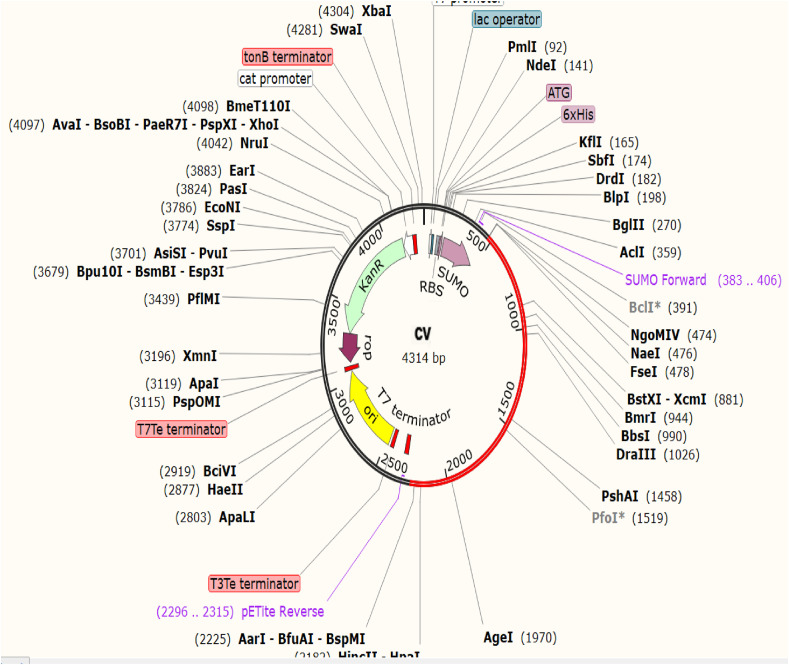
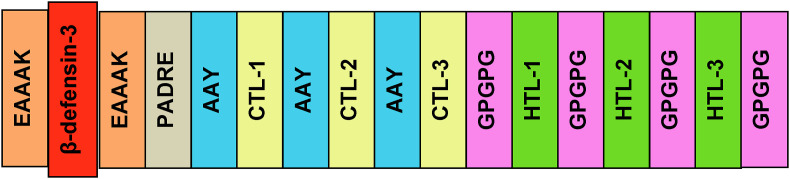
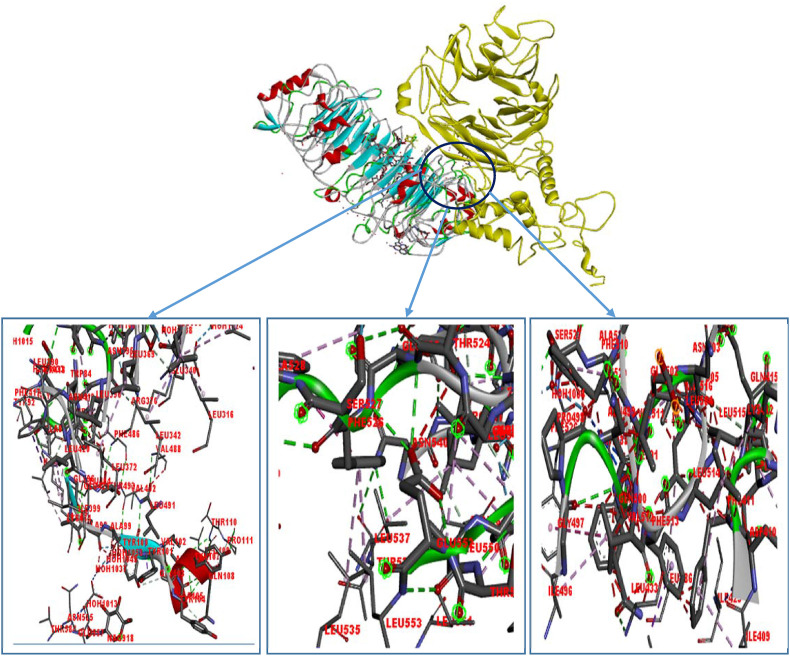
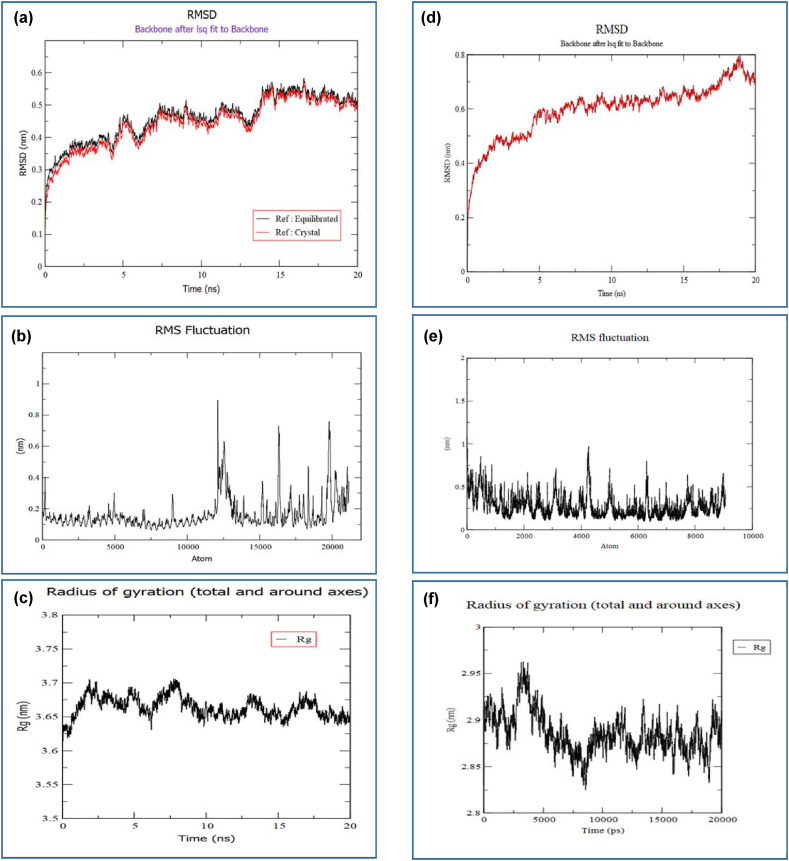
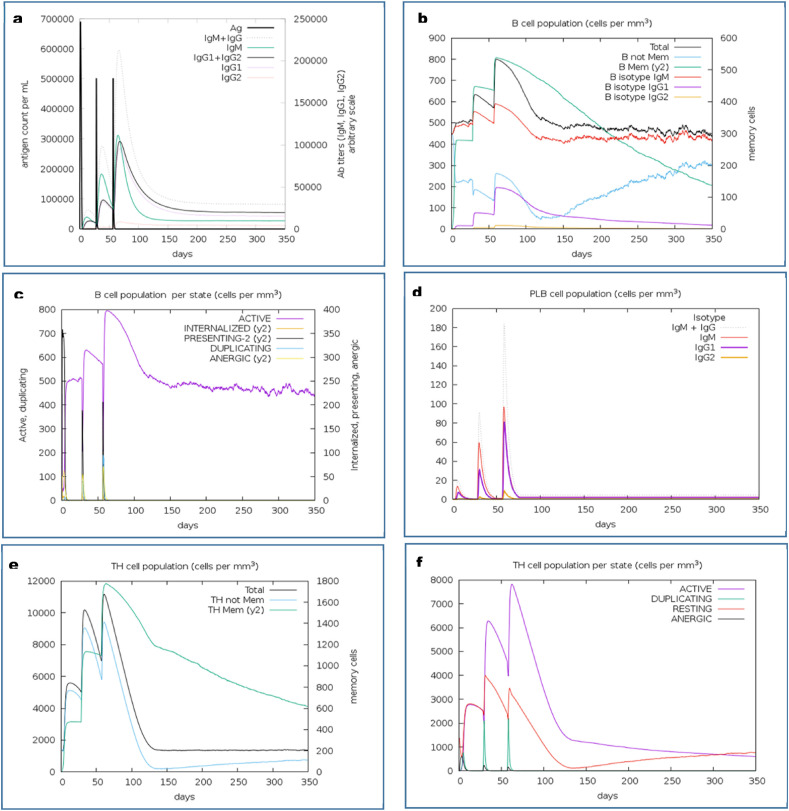
As the number of infections and deaths caused by the recent COVID-19 pandemic is increasing dramatically day-by-day, scientists are rushing towards developing possible countermeasures to fight the deadly virus, SARS-CoV-2. Although many efforts have already been put forward for developing potential vaccines; however, most of them are proved to possess negative consequences. Therefore, in this study, immunoinformatics methods were exploited to design a novel epitope-based subunit vaccine against the SARS-CoV-2, targeting four essential proteins of the virus i.e., spike glycoprotein, nucleocapsid phosphoprotein, membrane glycoprotein, and envelope protein. The highly antigenic, non-allergenic, non-toxic, non-human homolog, and 100% conserved (across other isolates from different regions of the world) epitopes were used for constructing the vaccine. In total, fourteen CTL epitopes and eighteen HTL epitopes were used to construct the vaccine. Thereafter, several validations i.e., the molecular docking, molecular dynamics simulation (including the RMSF and RMSD studies), and immune simulation studies were also performed which predicted that the designed vaccine should be quite safe, effective, and stable within the biological environment. Finally, cloning and codon adaptation studies were also conducted to design an effective mass production strategy of the vaccine. However, more and studies are required on the predicted vaccine to finally validate its safety and efficacy.
随着近期新冠疫情导致的感染和死亡人数日益急剧增加,科学家们正争分夺秒地研发对抗致命病毒SARS-CoV-2的可能对策。尽管已经为开发潜在疫苗付出了诸多努力;然而,事实证明其中大多数都有负面后果。因此,在本研究中,利用免疫信息学方法设计了一种针对SARS-CoV-2的新型基于表位的亚单位疫苗,靶向该病毒的四种重要蛋白,即刺突糖蛋白、核衣壳磷蛋白、膜糖蛋白和包膜蛋白。使用高度抗原性、无致敏性、无毒、无人类同源性且100%保守(在来自世界不同地区的其他分离株中)的表位来构建疫苗。总共使用了14个细胞毒性T淋巴细胞(CTL)表位和18个辅助性T淋巴细胞(HTL)表位来构建疫苗。此后,还进行了多项验证,即分子对接、分子动力学模拟(包括均方根波动(RMSF)和均方根偏差(RMSD)研究)以及免疫模拟研究,这些研究预测所设计的疫苗在生物环境中应该相当安全、有效且稳定。最后,还进行了克隆和密码子优化研究,以设计该疫苗的有效大规模生产策略。然而,对于所预测的疫苗,还需要更多研究来最终验证其安全性和有效性。