London Centre for Neglected Tropical Disease Research (LCNTDR), Department of Infectious Disease Epidemiology, Imperial College London, London, UK.
Aménagement et Lutte (RISEAL NIGER), Réseau International Schistosomiases Environnement, Avenue de l'indépendance, BP. 13724, Niamey, Niger.
Parasit Vectors. 2020 Nov 18;13(1):557. doi: 10.1186/s13071-020-04411-9.
The Schistosomiasis Consortium for Operational Research and Evaluation (SCORE) coordinated a five-year study implemented in several countries, including Niger, to provide an evidence-base for programmatic decisions regarding cost-effective approaches to preventive chemotherapy for schistosomiasis control.
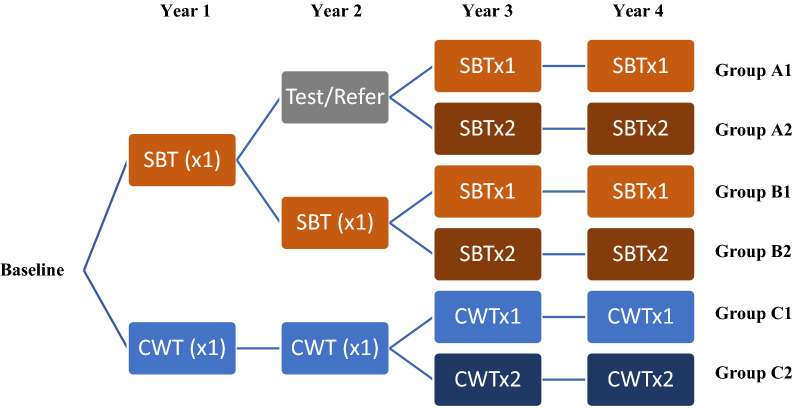
This was a cluster-randomised trial investigating six possible combinations of annual or biannual community-wide treatment (CWT), school-based treatment (SBT), and holidays from mass treatment over four years. The most intense arm involved two years of annual CWT followed by 2 years of biannual CWT, while the least intensive arm involved one year of annual SBT followed by a year without treatment and two more years of annual SBT. The primary outcome of interest was prevalence and intensity of Schistosoma haematobium among 100 children aged 9-12 years sampled each year. In addition, 100 children aged 5-8 years in their first year of school and 50 adults (aged 20-55 years) were tested in the first and final fifth year of the study.
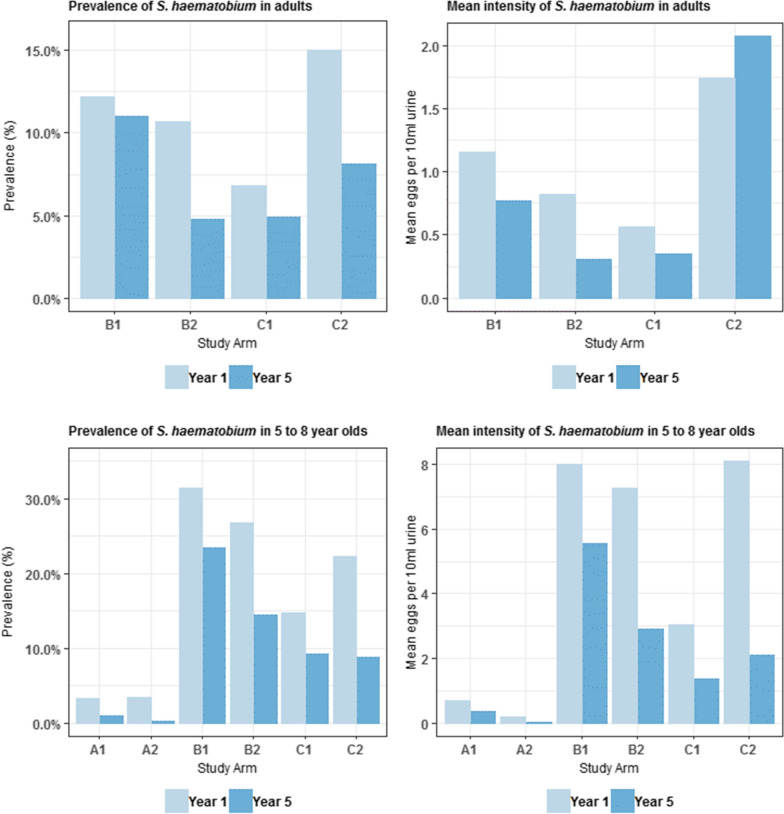
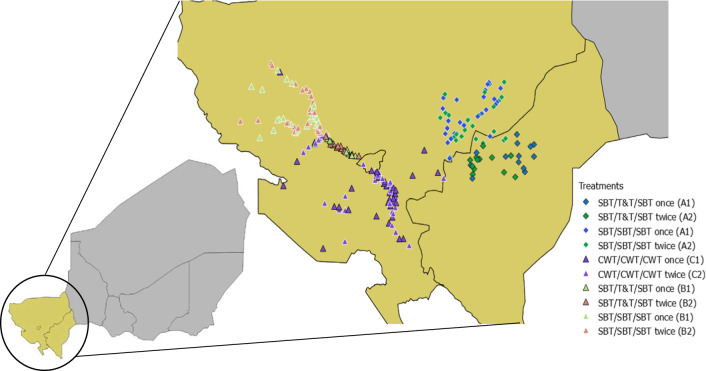
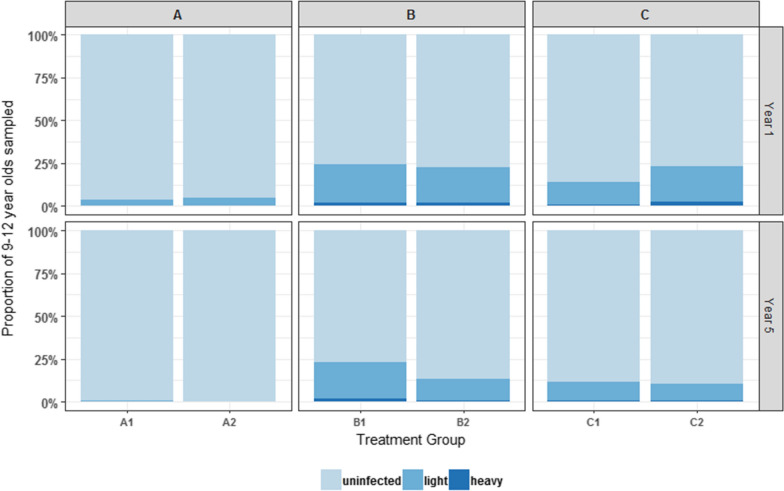
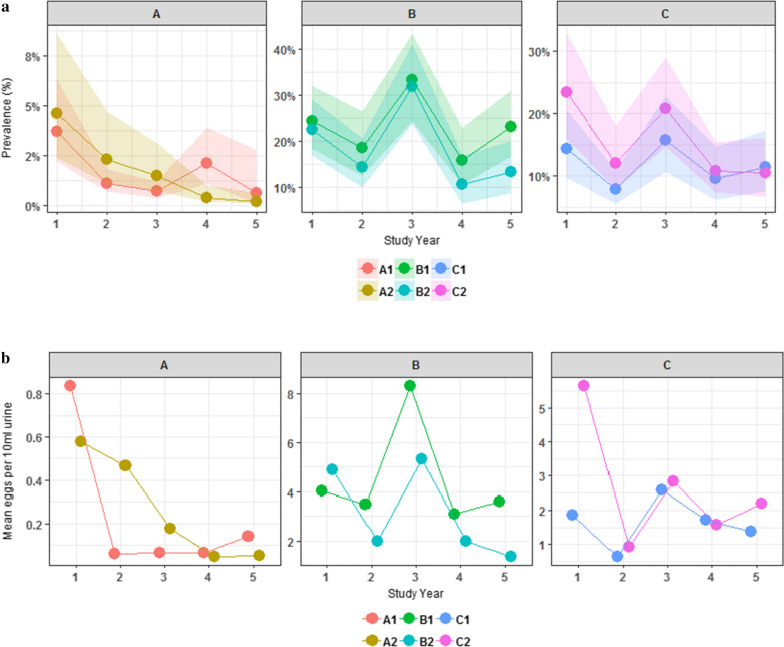
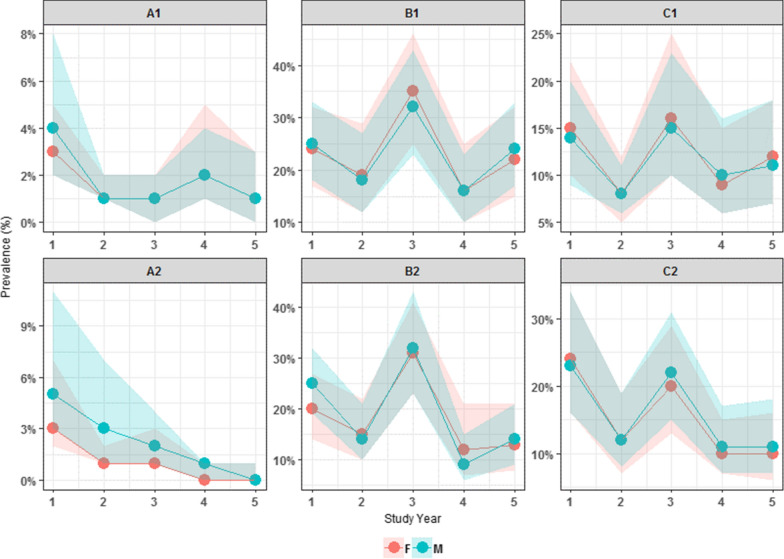
In total, data were collected from 167,500 individuals across 225 villages in nine districts within the Niger River valley, Western Niger. Overall, the prevalence of S. haematobium decreased from baseline to Year 5 across all study arms. The relative reduction of prevalence was greater in biannual compared with annual treatment across all arms; however, the only significant difference was seen in areas with a high starting prevalence. Although adults were not targeted for treatment in SBT arms, a statistically significant decrease in prevalence among adults was seen in moderate prevalence areas receiving biannual (10.7% to 4.8%) SBT (P < 0.001). Adults tested in the annual SBT group also showed a decrease in prevalence between Year 1 and Year 5 (12.2% to 11.0%), but this difference was not significant.
These findings are an important consideration for schistosomiasis control programmes that are considering elimination and support the idea that scaling up the frequency of treatment rounds, particularly in areas of low prevalence, will not eliminate schistosomiasis. Interestingly, the finding that prevalence decreased among adults in SBT arms suggests that transmission in the community can be reduced, even where only school children are being treated, which could have logistical and cost-saving implications for the national control programmes.
血吸虫病操作研究与评价联盟(SCORE)协调了一项为期五年的研究,该研究在包括尼日尔在内的多个国家实施,为针对血吸虫病控制的具有成本效益的预防性化疗方法的规划决策提供了依据。
这是一项集群随机试验,研究了六年可能的组合,包括每年或每两年进行一次社区范围的治疗(CWT)、学校为基础的治疗(SBT)以及在四年内停止大规模治疗的假期。最密集的治疗方案涉及两年的每年 CWT 后再进行两年的每两年 CWT,而最不密集的治疗方案涉及一年的每年 SBT 后一年不治疗和再进行两年的每年 SBT。主要关注的结果是每年从 100 名 9-12 岁的儿童中抽样检测到的血吸虫病曼氏血吸虫的流行率和强度。此外,在研究的第一年和最后一年,在 100 名 5-8 岁的新入学儿童和 50 名 20-55 岁的成年人中进行了测试。
总共在尼日尔河谷的九个区的 225 个村庄中,从 167500 个人中收集了数据。总体而言,在所有研究组中,曼氏血吸虫的流行率从基线到第五年均有所下降。在所有组中,与每年一次的治疗相比,每两年一次的治疗的流行率下降幅度更大;然而,只有在高起始流行率的地区才存在显著差异。尽管 SBT 组中成年人未作为治疗对象,但在中度流行率地区接受每两年一次的 SBT(10.7%至 4.8%)时,成年人的流行率显著下降(P <0.001)。在每年一次的 SBT 组中接受测试的成年人也显示出从第 1 年到第 5 年流行率下降(从 12.2%到 11.0%),但这一差异没有统计学意义。
这些发现对于正在考虑消除血吸虫病的血吸虫病控制规划非常重要,并支持增加治疗轮次频率的想法,特别是在低流行率地区,不会消除血吸虫病。有趣的是,在 SBT 组中成年人的流行率下降的发现表明,即使仅对在校儿童进行治疗,社区中的传播也可以减少,这可能对国家控制规划具有后勤和节省成本的意义。