Department of Epidemiology and Biostatistics, School of Public Health, Imperial College London, St Mary's Campus, Norfolk Place, London, W2 1PG, UK.
MRC Centre for Environment and Health, School of Public Health, Imperial College London, London, W2 1PG, UK.
Sci Rep. 2020 Nov 17;10(1):19940. doi: 10.1038/s41598-020-76518-z.
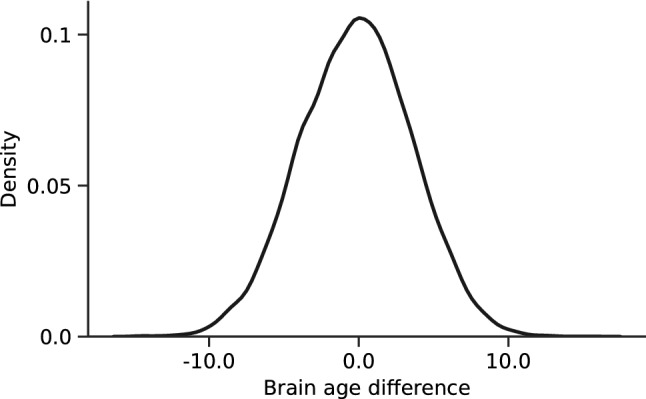
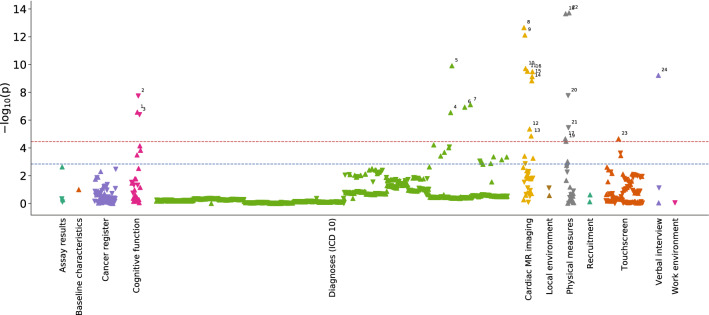
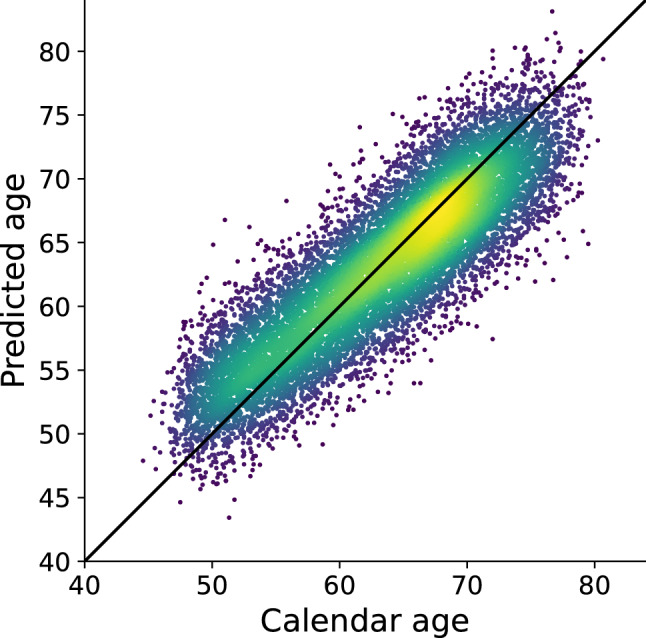
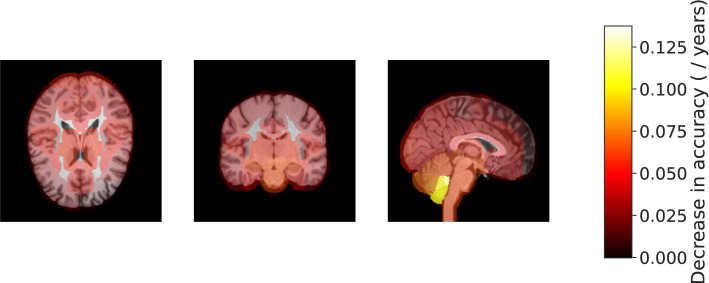
Brain structure in later life reflects both influences of intrinsic aging and those of lifestyle, environment and disease. We developed a deep neural network model trained on brain MRI scans of healthy people to predict "healthy" brain age. Brain regions most informative for the prediction included the cerebellum, hippocampus, amygdala and insular cortex. We then applied this model to data from an independent group of people not stratified for health. A phenome-wide association analysis of over 1,410 traits in the UK Biobank with differences between the predicted and chronological ages for the second group identified significant associations with over 40 traits including diseases (e.g., type I and type II diabetes), disease risk factors (e.g., increased diastolic blood pressure and body mass index), and poorer cognitive function. These observations highlight relationships between brain and systemic health and have implications for understanding contributions of the latter to late life dementia risk.
大脑结构在晚年反映了内在老化以及生活方式、环境和疾病的影响。我们开发了一种基于健康人脑部磁共振成像扫描的深度学习神经网络模型,用于预测“健康”的大脑年龄。对预测最有帮助的大脑区域包括小脑、海马体、杏仁核和脑岛。然后,我们将该模型应用于来自一个没有按健康状况分层的独立人群的数据。对 UK Biobank 中超过 1410 种特征的全基因组关联分析,以及对第二组人群预测年龄与实际年龄之间的差异进行分析,确定了与 40 多种特征的显著关联,包括疾病(例如,I 型和 II 型糖尿病)、疾病风险因素(例如,舒张压和体重指数增加)以及认知功能下降。这些观察结果强调了大脑和全身健康之间的关系,并对理解后者对晚年痴呆风险的贡献具有重要意义。