Akhoundova D, Mosquera Martinez J, Musmann L E, Britschgi C, Rütsche C, Rechsteiner M, Nadal E, Garcia Campelo M R, Curioni-Fontecedro A
Department of Medical Oncology and Hematology, Comprehensive Cancer Center Zurich, University Hospital Zurich and University of Zurich, 8091 Zurich, Switzerland.
Department of Medical Oncology, University Hospital A Coruña, 15006 A Coruña, Spain.
J Clin Med. 2020 Nov 16;9(11):3674. doi: 10.3390/jcm9113674.
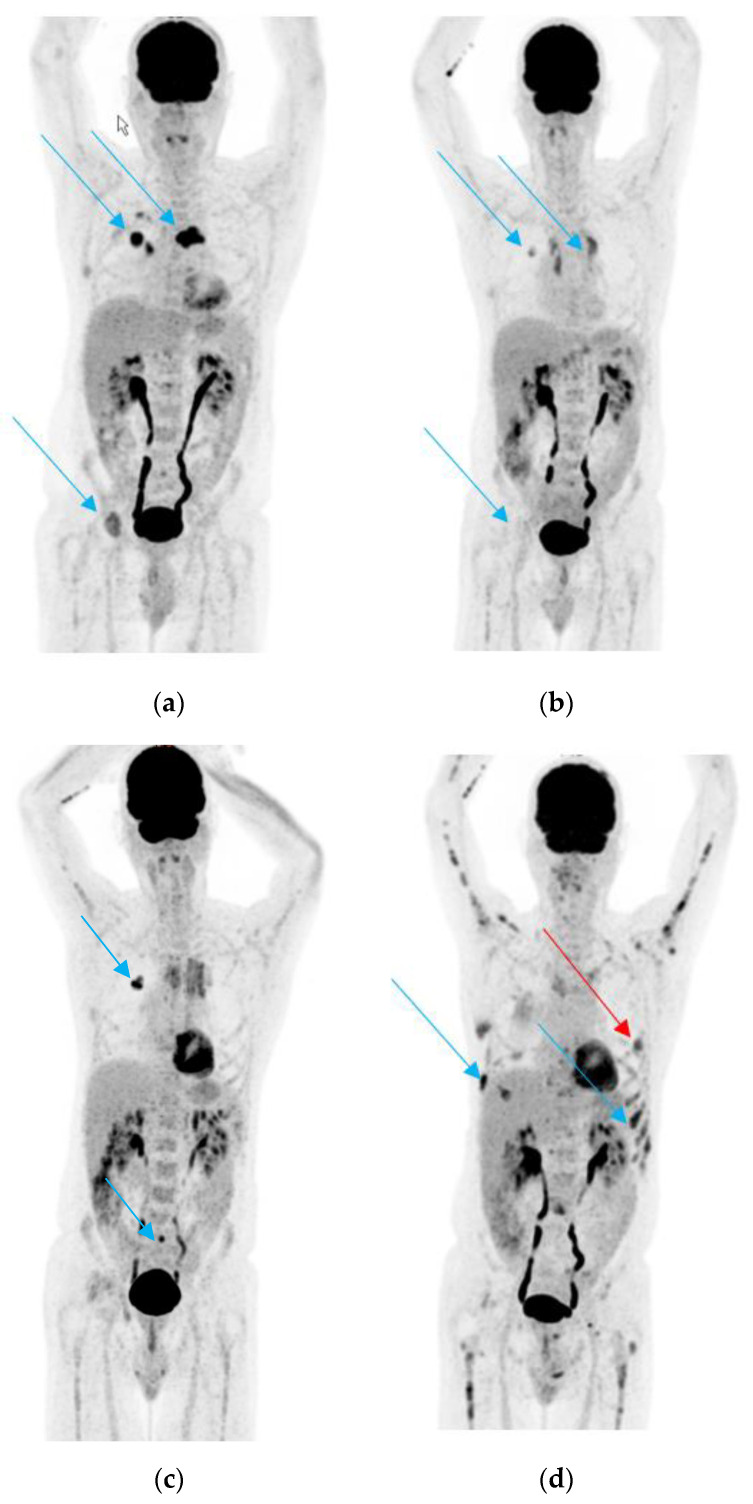
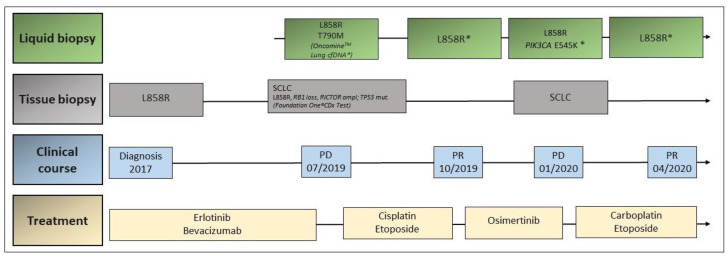
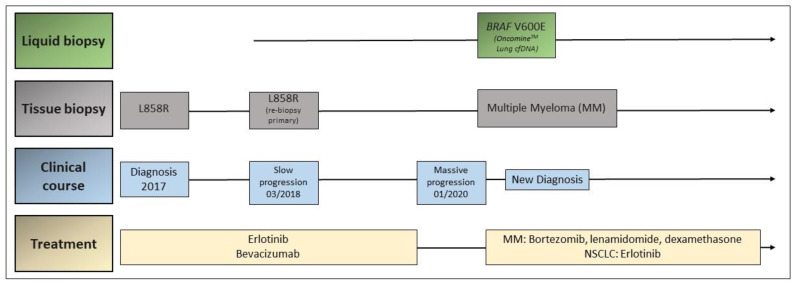
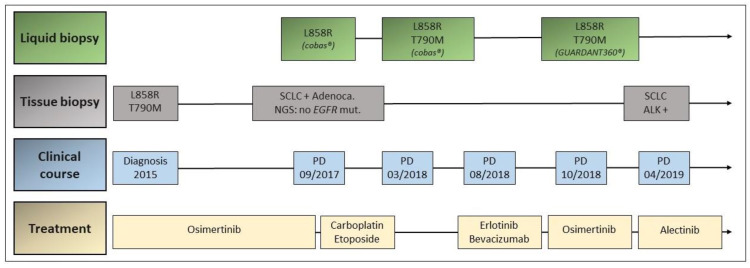
Liquid biopsy is a rapidly emerging tool of precision oncology enabling minimally invasive molecular diagnostics and longitudinal monitoring of treatment response. For the clinical management of advanced stage lung cancer patients, detection and quantification of circulating tumor DNA (ctDNA) is now widely adopted into clinical practice. Still, interpretation of results and validation of ctDNA-based treatment decisions remain challenging. We report here our experience implementing liquid biopsies into the clinical management of lung cancer. We discuss advantages and limitations of distinct ctDNA assay techniques and highlight our approach to the analysis of recurrent molecular alterations found in lung cancer. Moreover, we report three exemplary clinical cases illustrating the complexity of interpreting liquid biopsy results in clinical practice. These cases underscore the potential and current limitations of liquid biopsy, focusing on the difficulty of interpreting discordant findings. In our view, despite all current limitations, the analysis of ctDNA in lung cancer patients is an essential and highly versatile complementary diagnostic tool for the clinical management of lung cancer patients in the era of precision oncology.
液体活检是精准肿瘤学中一种迅速兴起的工具,可实现微创分子诊断和对治疗反应的纵向监测。对于晚期肺癌患者的临床管理,循环肿瘤DNA(ctDNA)的检测和定量现已广泛应用于临床实践。然而,结果的解读以及基于ctDNA的治疗决策的验证仍然具有挑战性。我们在此报告我们将液体活检应用于肺癌临床管理的经验。我们讨论了不同ctDNA检测技术的优缺点,并强调了我们对肺癌中发现的复发性分子改变的分析方法。此外,我们报告了三个典型临床病例,说明了在临床实践中解读液体活检结果的复杂性。这些病例强调了液体活检的潜力和当前局限性,重点在于解读不一致结果的困难。我们认为,尽管存在当前所有局限性,但在精准肿瘤学时代,对肺癌患者进行ctDNA分析对于肺癌患者的临床管理而言是一种必不可少且用途广泛的补充诊断工具。