Department of International and Community Oral Health, Tohoku University Graduate School of Dentistry, Sendai 980-8575, Japan.
Tropical Biosphere Research Center, University of the Ryukyus, Okinawa 903-0213, Japan.
Int J Environ Res Public Health. 2020 Nov 16;17(22):8476. doi: 10.3390/ijerph17228476.
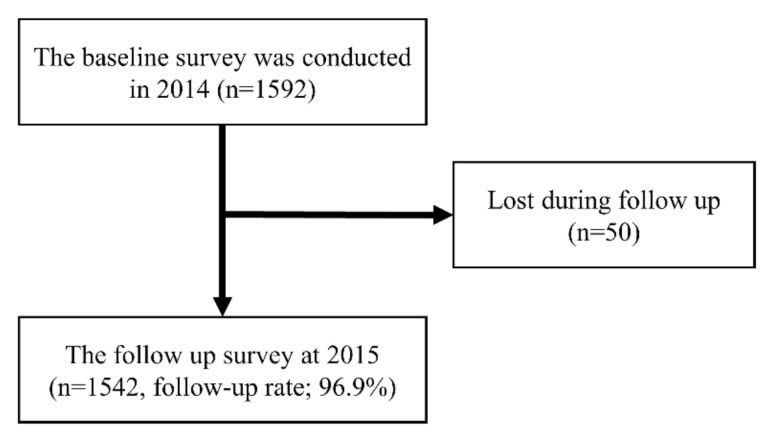
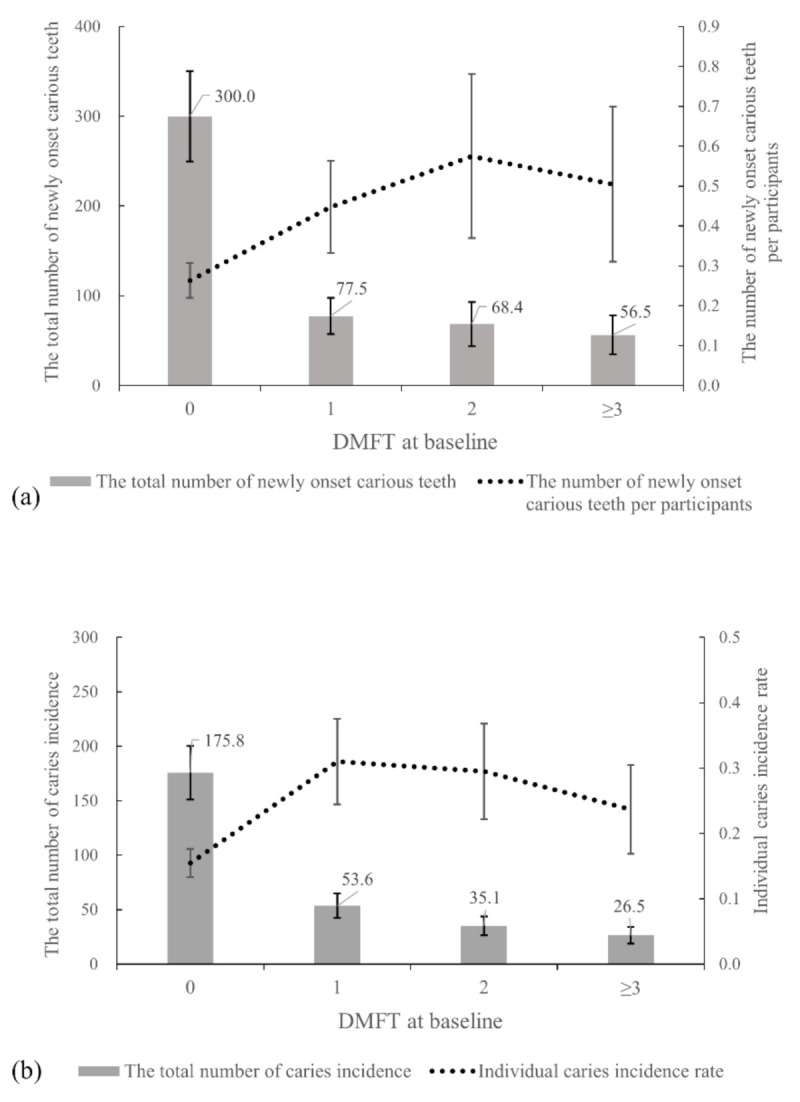
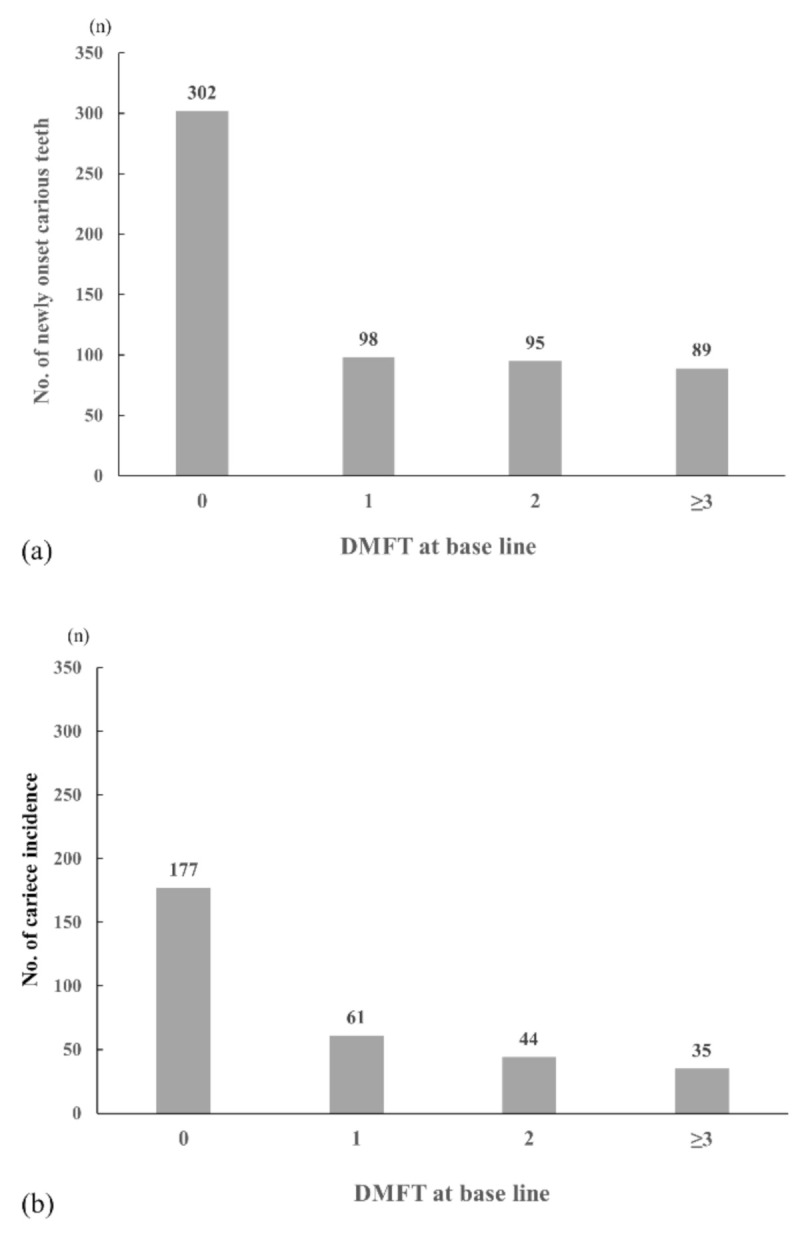
We examined Rose's axiom that a large number of people exposed to a small risk may generate more cases than a small number exposed to a high risk, using data on caries incidence. This longitudinal study was based on the records of annual dental checks conducted in primary schools in Okinawa, Japan. Participants were students aged 6-11 years at baseline in 2014, and a follow-up survey was conducted after one-year. The outcome variable was the increased number of decayed, missing, and filled teeth (DMFT). The predictor variable was the baseline DMFT score. Gender, grade, and affiliated school variables were adjusted. A negative binomial regression model was used to obtain the estimated increase of DMFT score. Among 1542 students, 1138 (73.8%) were caries-free at baseline. A total of 317 (20.6%) developed new caries during the follow-up. The predicted number of new carious teeth in a caries-free students and students with DMFT = 1 at baseline were 0.26 (95% CI, 0.22-0.31) and 0.45 teeth (95% CI, 0.33-0.56), respectively. However, among the total of 502 newly onset of carious teeth, 300 teeth (59.7%) occurred from the caries-free students at baseline. Hence, prevention strategies should target the low-risk group because they comprise the majority of the population.
我们利用龋齿发病率数据检验了 Rose 的公理,即大量接触小风险的人群可能会产生比少数接触高风险的人群更多的病例。这项纵向研究基于日本冲绳县小学年度牙科检查记录。参与者为 2014 年基线时年龄为 6-11 岁的学生,一年后进行了随访调查。因变量为龋齿、缺失和补牙(DMFT)的增加数量。预测变量为基线 DMFT 评分。调整了性别、年级和附属学校变量。使用负二项回归模型得出 DMFT 评分的估计增加量。在 1542 名学生中,有 1138 名(73.8%)基线时无龋齿。共有 317 名(20.6%)在随访期间出现新龋齿。在基线时无龋齿的学生和 DMFT=1 的学生中,新龋齿的预测数量分别为 0.26(95%CI,0.22-0.31)和 0.45 颗牙(95%CI,0.33-0.56)。然而,在总共新发生的 502 颗龋齿中,有 300 颗(59.7%)来自基线时无龋齿的学生。因此,预防策略应该针对低风险人群,因为他们构成了大多数人群。