Department of Translational Medicine, University of Piemonte Orientale, 28100 Novara, Italy.
Center for Translational Research on Autoimmune and Allergic Diseases, University of Piemonte Orientale, 28100 Novara, Italy.
Int J Mol Sci. 2020 Nov 16;21(22):8623. doi: 10.3390/ijms21228623.
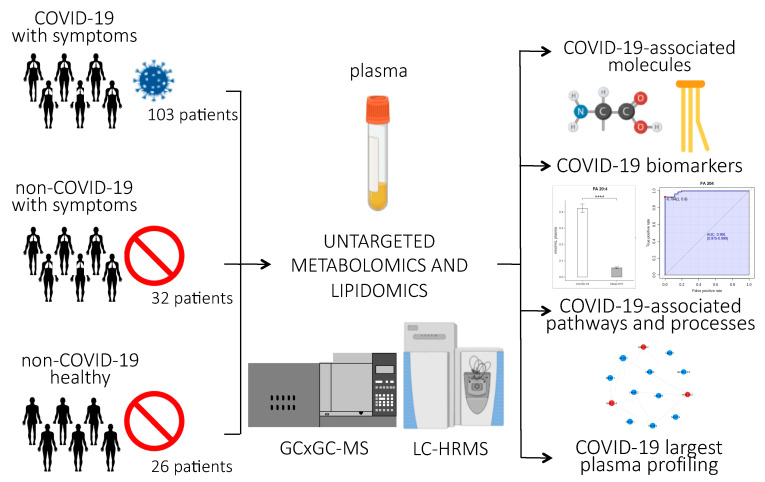
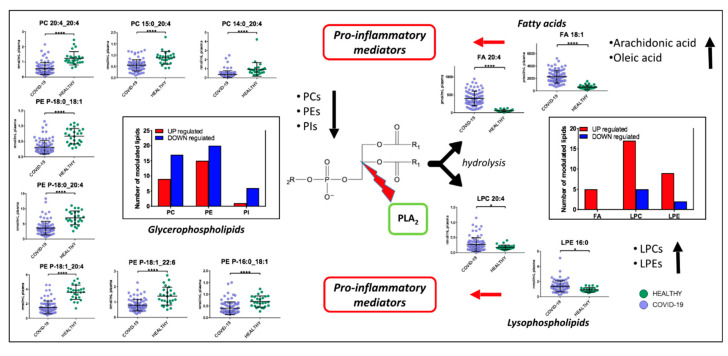
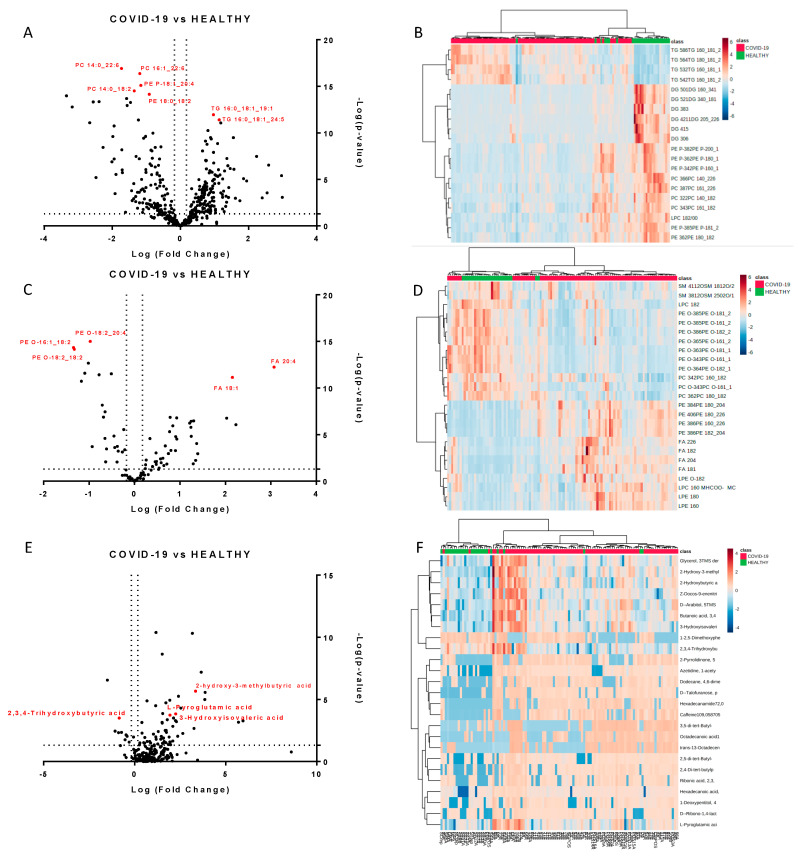
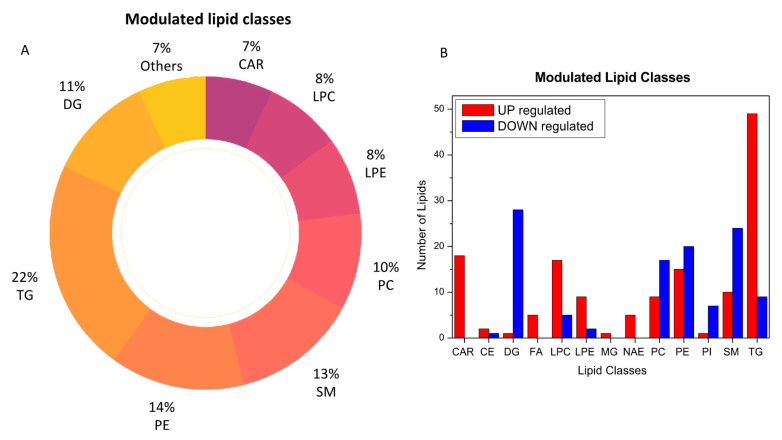
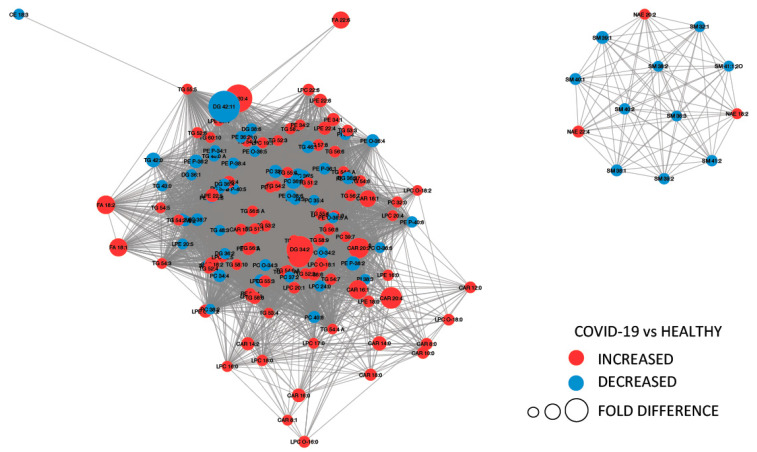
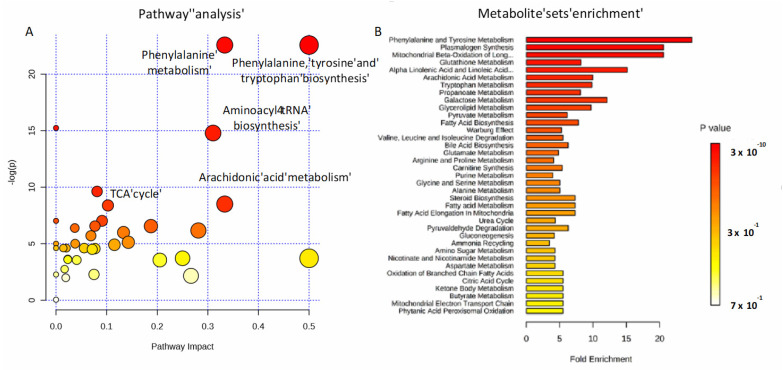
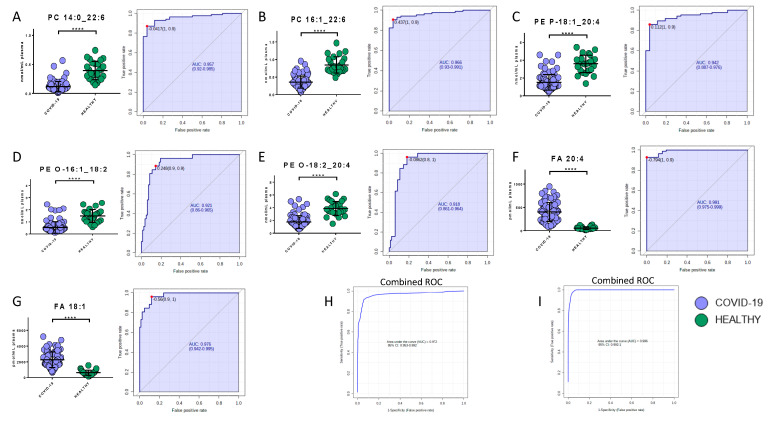
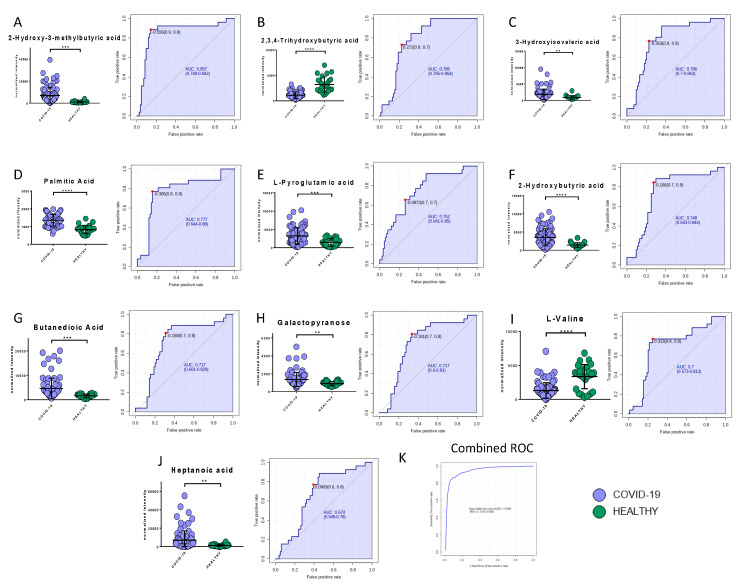
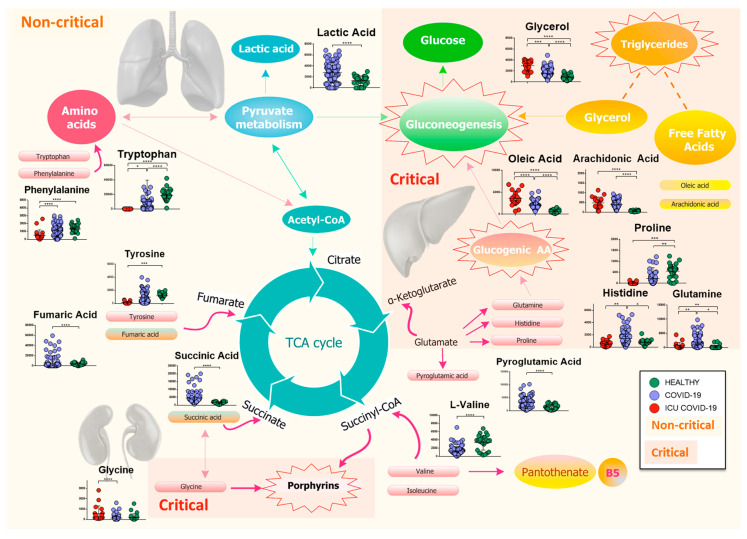
The novel severe acute respiratory syndrome coronavirus 2 (SARS-CoV-2) has spread to nearly every continent, registering over 1,250,000 deaths worldwide. The effects of SARS-CoV-2 on host targets remains largely limited, hampering our understanding of Coronavirus Disease 2019 (COVID-19) pathogenesis and the development of therapeutic strategies. The present study used a comprehensive untargeted metabolomic and lipidomic approach to capture the host response to SARS-CoV-2 infection. We found that several circulating lipids acted as potential biomarkers, such as phosphatidylcholine 14:0_22:6 (area under the curve (AUC) = 0.96), phosphatidylcholine 16:1_22:6 (AUC = 0.97), and phosphatidylethanolamine 18:1_20:4 (AUC = 0.94). Furthermore, triglycerides and free fatty acids, especially arachidonic acid (AUC = 0.99) and oleic acid (AUC = 0.98), were well correlated to the severity of the disease. An untargeted analysis of non-critical COVID-19 patients identified a strong alteration of lipids and a perturbation of phenylalanine, tyrosine and tryptophan biosynthesis, phenylalanine metabolism, aminoacyl-tRNA degradation, arachidonic acid metabolism, and the tricarboxylic acid (TCA) cycle. The severity of the disease was characterized by the activation of gluconeogenesis and the metabolism of porphyrins, which play a crucial role in the progress of the infection. In addition, our study provided further evidence for considering phospholipase A2 (PLA2) activity as a potential key factor in the pathogenesis of COVID-19 and a possible therapeutic target. To date, the present study provides the largest untargeted metabolomics and lipidomics analysis of plasma from COVID-19 patients and control groups, identifying new mechanisms associated with the host response to COVID-19, potential plasma biomarkers, and therapeutic targets.
新型严重急性呼吸综合征冠状病毒 2(SARS-CoV-2)已传播到几乎各大洲,在全球范围内造成超过 125 万人死亡。SARS-CoV-2 对宿主靶标的影响在很大程度上仍然受到限制,这阻碍了我们对 2019 年冠状病毒病(COVID-19)发病机制的理解和治疗策略的发展。本研究使用了一种全面的非靶向代谢组学和脂质组学方法来捕捉宿主对 SARS-CoV-2 感染的反应。我们发现几种循环脂质可作为潜在的生物标志物,例如磷脂酰胆碱 14:0_22:6(曲线下面积(AUC)=0.96)、磷脂酰胆碱 16:1_22:6(AUC=0.97)和磷脂酰乙醇胺 18:1_20:4(AUC=0.94)。此外,甘油三酯和游离脂肪酸,特别是花生四烯酸(AUC=0.99)和油酸(AUC=0.98),与疾病的严重程度密切相关。对非重症 COVID-19 患者的非靶向分析发现,脂质发生了强烈改变,苯丙氨酸、酪氨酸和色氨酸生物合成、苯丙氨酸代谢、氨酰-tRNA 降解、花生四烯酸代谢和三羧酸(TCA)循环受到干扰。疾病的严重程度表现为糖异生和卟啉代谢的激活,这在感染的进展中起着至关重要的作用。此外,我们的研究为考虑磷脂酶 A2(PLA2)活性作为 COVID-19 发病机制的潜在关键因素和可能的治疗靶点提供了进一步的证据。迄今为止,本研究提供了 COVID-19 患者和对照组血浆的最大规模非靶向代谢组学和脂质组学分析,确定了与宿主对 COVID-19 反应相关的新机制、潜在的血浆生物标志物和治疗靶点。