Clinic of Infectious Diseases and Dermatovenerology, Institute of Clinical Medicine, Faculty of Medicine, Vilnius University, Vilnius, Lithuania.
Center of Infectious Diseases, Vilnius University, Vilnius, Lithuania.
PLoS One. 2020 Nov 19;15(11):e0241587. doi: 10.1371/journal.pone.0241587. eCollection 2020.
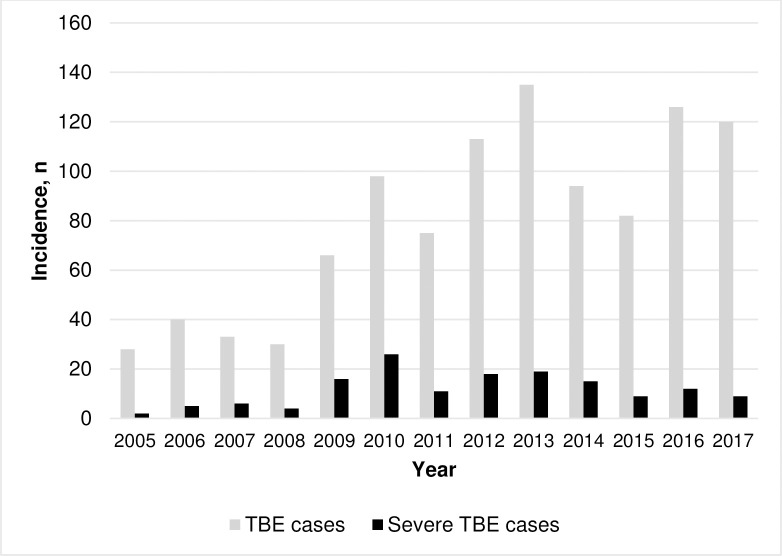
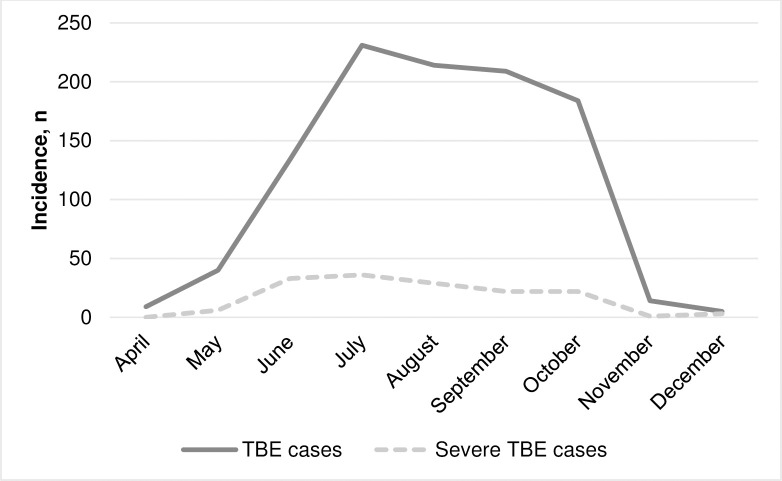
In recent decades, the incidence of Tick-borne encephalitis (TBE) has been increasing and posing a growing health problem because of the high costs to the healthcare system and society. The clinical manifestations are well studied but there is a lack of research analyzing the severity of the disease.
The aim of this study was to analyze the epidemiology and clinical presentation of severe TBE, to identify the predictors for a severe disease course, and also predictors for meningoencephalomyelitic and severe meningoencephalitic/encephalitic forms.
A retrospective study was conducted in the Center of Infectious Diseases and the Center of Neurology at Vilnius University Hospital Santaros Klinikos in the years 2005-2017 to describe the clinical and epidemiological features of TBE in adults.
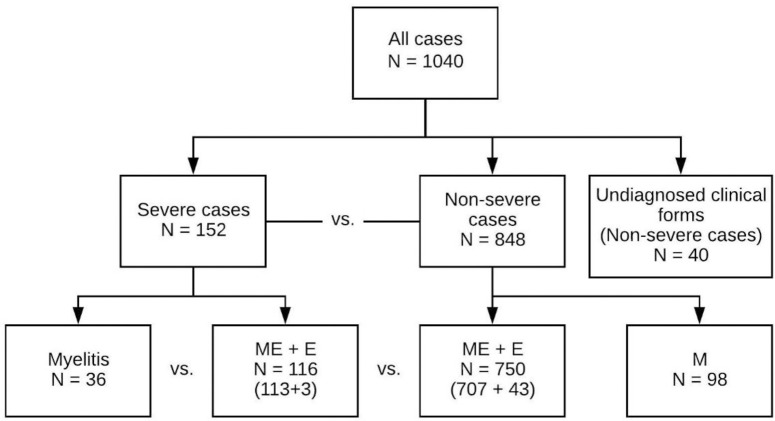
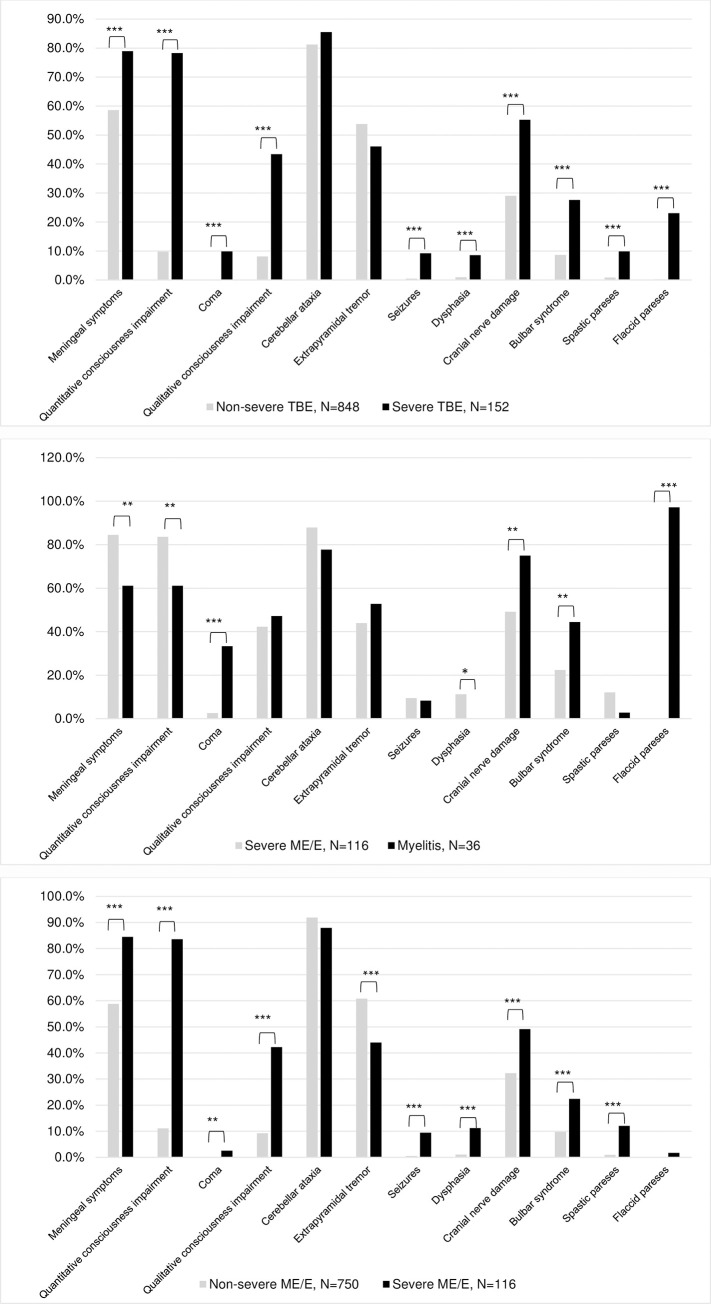
1040 patients were included in the study. A total of 152/1040 (14.6%) patients had a severe course. The highest proportion of severe cases, reaching 41.2%, was reported in the 70-79 year-old age group. A total of 36/152 (23.7%) severe patients presented meningoencephalomyelitis. Myelitic patients were older, were frequently infected in their living areas, and usually reported a monophasic disease course compared with severe meningoencephalitic/encephalitic patients. Severe meningoencephalitic/encephalitic patients, compared with non-severe meningoencephalitic/encephalitic, were older, less often noticed the tick bite, and often had a monophasic course. The sequelae on discharge were observed in 810/1000 (81%) of patients.
The prognostic factors associated with a severe disease course and severe meningoencephalitic form are: older age, comorbidities, a monophasic course, a fever of 40˚C and above, CRP more than 30 mg/l, CSF protein more than 1 g/l, delayed immune response of TBEV IgG, pathological findings in CT. Age above 60 years, presence of CNS disease, bulbar syndrome, pleocytosis 500x106/l and above, and delayed immune response of TBEV IgG are predictors of the most severe myelitic form.
近几十年来,由于 tick-borne encephalitis (TBE) 给医疗保健系统和社会带来的高昂成本,其发病率不断上升,成为一个日益严重的健康问题。该病的临床表现已得到充分研究,但对疾病严重程度的研究仍相对较少。
本研究旨在分析重症 TBE 的流行病学和临床表现,确定重症疾病的预测因素,以及脑膜脑炎型和重症脑膜脑炎/脑炎型的预测因素。
在 2005 年至 2017 年期间,我们在 Vilnius 大学医院 Santaros Klinikos 的传染病中心和神经病学中心进行了一项回顾性研究,以描述成人 TBE 的临床和流行病学特征。
共纳入 1040 例患者。其中共有 152/1040(14.6%)例患者的疾病严重程度较高。在 70-79 岁年龄组,重症病例的比例最高,达到 41.2%。152 例重症患者中共有 36 例(23.7%)为脑膜脑炎型。髓炎患者年龄较大,常在其生活区域感染,且与重症脑膜脑炎/脑炎型患者相比,常呈单相病程。与非重症脑膜脑炎/脑炎型患者相比,重症脑膜脑炎/脑炎型患者年龄较大,较少注意到蜱叮咬,且常呈单相病程。出院时观察到 810/1000(81%)例患者存在后遗症。
与重症疾病和重症脑膜脑炎型相关的预后因素为:年龄较大、合并症、单相病程、体温 40°C 及以上、CRP 超过 30mg/l、CSF 蛋白超过 1g/l、TBEV IgG 的免疫反应延迟、CT 上的病理表现。年龄超过 60 岁、存在中枢神经系统疾病、延髓综合征、白细胞数超过 500x106/l 且 TBEV IgG 的免疫反应延迟,是最严重的髓炎型的预测因素。