Leng Ling, Ma Jie, Sun Xuer, Guo Baolin, Li Fanlu, Zhang Wei, Chang Mingyang, Diao Jinmei, Wang Yi, Wang Wenjuan, Wang Shuyong, Zhu Yunping, He Fuchu, Reid Lola M, Wang Yunfang
Stem cell and Regenerative Medicine Lab, Department of Medical Science Research Center, Translational Medicine Center, Peking Union Medical College Hospital, Peking Union Medical College and Chinese Academy of Medical Sciences, Beijing, China.
Department of Stem Cell and Regenerative Medicine Laboratory, Institute of Health Service and Transfusion Medicine, Beijing, China.
J Tissue Eng. 2020 Nov 10;11:2041731420972310. doi: 10.1177/2041731420972310. eCollection 2020 Jan-Dec.
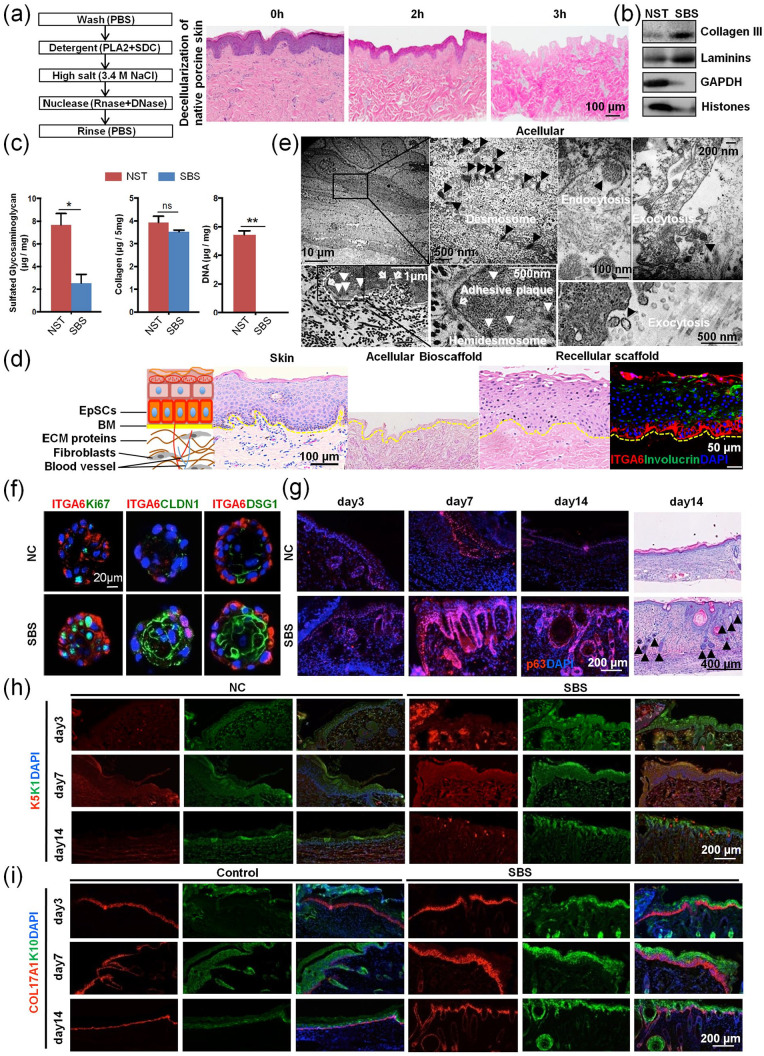
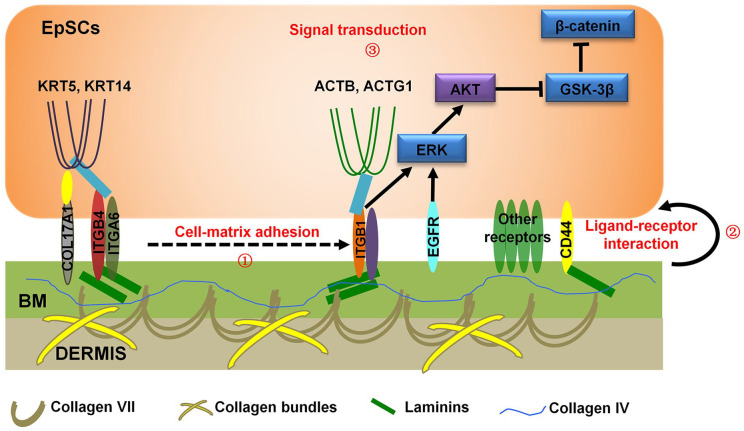
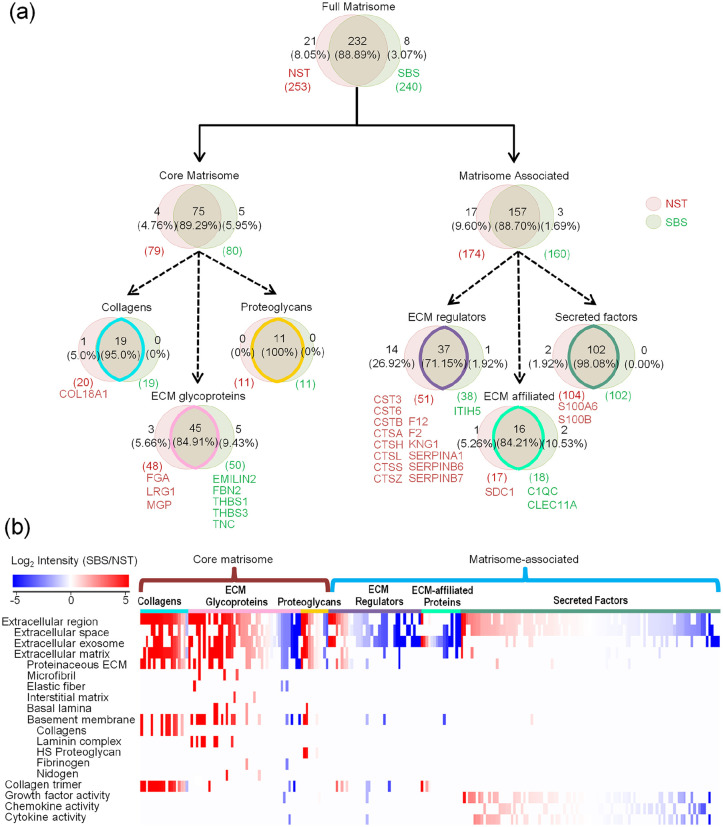
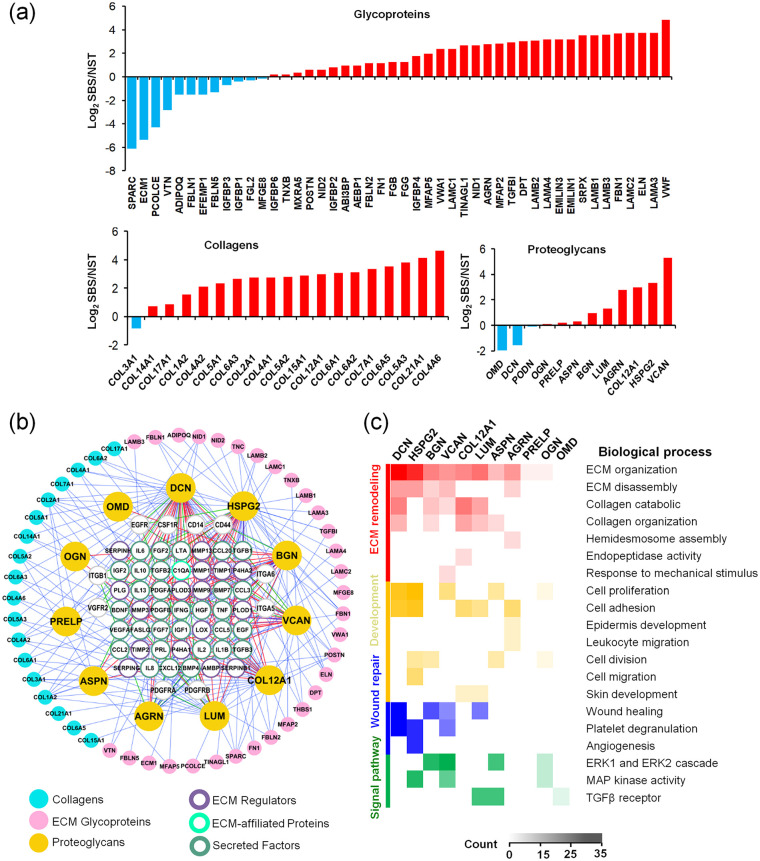
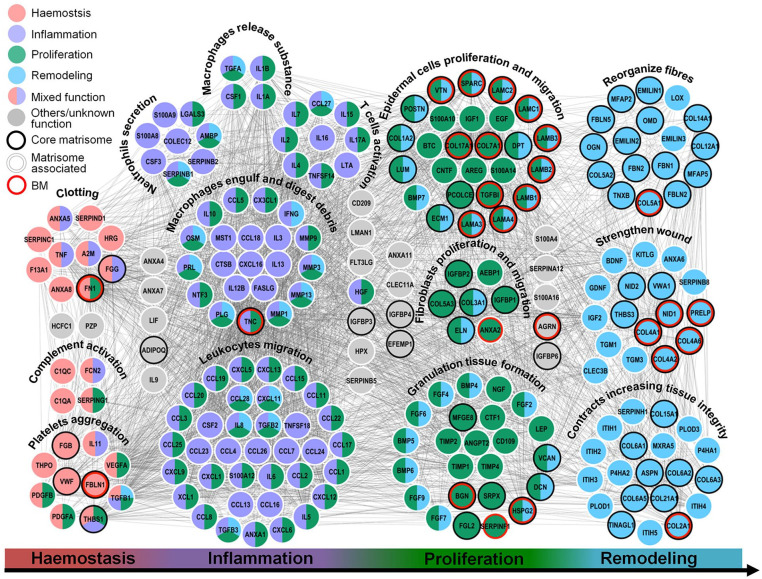
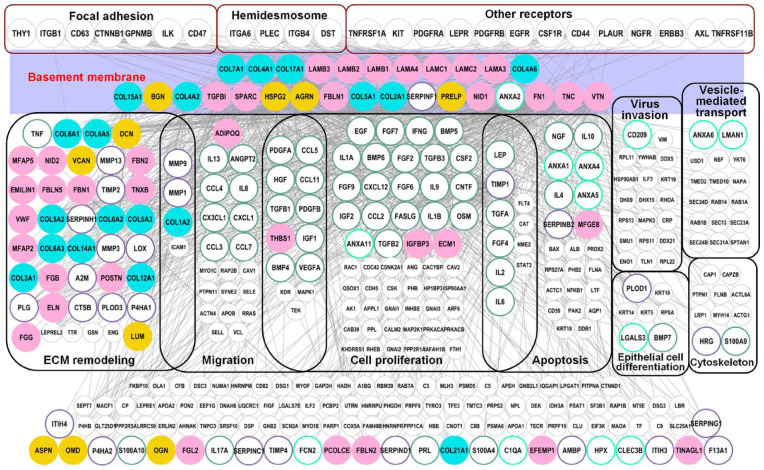
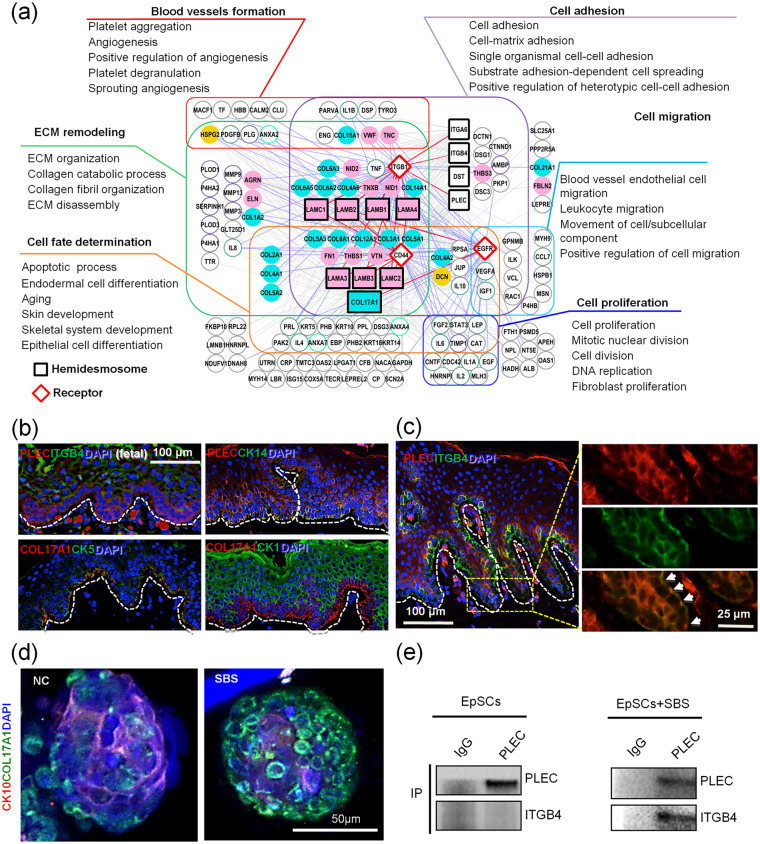
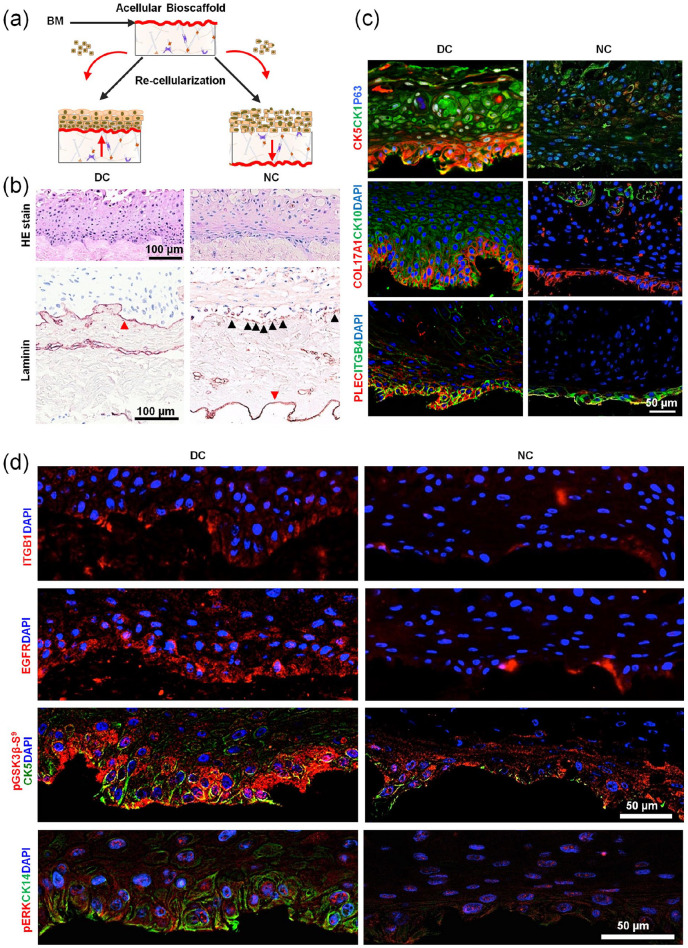
Biomaterial scaffolds are increasingly being used to drive tissue regeneration. The limited success so far in human tissues rebuilding and therapy application may be due to inadequacy of the functionality biomaterial scaffold. We developed a new decellularized method to obtain complete anatomical skin biomatrix scaffold in situ with extracellular matrix (ECM) architecture preserved, in this study. We described a skin scaffold map by integrated proteomics and systematically analyzed the interaction between ECM proteins and epidermal cells in skin microenvironment on this basis. They were used to quantify structure and function of the skin's Matrisome, comprised of core ECM components and ECM-associated soluble signals that are key regulators of epidermal development. We especially revealed that ECM played a role in determining the fate of epidermal stem cells through hemidesmosome components. These concepts not only bring us a new understanding of the role of the skin ECM niche, they also provide an attractive combinational strategy based on tissue engineering principles with skin biomatrix scaffold materials for the acceleration and enhancement of tissue regeneration.
生物材料支架越来越多地被用于驱动组织再生。迄今为止,在人体组织重建和治疗应用方面取得的成功有限,这可能是由于生物材料支架的功能不足所致。在本研究中,我们开发了一种新的去细胞方法,以原位获得保留细胞外基质(ECM)结构的完整解剖学皮肤生物基质支架。我们通过整合蛋白质组学描绘了皮肤支架图谱,并在此基础上系统地分析了皮肤微环境中ECM蛋白与表皮细胞之间的相互作用。它们被用于量化皮肤基质体的结构和功能,该基质体由核心ECM成分和ECM相关的可溶性信号组成,这些信号是表皮发育的关键调节因子。我们特别揭示了ECM通过半桥粒成分在决定表皮干细胞命运中发挥作用。这些概念不仅使我们对皮肤ECM生态位的作用有了新的认识,它们还基于组织工程原理提供了一种有吸引力的组合策略,即使用皮肤生物基质支架材料来加速和增强组织再生。