Athinoula A. Martinos Center for Biomedical Imaging, Department of Radiology, Massachusetts General Hospital, Charlestown, MA, USA.
Harvard Medical School, Boston, MA, USA.
Nat Biomed Eng. 2021 Mar;5(3):229-239. doi: 10.1038/s41551-020-00641-5. Epub 2020 Nov 23.
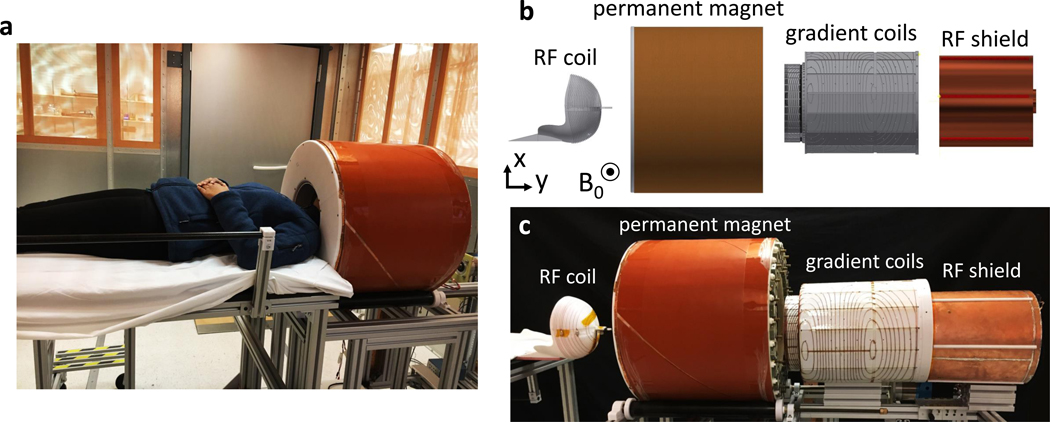
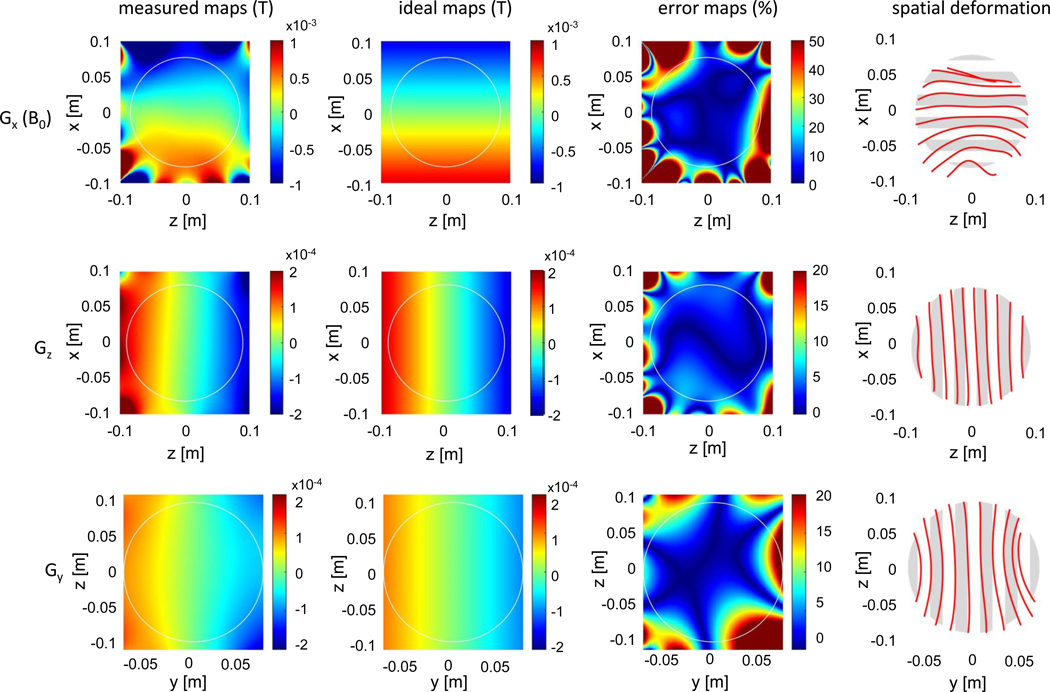
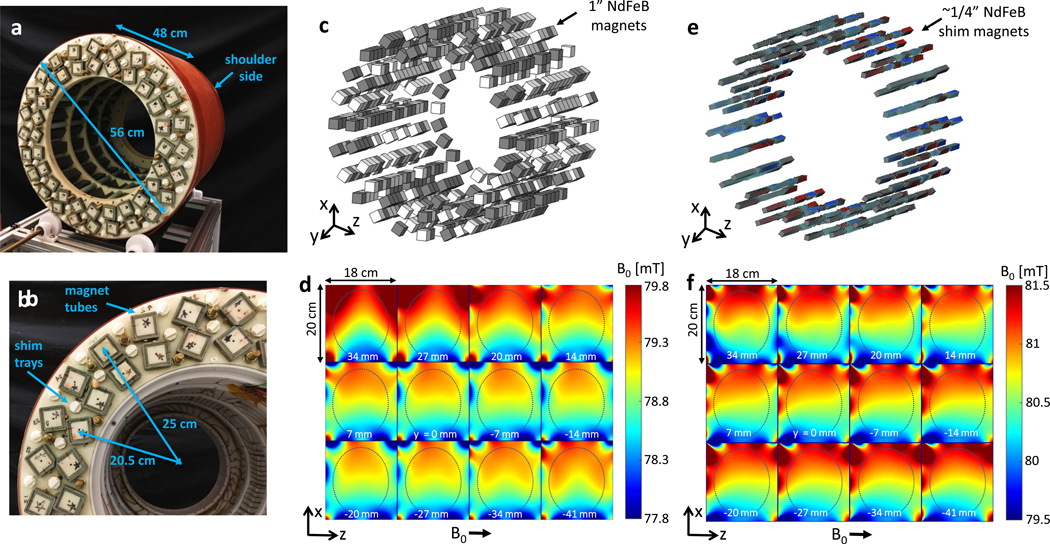
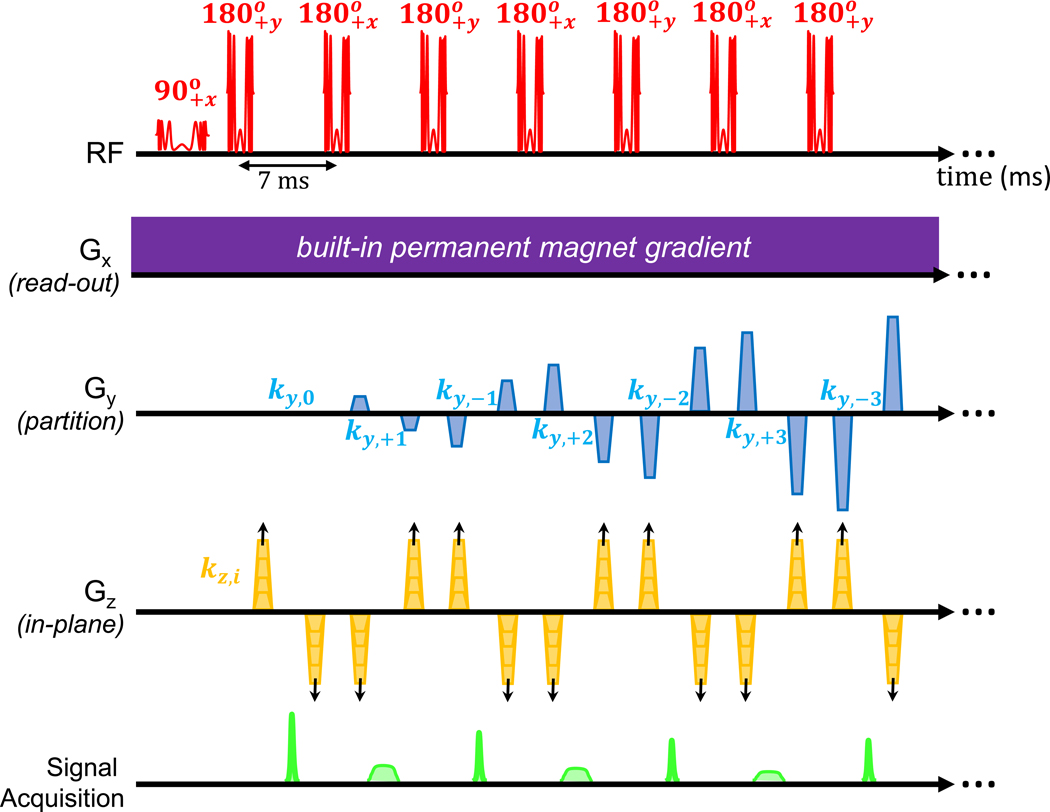
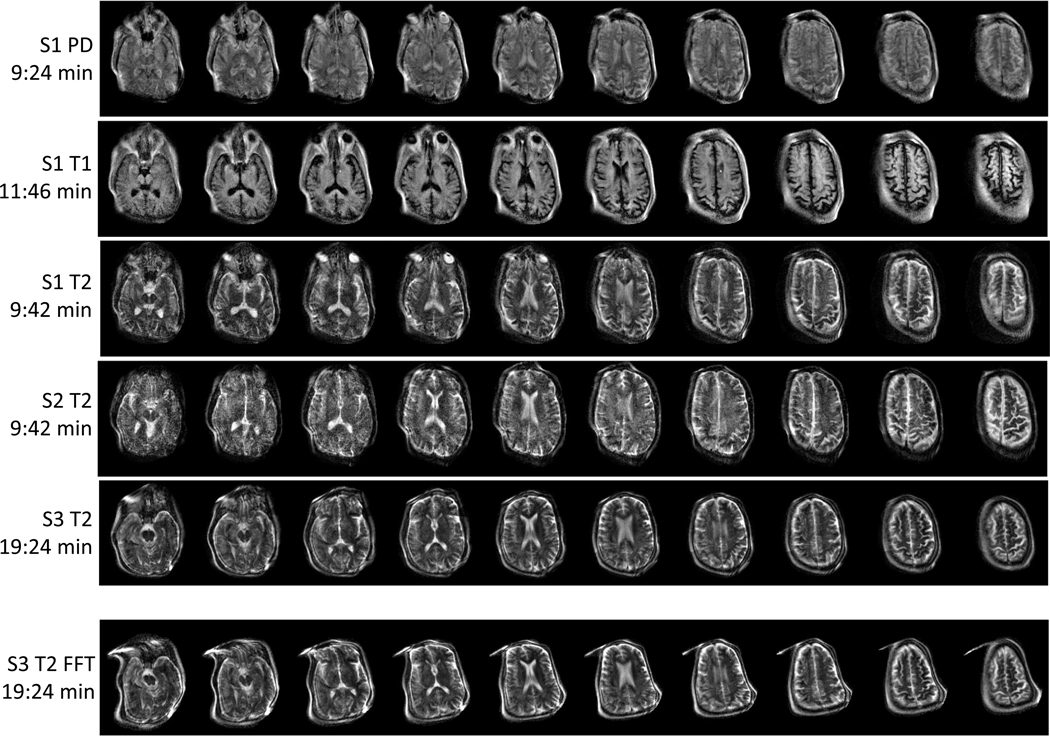
Access to scanners for magnetic resonance imaging (MRI) is typically limited by cost and by infrastructure requirements. Here, we report the design and testing of a portable prototype scanner for brain MRI that uses a compact and lightweight permanent rare-earth magnet with a built-in readout field gradient. The 122-kg low-field (80 mT) magnet has a Halbach cylinder design that results in a minimal stray field and requires neither cryogenics nor external power. The built-in magnetic field gradient reduces the reliance on high-power gradient drivers, lowering the overall requirements for power and cooling, and reducing acoustic noise. Imperfections in the encoding fields are mitigated with a generalized iterative image reconstruction technique that leverages previous characterization of the field patterns. In healthy adult volunteers, the scanner can generate T1-weighted, T2-weighted and proton density-weighted brain images with a spatial resolution of 2.2 × 1.3 × 6.8 mm. Future versions of the scanner could improve the accessibility of brain MRI at the point of care, particularly for critically ill patients.
获取磁共振成像 (MRI) 扫描仪通常受到成本和基础设施要求的限制。在这里,我们报告了一种用于脑 MRI 的便携式原型扫描仪的设计和测试,该扫描仪使用带有内置读出磁场梯度的紧凑型轻量级永磁体。这个 122 公斤的低场(80mT)磁体采用了 Halbach 圆柱设计,具有最小的杂散场,既不需要低温也不需要外部电源。内置磁场梯度降低了对高功率梯度驱动器的依赖,从而降低了对功率和冷却的总体要求,并降低了声噪声。通过利用先前对磁场模式的表征的广义迭代图像重建技术,可以减轻编码场的不完美。在健康的成年志愿者中,该扫描仪可以生成具有 2.2×1.3×6.8mm 空间分辨率的 T1 加权、T2 加权和质子密度加权脑图像。该扫描仪的未来版本可以提高在护理点进行脑 MRI 的可及性,特别是对于危重症患者。