College of Pharmacy, Vessel-Organ Interaction Research Center (VOICE, MRC), Kyungpook National University, Daegu, 41566, Republic of Korea.
College of Pharmacy, Research Institute of Pharmaceutical Sciences, Kyungpook National University, Daegu, 41566, Republic of Korea.
Arch Pharm Res. 2021 Jan;44(1):1-15. doi: 10.1007/s12272-020-01287-2. Epub 2020 Nov 23.
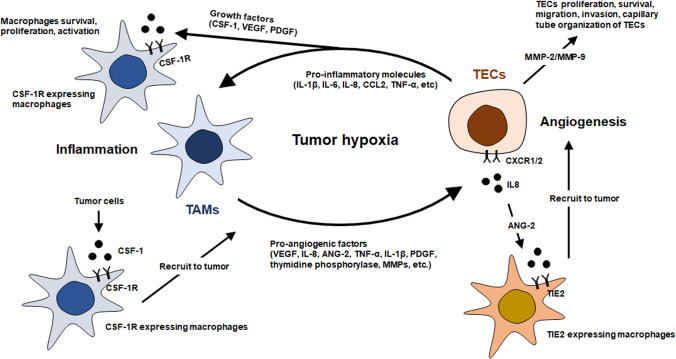
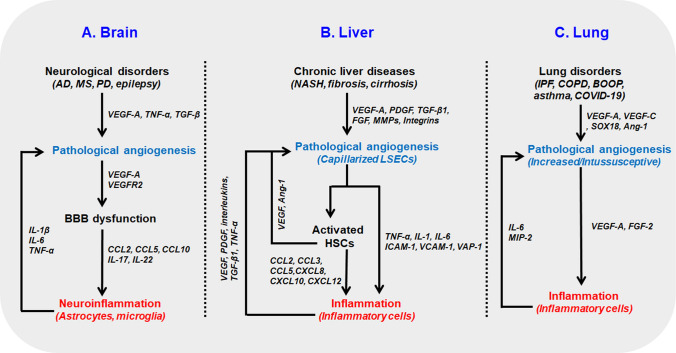
The role of angiogenesis in the growth of organs and tumors is widely recognized. Vascular-organ interaction is a key mechanism and a concept that enables an understanding of all biological phenomena and normal physiology that is essential for human survival under pathological conditions. Recently, vascular endothelial cells have been classified as a type of innate immune cells that are dependent on the pathological situations. Moreover, inflammatory cytokines and signaling regulators activated upon exposure to infection or various stresses play crucial roles in the pathological function of parenchymal cells, peripheral immune cells, stromal cells, and cancer cells in tissues. Therefore, vascular-organ interactions as a vascular microenvironment or tissue microenvironment under physiological and pathological conditions are gaining popularity as an interesting research topic. Here, we review vascular contribution as a major factor in microenvironment homeostasis in the pathogenesis of normal as well as cancerous tissues. Furthermore, we suggest that the normalization strategy of pathological angiogenesis could be a promising therapeutic target for various diseases, including cancer.
血管生成在器官和肿瘤生长中的作用已得到广泛认可。血管-器官相互作用是一种关键机制和概念,它使人们能够理解所有的生物学现象和正常生理,这对于人类在病理条件下的生存至关重要。最近,血管内皮细胞被归类为一种依赖于病理情况的先天免疫细胞。此外,感染或各种应激暴露后激活的炎症细胞因子和信号调节剂在组织中实质细胞、外周免疫细胞、基质细胞和癌细胞的病理功能中发挥着关键作用。因此,血管-器官相互作用作为生理和病理条件下的血管微环境或组织微环境,作为一个有趣的研究课题正受到越来越多的关注。在这里,我们回顾了血管作为正常组织和癌变组织发病机制中微环境稳态的主要因素的作用。此外,我们提出病理性血管生成的正常化策略可能是包括癌症在内的各种疾病有前途的治疗靶点。