Witkowska-Piłaszewicz Olga, Pingwara Rafał, Winnicka Anna
Department of Pathology and Veterinary Diagnostics, Institute of Veterinary Medicine, Warsaw University of Life Sciences-SGGW, 02-776 Warsaw, Poland.
Department of Physiological Sciences, Institute of Veterinary Medicine, Warsaw University of Life Sciences-SGGW, 02-776 Warsaw, Poland.
Antioxidants (Basel). 2020 Nov 20;9(11):1155. doi: 10.3390/antiox9111155.
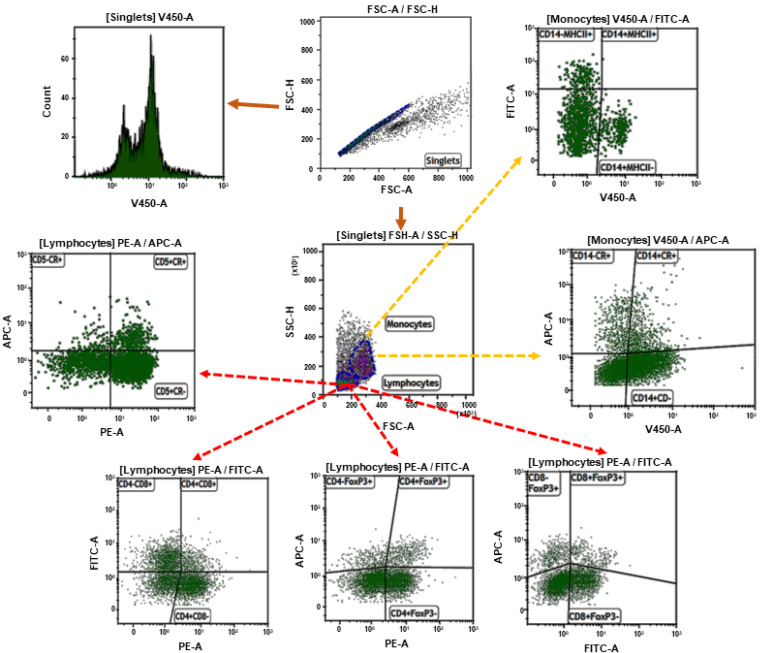
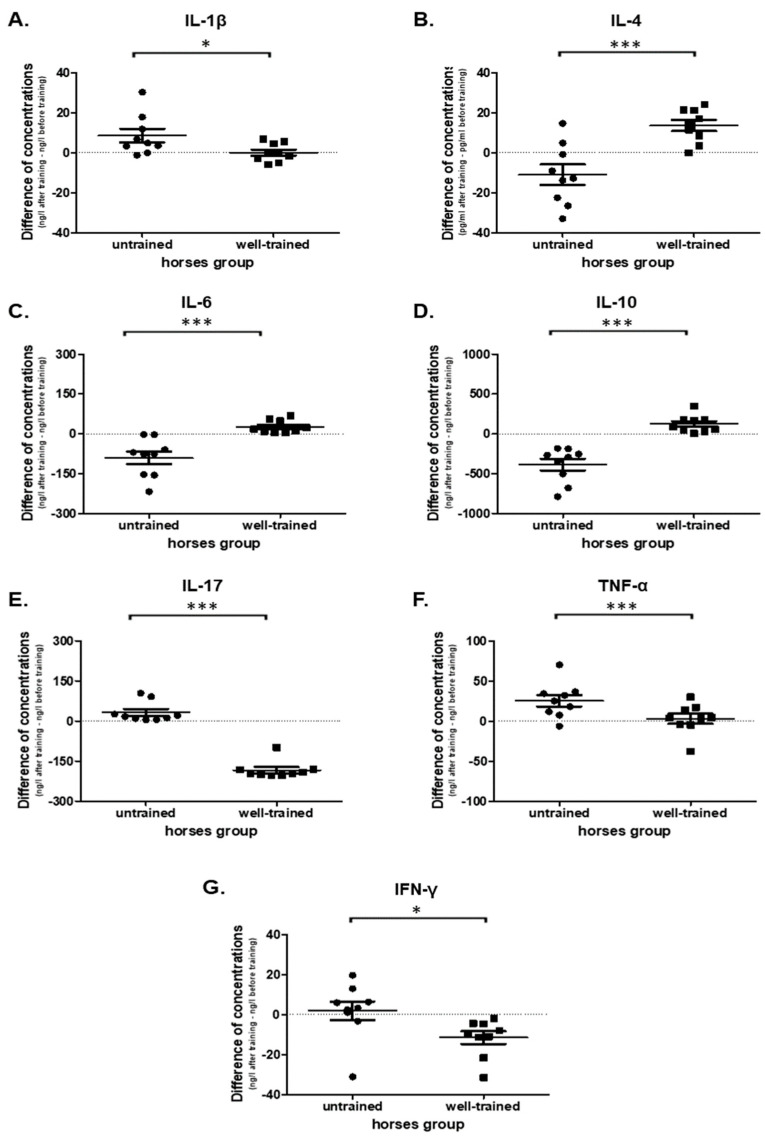
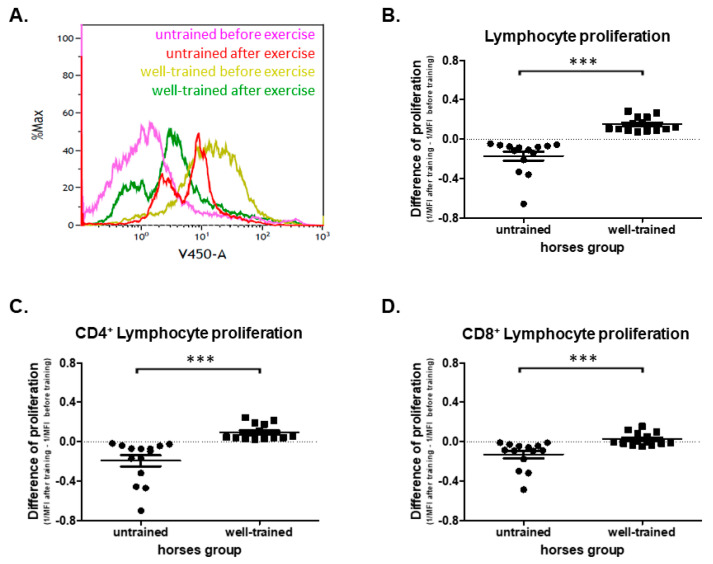
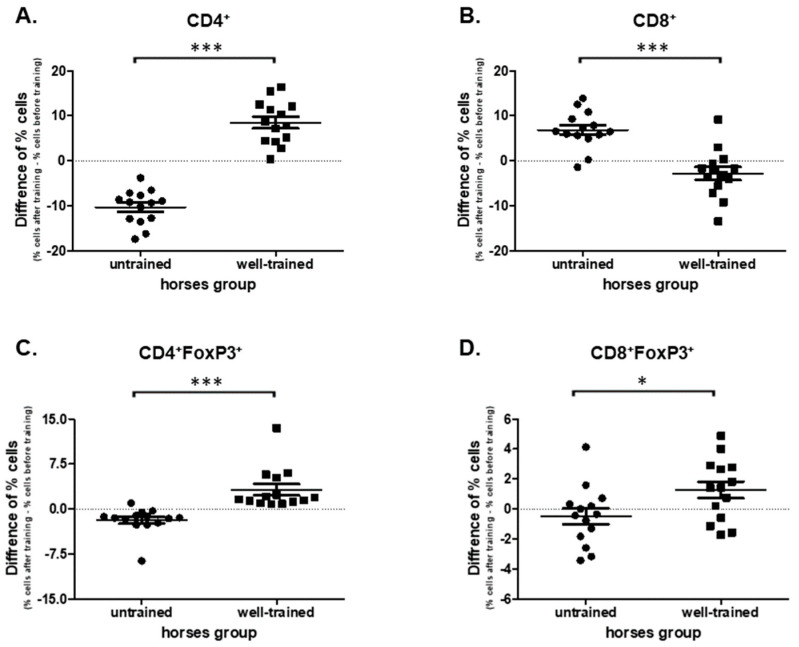
Physical activity has an influence on a variety of processes in an athlete's organism including the immune system. Unfortunately, there is a lack of studies regarding racehorse immune cells, especially when the horse model is compared to human exercise physiology. The aim of the study was to determine changes in immune cell proliferation, lymphocyte populations, and monocyte functionality in trained and untrained racehorses after exercise. In this study, field data were collected. The cells from 28 racehorses (14 untrained and 14 well-trained) were collected before and after exercise (800 m at a speed of about 800 m/min) and cultured for 4 days. The expression of CD4, CD8, FoxP, CD14, MHCII, and CD5 in PBMC, and reactive oxygen species (ROS) production, as well as cell proliferation, were evaluated by flow cytometry. In addition, IL-1β, IL-4, IL-6, IL-10, IL-17, INF-γ, and TNF-α concentrations were evaluated by ELISA. The creation of an anti-inflammatory environment in well-trained horses was confirmed. In contrast, a pro-inflammatory reaction occurred in untrained horses after training. In conclusion, an anti-inflammatory state occurs in well-trained racehorses, which is an adaptational reaction to an increased workload during training.
体育活动会对运动员机体的多种过程产生影响,包括免疫系统。遗憾的是,关于赛马免疫细胞的研究匮乏,尤其是将马的模型与人类运动生理学进行比较时。本研究的目的是确定训练和未训练的赛马运动后免疫细胞增殖、淋巴细胞群体及单核细胞功能的变化。在本研究中,收集了现场数据。在运动前后(以约800米/分钟的速度跑800米)采集了28匹赛马(14匹未训练的和14匹训练有素的)的细胞,并培养4天。通过流式细胞术评估外周血单核细胞(PBMC)中CD4、CD8、FoxP、CD14、MHCII和CD5的表达,以及活性氧(ROS)的产生和细胞增殖。此外,通过酶联免疫吸附测定(ELISA)评估白细胞介素-1β(IL-1β)、白细胞介素-4(IL-4)、白细胞介素-6(IL-6)、白细胞介素-10(IL-10)、白细胞介素-17(IL-17)、干扰素-γ(INF-γ)和肿瘤坏死因子-α(TNF-α)的浓度。证实了训练有素的马匹中会形成抗炎环境。相比之下,未训练的马匹在训练后发生了促炎反应。总之,训练有素的赛马会出现抗炎状态,这是对训练期间工作量增加的一种适应性反应。