Setor de Pos-graduaçao, Pesquisa e Inovação, Centro Universitârio Saûde ABC, Fundação do ABC, Santo André, SP, Brazil.
Cartagena, Spain.
Trop Biomed. 2020 Jun;37(2):513-535.
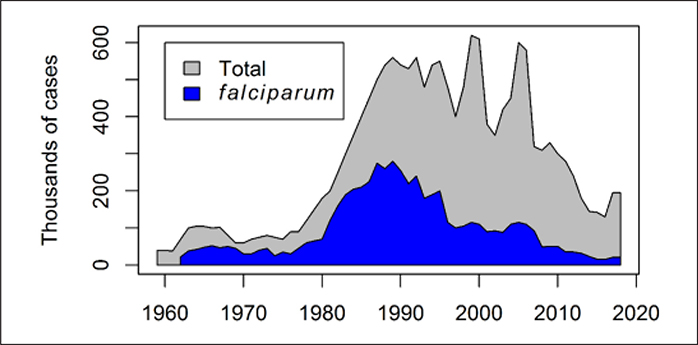
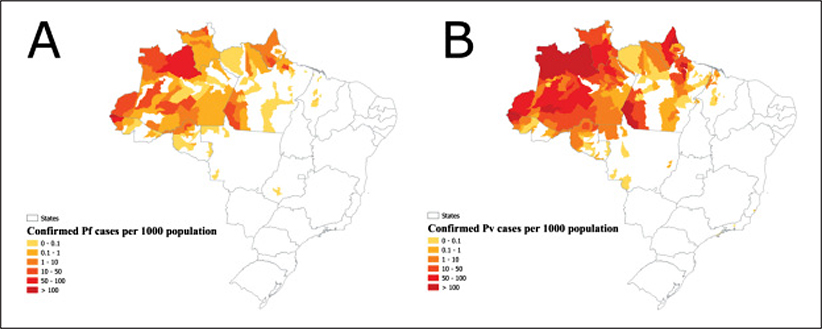
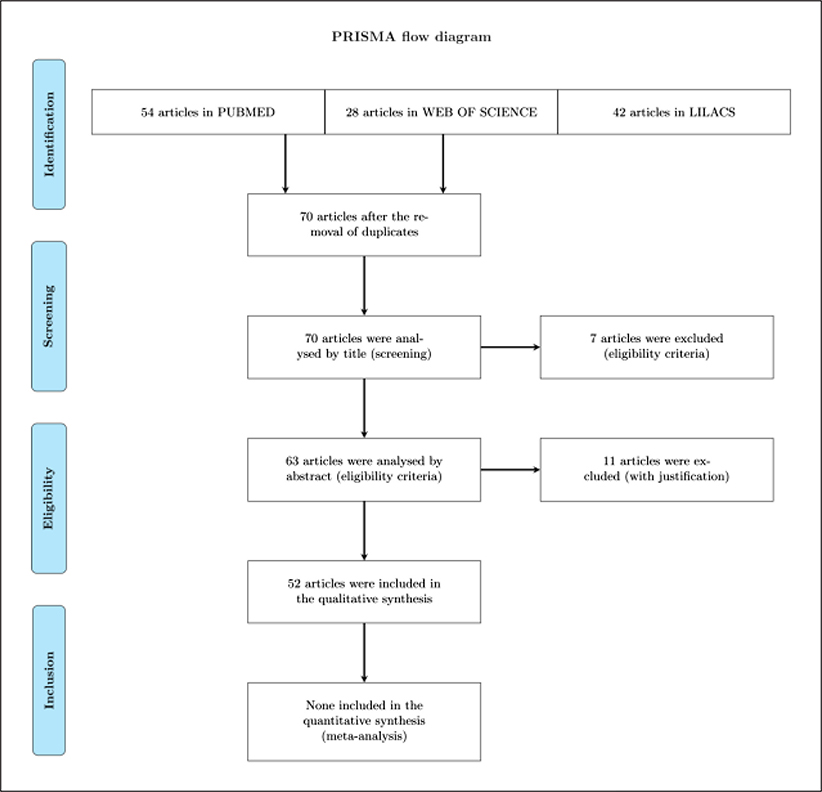
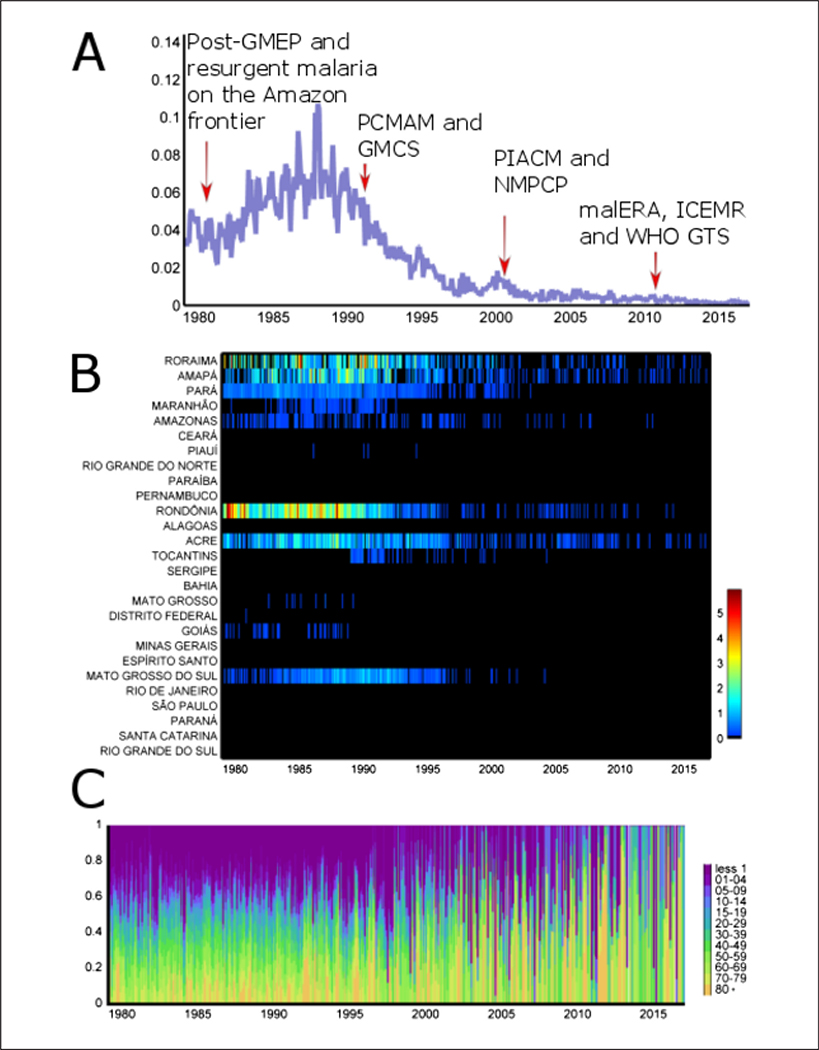
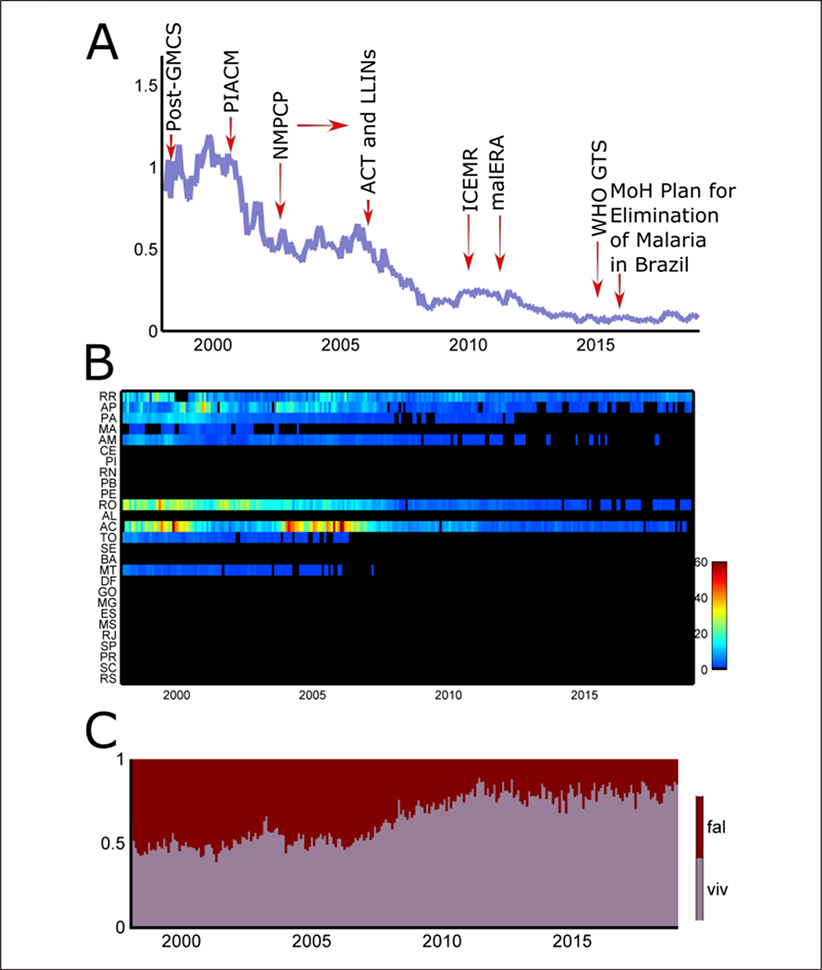
After a centenary fight against malaria, Brazil has seen an opportunity for change with the proposal of the malaria elimination policy set by the Brazilian government, in line with malaria elimination policies in other Latin American countries. Brazilian malaria experts regard eliminating malaria by 2030 to be within reach. Herein we evaluated the likelihood that malaria elimination can be accomplished in Brazil through systematic review of the literature on malaria elimination in Brazil and epidemiological analysis. Fifty-two articles referring to malaria eradication/elimination in Brazil were analyzed to identify challenges and technological breakthroughs for controlling malaria. Monthly deaths (1979-2016) and monthly severe malaria cases (1998-2018) were analyzed according to age groups, geographic region and parasite species. As a result, we observed that the declining malaria burden was mostly attributable to a decline in At the same time, the proportional increase of -malaria in comparison with -malaria was notable. This niche replacement mechanism was discussed in the reviewed literature. In addition, the challenges to -malaria elimination outnumbered the available technological breakthroughs. Although accumulated and basic information exists on mosquito vector biology, the lack of specific knowledge about mosquito vector taxonomy and ecology may hamper current attempts at stopping malaria in the country. An impressive reduction in malaria hospitalizations and mortality was seen in Brazil in the past 3 decades. Eliminating malaria deaths in children less than 5 years and severe cases may be achievable goals under the current malaria policy until 2030. However, eliminating malaria transmission and morbidity seems unattainable with the available tools. Therefore, complete malaria elimination in Brazil in the near future is unlikely.
在与疟疾斗争了一个世纪之后,巴西政府提出了消除疟疾政策,这与其他拉丁美洲国家的消除疟疾政策一致,为改变现状提供了契机。巴西的疟疾专家认为,到 2030 年消除疟疾是可行的。为此,我们通过对巴西消除疟疾文献的系统回顾和流行病学分析,评估了巴西消除疟疾的可能性。分析了 52 篇关于巴西消除疟疾的文章,以确定控制疟疾的挑战和技术突破。根据年龄组、地理区域和寄生虫种类,分析了 1979 年至 2016 年每月疟疾死亡人数和 1998 年至 2018 年每月重症疟疾病例数。结果表明,疟疾负担的下降主要归因于 -疟疾的下降。同时,-疟疾的比例增加与 -疟疾相比是显著的。这一生态位替代机制在综述文献中进行了讨论。此外,消除 -疟疾的挑战超过了现有的技术突破。尽管蚊子媒介生物学方面积累了大量的基础信息,但对蚊子媒介分类学和生态学的了解不足,可能会阻碍该国目前停止疟疾传播的努力。在过去的 30 年里,巴西的疟疾住院率和死亡率显著下降。在当前的疟疾政策下,到 2030 年,消除 5 岁以下儿童和重症疟疾死亡病例可能是可以实现的目标。然而,利用现有的工具消除疟疾传播和发病率似乎是不可能的。因此,在不久的将来,巴西不太可能完全消除疟疾。