Lin Guozhen, Zhang Shiyu, Zhong Yi, Zhang Lin, Ai Siqi, Li Kuibiao, Su Wenzhe, Cao Lan, Zhao Yuteng, Tian Fei, Li Jinrong, Wu Yinglin, Guo Chongshan, Peng Rongfei, Wu Xinwei, Gan Pingsheng, Zhu Wei, Lin Hualiang, Zhang Zhoubin
Department of Basic Public Health, Guangzhou Center for Disease Control and Prevention, Guangzhou, 510440, China.
Department of Epidemiology, School of Public Health, Sun Yat-sen University, Guangzhou, 510030, China.
Atmos Environ (1994). 2021 Feb 1;246:118083. doi: 10.1016/j.atmosenv.2020.118083. Epub 2020 Nov 20.
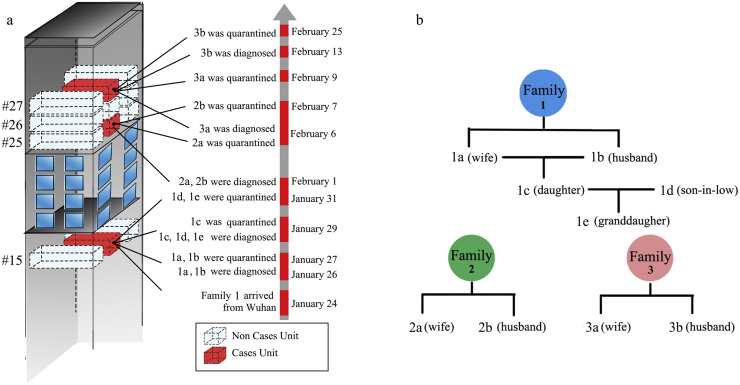
Nine COVID-19 (Corona Virus Disease, 2019) cases were observed in one community in Guangzhou. All the cases lived in three vertically aligned units of one building sharing the same piping system, which provided one unique opportunity to examine the transmission mode of SARS-CoV-2.
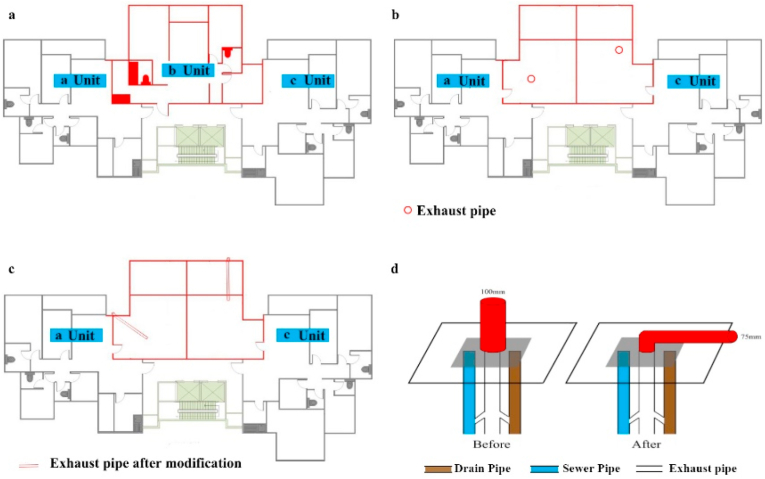
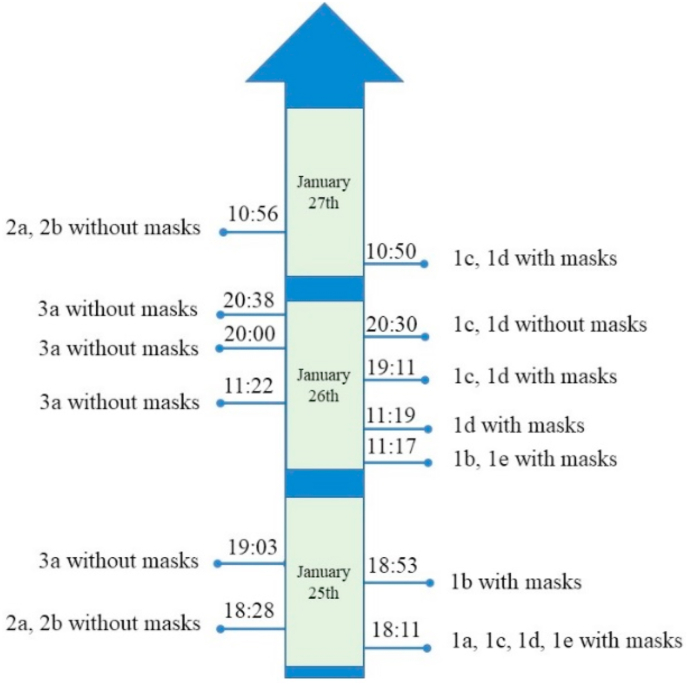
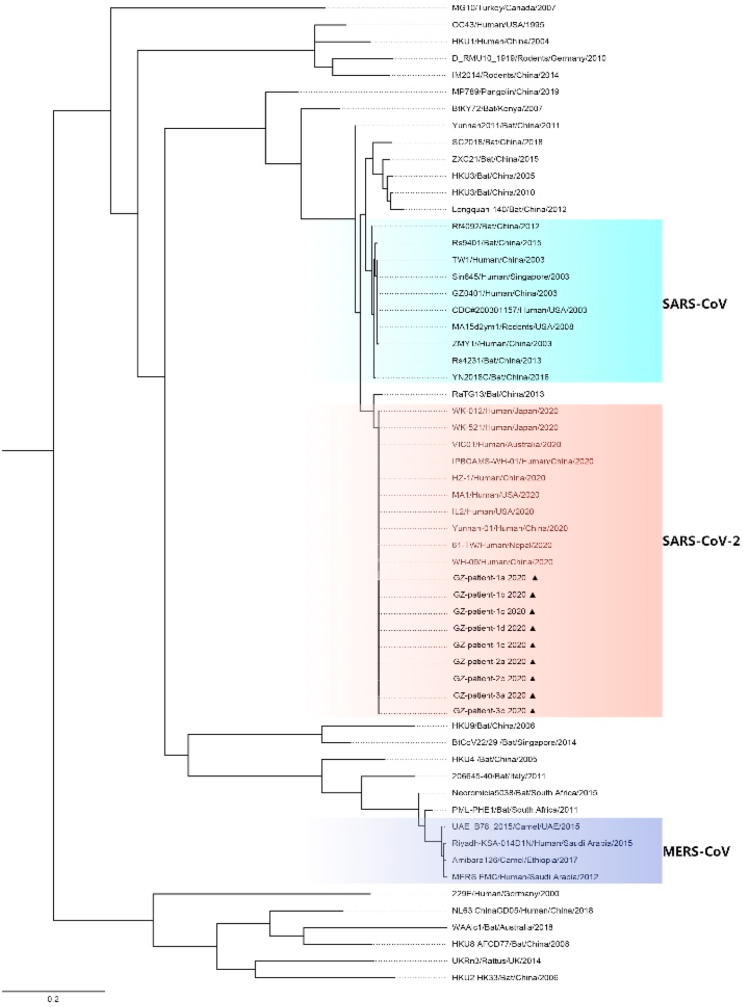
We interviewed the cases on the history of travelling and close contact with the index patients. Respiratory samples from all the cases were collected for viral phylogenetic analyses. A simulation experiment in the building and a parallel control experiment in a similar building were then conducted to investigate the possibility of transmission through air.
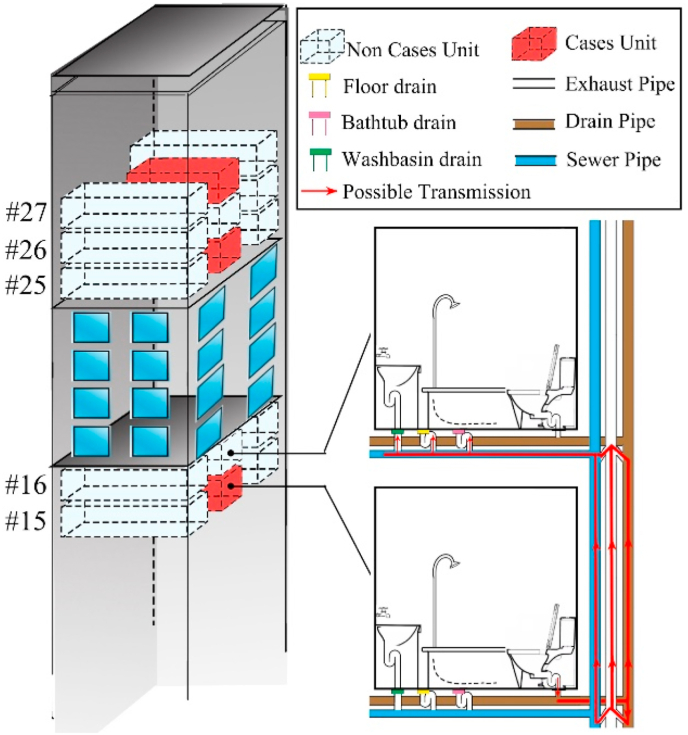
Index patients living in Apartment 15-b had a travelling history in Wuhan, and four cases who lived in Apartment 25-b and 27-b were subsequently diagnosed. Phylogenetic analyses showed that virus of all the patients were from the same strain of the virus. No close contacts between the index cases and other families indicated that the transmission might not occur through droplet and close contacts. Airflow detection and simulation experiment revealed that flushing the toilets could increase the speed of airflow in the pipes and transmitted the airflow from Apartment 15-b to 25-b and 27-b. Reduced exhaust flow rates in the infected building might have contributed to the outbreak.
The outbreak of COVID-19 in this community could be largely explained by the transmission through air, and future efforts to prevent the infection should take the possibility of transmission through air into consideration. A disconnected drain pipe and exhaust pipe for toilet should be considered in the architectural design to help prevent possible virus spreading through the air.
在广州的一个社区中观察到9例新型冠状病毒肺炎(2019冠状病毒病)病例。所有病例居住在同一栋楼的三个垂直对齐的单元中,共用同一管道系统,这为研究严重急性呼吸综合征冠状病毒2的传播模式提供了一个独特的机会。
我们询问了这些病例的旅行史以及与首例患者的密切接触情况。采集了所有病例的呼吸道样本进行病毒系统发育分析。然后在该建筑物内进行了模拟实验,并在一栋类似的建筑物内进行了平行对照实验,以研究空气传播的可能性。
居住在15 - b室的首例患者有武汉旅行史,随后居住在25 - b室和27 - b室的4例病例被确诊。系统发育分析表明,所有患者的病毒均来自同一病毒株。首例病例与其他家庭之间没有密切接触,这表明传播可能不是通过飞沫和密切接触发生的。气流检测和模拟实验表明,冲洗马桶会增加管道内的气流速度,并将气流从15 - b室传输到25 - b室和27 - b室。受感染建筑物内排气流量的减少可能是导致疫情爆发的原因之一。
该社区新型冠状病毒肺炎的爆发很大程度上可能是由空气传播所致,未来预防感染的工作应考虑空气传播的可能性。在建筑设计中应考虑设置断开的马桶排水管和排气管,以帮助防止病毒通过空气传播。