Research School of Population Health, Australian National University, Canberra, Australia.
Global Health Group, University of California, San Francisco, San Francisco, USA.
Sci Rep. 2020 Nov 25;10(1):20570. doi: 10.1038/s41598-020-77519-8.
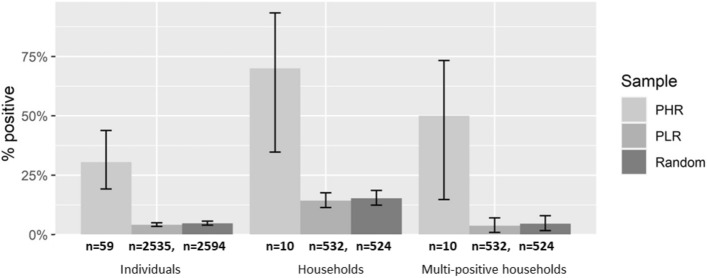
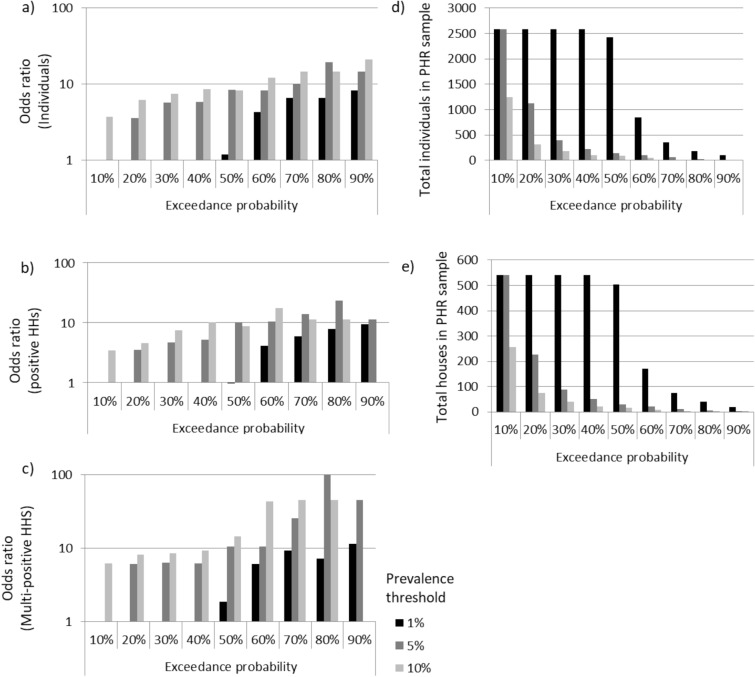
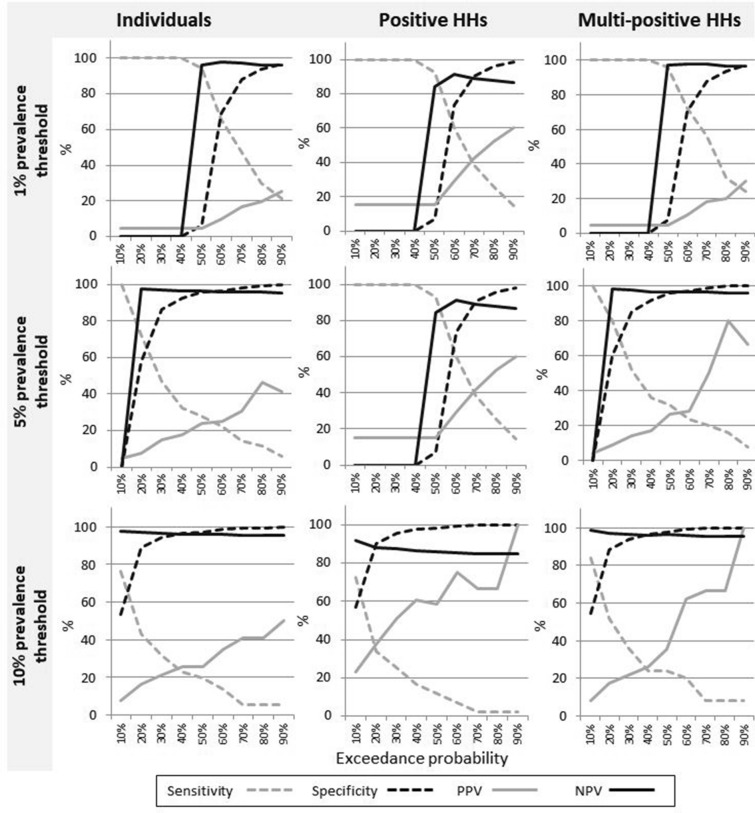
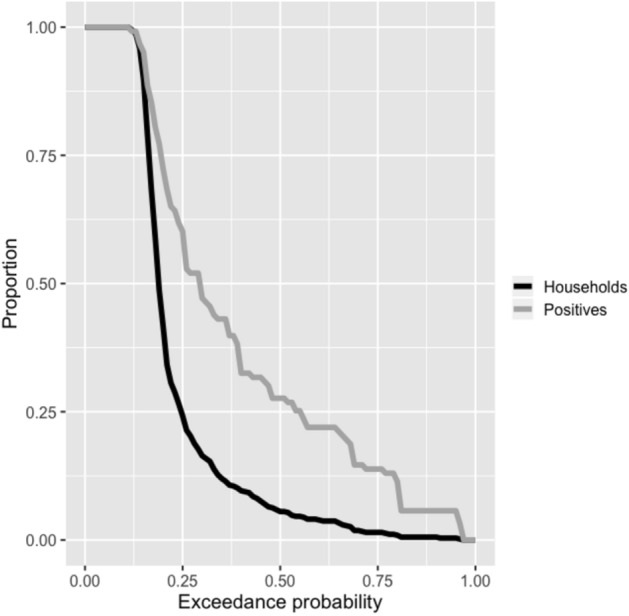
The global elimination of lymphatic filariasis (LF) is a major focus of the World Health Organization. One key challenge is locating residual infections that can perpetuate the transmission cycle. We show how a targeted sampling strategy using predictions from a geospatial model, combining random forests and geostatistics, can improve the sampling efficiency for identifying locations with high infection prevalence. Predictions were made based on the household locations of infected persons identified from previous surveys, and environmental variables relevant to mosquito density. Results show that targeting sampling using model predictions would have allowed 52% of infections to be identified by sampling just 17.7% of households. The odds ratio for identifying an infected individual in a household at a predicted high risk compared to a predicted low risk location was 10.2 (95% CI 4.2-22.8). This study provides evidence that a 'one size fits all' approach is unlikely to yield optimal results when making programmatic decisions based on model predictions. Instead, model assumptions and definitions should be tailored to each situation based on the objective of the surveillance program. When predictions are used in the context of the program objectives, they can result in a dramatic improvement in the efficiency of locating infected individuals.
全球消除淋巴丝虫病(LF)是世界卫生组织的一个主要重点。一个关键挑战是定位可能使传播周期持续存在的残留感染。我们展示了如何使用基于地理空间模型的预测(结合随机森林和地统计学)的靶向抽样策略来提高识别高感染率地点的抽样效率。预测是基于先前调查中确定的感染者的家庭位置以及与蚊子密度相关的环境变量做出的。结果表明,使用模型预测进行靶向抽样,仅需抽样 17.7%的家庭,就可以发现 52%的感染。与预测的低风险地点相比,在预测的高风险地点识别出一个感染者的家庭的比值比为 10.2(95%CI 4.2-22.8)。这项研究提供了证据,表明在基于模型预测做出计划决策时,“一刀切”的方法不太可能产生最佳结果。相反,应根据监测计划的目标来调整模型假设和定义。当预测在计划目标的背景下使用时,它们可以极大地提高定位感染者的效率。