Department of Health Sciences, University "Magna Græcia" of Catanzaro, Catanzaro 88100, Italy.
Department of Experimental and Clinical Medicine, University "Magna Græcia" of Catanzaro, Catanzaro 88100, Italy.
Int J Nanomedicine. 2020 Nov 19;15:9197-9210. doi: 10.2147/IJN.S237508. eCollection 2020.
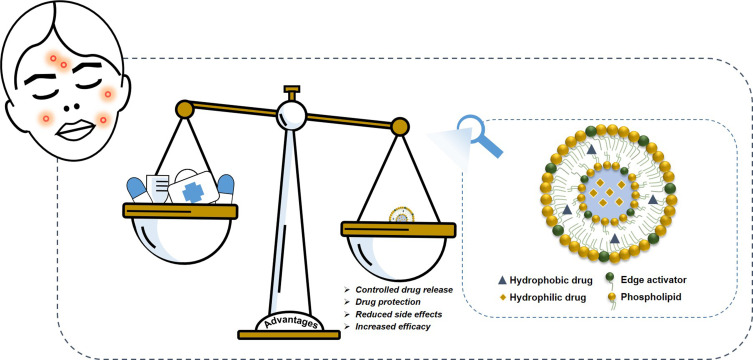
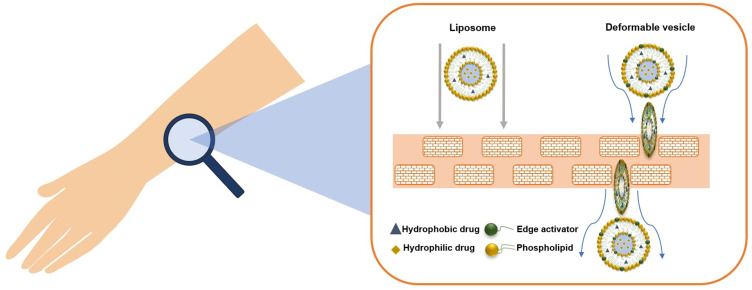
Acne is a common skin disease that affect over 80% of adolescents. It is characterized by inflammation of the hair bulb and the attached sebaceous gland. To date, many strategies have been used to treat acne as a function of the disease severity. However, common treatments for acne seem to show several side effects, from local irritation to more serious collateral effects. The use of topical vesicular carriers able to deliver active compounds is currently considered as an excellent approach in the treatment of different skin diseases. Many results in the literature have proven that drug delivery systems are useful in overcoming the toxicity induced by common drug therapies, while maintaining their therapeutic efficacy. Starting from these assumptions, the authors reviewed drug delivery systems already realized for the topical treatment of acne, with a focus on their limitations and advantages over conventional treatment strategies. Although their exact mechanism of permeation is not often completely clear, deformable vesicles seem to be the best solution for obtaining a specific delivery of drugs into the deeper skin layers, with consequent increased local action and minimized collateral effects.
痤疮是一种常见的皮肤疾病,影响超过 80%的青少年。它的特征是毛囊和附属的皮脂腺的炎症。迄今为止,已经有许多策略被用于根据疾病的严重程度来治疗痤疮。然而,痤疮的常见治疗方法似乎表现出一些副作用,从局部刺激到更严重的副作用。目前,使用能够输送活性化合物的局部水疱载体被认为是治疗不同皮肤疾病的一种极好方法。许多文献中的结果已经证明,药物输送系统在克服常见药物治疗引起的毒性方面非常有用,同时保持其治疗效果。基于这些假设,作者综述了已经用于痤疮局部治疗的药物输送系统,重点讨论了它们与传统治疗策略相比的局限性和优势。尽管它们的渗透确切机制并不总是完全清楚,但变形囊泡似乎是将药物特异性递送至深层皮肤层的最佳解决方案,从而增加局部作用并最小化副作用。