Albright Michaeline B N, Johansen Renee, Thompson Jaron, Lopez Deanna, Gallegos-Graves La V, Kroeger Marie E, Runde Andreas, Mueller Rebecca C, Washburne Alex, Munsky Brian, Yoshida Thomas, Dunbar John
Biosciences Division, Los Alamos National Laboratory, Los Alamos, NM, United States.
Department of Chemical and Biological Engineering, Colorado State University, Fort Collins, CO, United States.
Front Microbiol. 2020 Nov 6;11:542220. doi: 10.3389/fmicb.2020.542220. eCollection 2020.
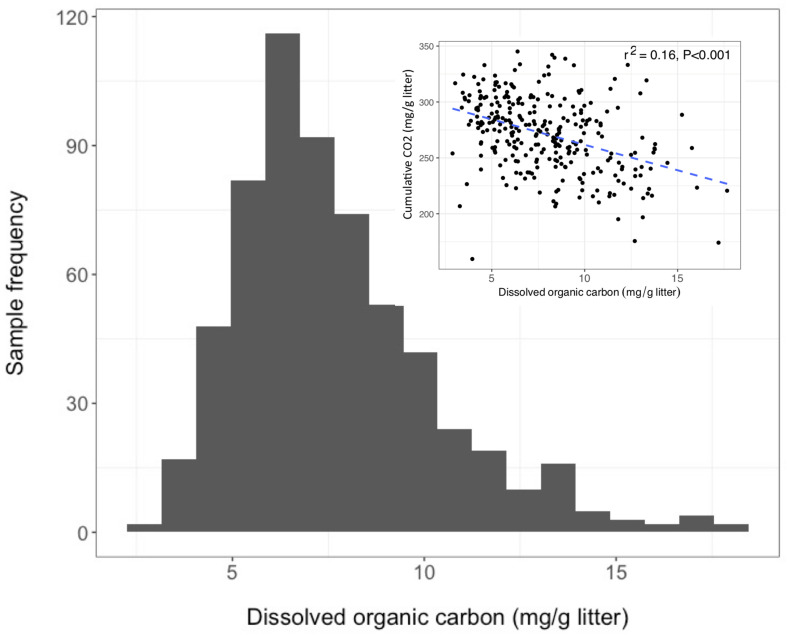
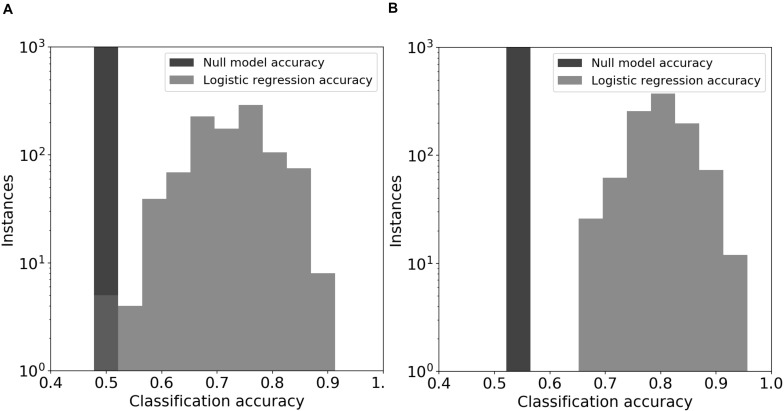
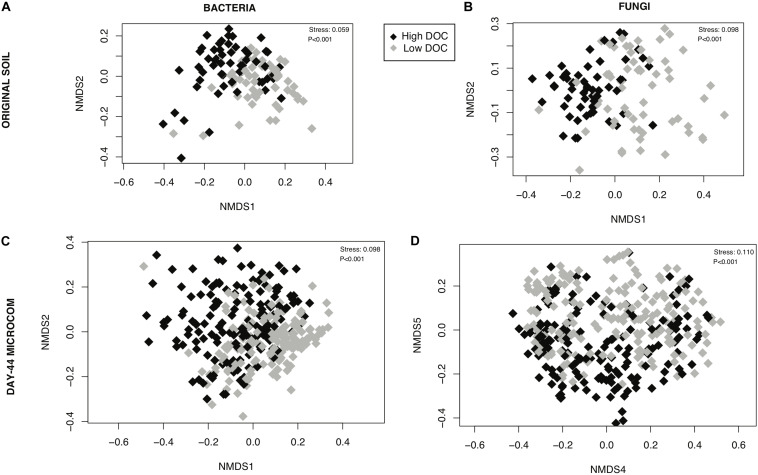
Discovering widespread microbial processes that drive unexpected variation in carbon cycling may improve modeling and management of soil carbon (Prescott, 2010; Wieder et al., 2015a, 2018). A first step is to identify community features linked to carbon cycle variation. We addressed this challenge using an epidemiological approach with 206 soil communities decomposing Ponderosa pine litter in 618 microcosms. Carbon flow from litter decomposition was measured over a 6-week incubation. Cumulative CO from microbial respiration varied two-fold among microcosms and dissolved organic carbon (DOC) from litter decomposition varied five-fold, demonstrating large functional variation despite constant environmental conditions where strong selection is expected. To investigate microbial features driving DOC concentration, two microbial community cohorts were delineated as "high" and "low" DOC. For each cohort, communities from the original soils and from the final microcosm communities after the 6-week incubation with litter were taxonomically profiled. A logistic model including total biomass, fungal richness, and bacterial richness measured in the original soils or in the final microcosm communities predicted the DOC cohort with 72 ( < 0.05) and 80 ( < 0.001) percent accuracy, respectively. The strongest predictors of the DOC cohort were biomass and either fungal richness (in the original soils) or bacterial richness (in the final microcosm communities). Successful forecasting of functional patterns after lengthy community succession in a new environment reveals strong historical contingencies. Forecasting future community function is a key advance beyond correlation of functional variance with end-state community features. The importance of taxon richness-the same feature linked to carbon fate in gut microbiome studies-underscores the need for increased understanding of biotic mechanisms that can shape richness in microbial communities independent of physicochemical conditions.
发现驱动碳循环中意外变化的广泛微生物过程,可能会改善土壤碳的建模和管理(普雷斯科特,2010年;维德等人,2015年a,2018年)。第一步是确定与碳循环变化相关的群落特征。我们采用流行病学方法应对这一挑战,用206个土壤群落分解618个微观世界中的黄松落叶。在6周的培养期内测量了落叶分解产生的碳流。微生物呼吸产生的累积二氧化碳在各微观世界中变化了两倍,落叶分解产生的溶解有机碳(DOC)变化了五倍,这表明尽管环境条件恒定且预计会有强烈选择,但仍存在很大的功能差异。为了研究驱动DOC浓度的微生物特征,将两个微生物群落群组划分为“高”和“低”DOC。对于每个群组,对原始土壤中的群落以及与落叶一起培养6周后的最终微观世界群落进行了分类分析。一个包括在原始土壤或最终微观世界群落中测量的总生物量、真菌丰富度和细菌丰富度的逻辑模型,分别以72%(<0.05)和80%(<0.001)的准确率预测了DOC群组。DOC群组的最强预测因子是生物量以及真菌丰富度(在原始土壤中)或细菌丰富度(在最终微观世界群落中)。在新环境中经过长时间群落演替后成功预测功能模式,揭示了强烈的历史偶然性。预测未来群落功能是超越功能方差与终态群落特征相关性的关键进展。分类群丰富度的重要性——这一特征与肠道微生物组研究中的碳命运相关——强调了需要更多地了解能够独立于物理化学条件塑造微生物群落丰富度的生物机制。