Klima Cassidy L, Holman Devin B, Cook Shaun R, Conrad Cheyenne C, Ralston Brenda J, Allan Nick, Anholt R Michele, Niu Yan D, Stanford Kim, Hannon Sherry J, Booker Calvin W, McAllister Tim A
Lethbridge Research and Development Centre, Agriculture and Agri-Food Canada, Lethbridge, AB, Canada.
Lacombe Research and Development Centre, Agriculture and Agri-Food Canada, Lacombe, AB, Canada.
Front Microbiol. 2020 Nov 5;11:606438. doi: 10.3389/fmicb.2020.606438. eCollection 2020.
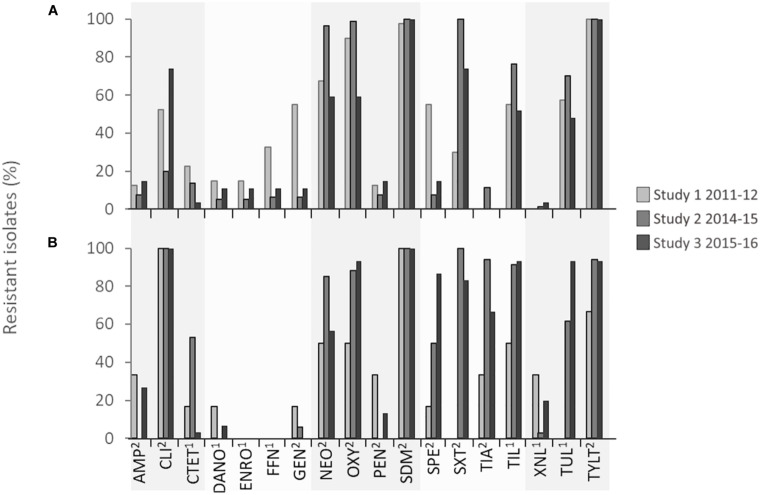
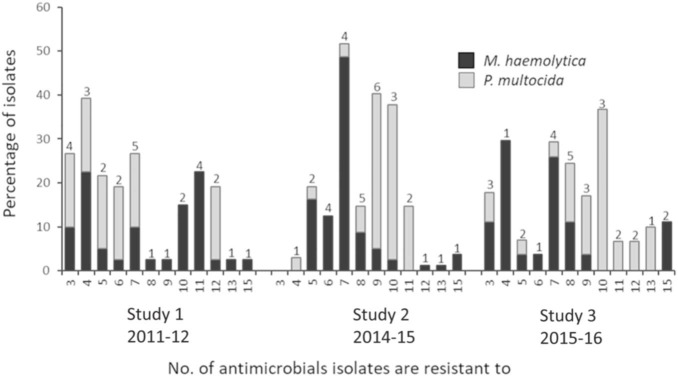
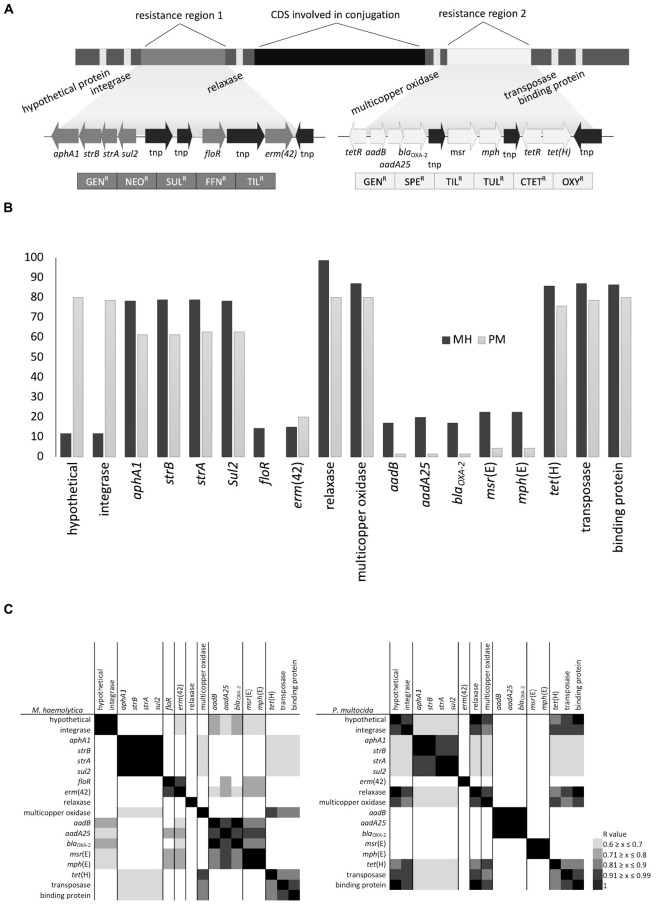
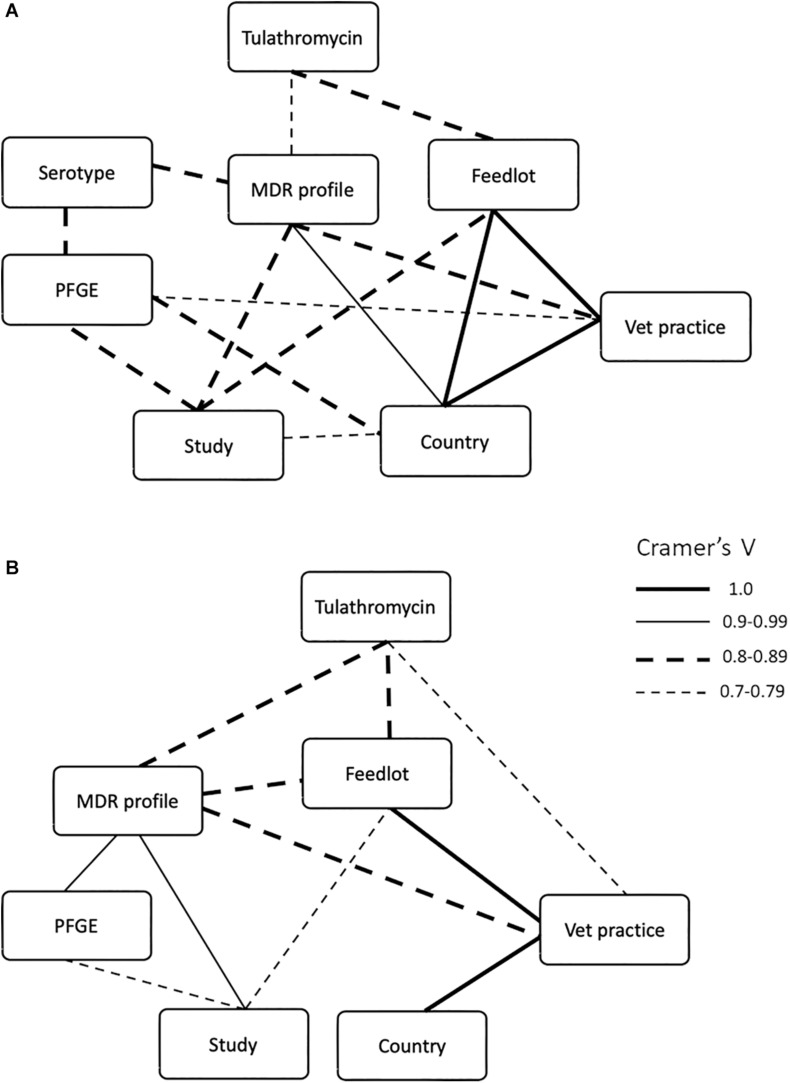
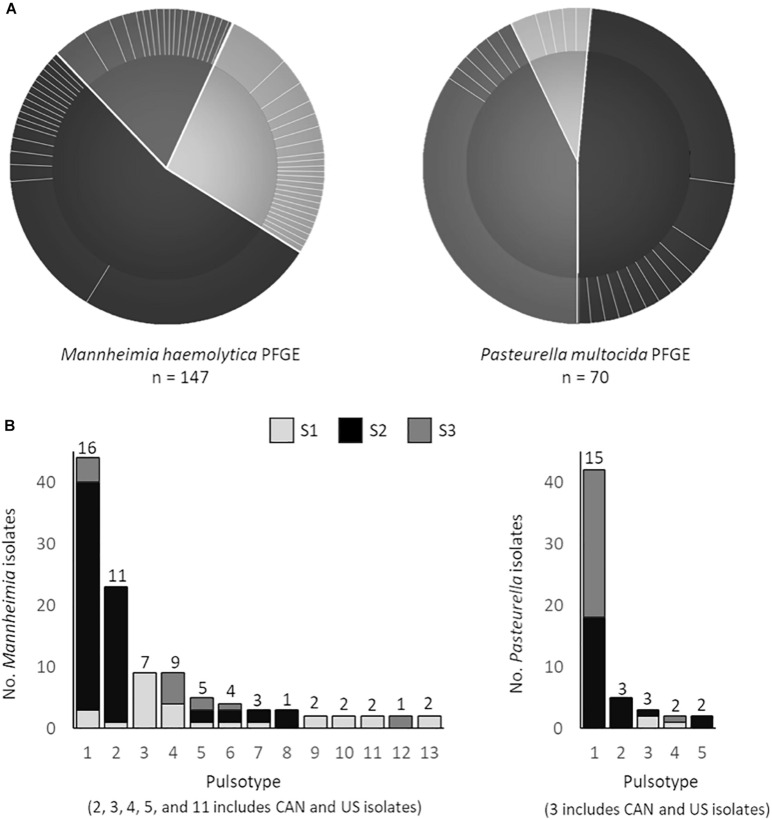
Multidrug-resistant (MDR; resistance to ≥3 antimicrobial classes) members of the family may compromise the efficacy of therapies used to prevent and treat bovine respiratory disease (BRD) in feedlot cattle. This study examined the prevalence of multidrug resistance in strains of and collected from BRD cattle mortalities in North America. Isolates of ( = 147) and ( = 70) spanning 69 Alberta feedlots from 2011 to 2016 and two United States feedlots from 2011 to 2012 were examined for antimicrobial resistance (AMR) in association with integrative and conjugative elements (ICEs). Overall, resistance was high in both bacterial species with an increase in the prevalence of MDR isolates between 2011 and 2016. Resistance to >7 antimicrobial drugs occurred in 31% of and 83% of isolates. Resistance to sulfadimethoxine, trimethoprim/sulfamethoxazole, neomycin, clindamycin oxytetracycline, spectinomycin, tylosin, tilmicosin, and tulathromycin was most common. Although >80% of strains harbored three or more ICE-associated genes, only 12% of and 77% of contained all six, reflecting the diversity of ICEs. There was evidence of clonal spread as and isolates with the same pulsed-field gel electrophoresis profile from the United States in 2011 were isolated in Alberta in 2015-2016. This work highlights that MDR strains of containing ICEs are widespread and may be contributing to BRD therapy failure in feedlot cattle. Given the antimicrobial resistance gene profiles identified, these MDR isolates may be selected for by the use of macrolides, tetracyclines, and/or in-feed supplements containing heavy metals.
该菌属的多重耐药(MDR,即对≥3类抗菌药物耐药)成员可能会影响用于预防和治疗育肥牛牛呼吸道疾病(BRD)的疗法的疗效。本研究调查了从北美BRD死亡牛中分离出的该菌属菌株的多重耐药流行情况。对2011年至2016年来自艾伯塔省69个饲养场以及2011年至2012年来自美国两个饲养场的该菌属(n = 147)和该菌属(n = 70)分离株进行了与整合和接合元件(ICE)相关的抗菌药物耐药性(AMR)检测。总体而言,两种细菌的耐药性都很高,且2011年至2016年间多重耐药分离株的流行率有所上升。31%的该菌属分离株和83%的该菌属分离株对>7种抗菌药物耐药。对磺胺二甲氧嘧啶、甲氧苄啶/磺胺甲恶唑、新霉素、克林霉素、土霉素、壮观霉素、泰乐菌素、替米考星和图拉霉素的耐药最为常见。虽然>80%的菌株含有三个或更多与ICE相关的基因,但只有12%的该菌属和77%的该菌属含有全部六个基因,这反映了ICE的多样性。有克隆传播的证据,因为2011年来自美国的具有相同脉冲场凝胶电泳图谱的该菌属和该菌属分离株在2015 - 2016年在艾伯塔省被分离出来。这项工作突出表明,含有ICE的该菌属多重耐药菌株广泛存在,可能导致育肥牛的BRD治疗失败。鉴于所确定的抗菌药物耐药基因谱,这些多重耐药分离株可能会因使用大环内酯类、四环素类和/或含重金属的饲料添加剂而被选择出来。