Behavioural Science Institute, Radboud University, Nijmegen, The Netherlands.
Erasmus School of Social and Behavioural Sciences, Erasmus University Rotterdam, Rotterdam, The Netherlands.
Public Health Nutr. 2021 Jun;24(8):2324-2336. doi: 10.1017/S1368980020004802. Epub 2020 Nov 27.
To test the effectiveness of a social network intervention (SNI) to improve children's healthy drinking behaviours.
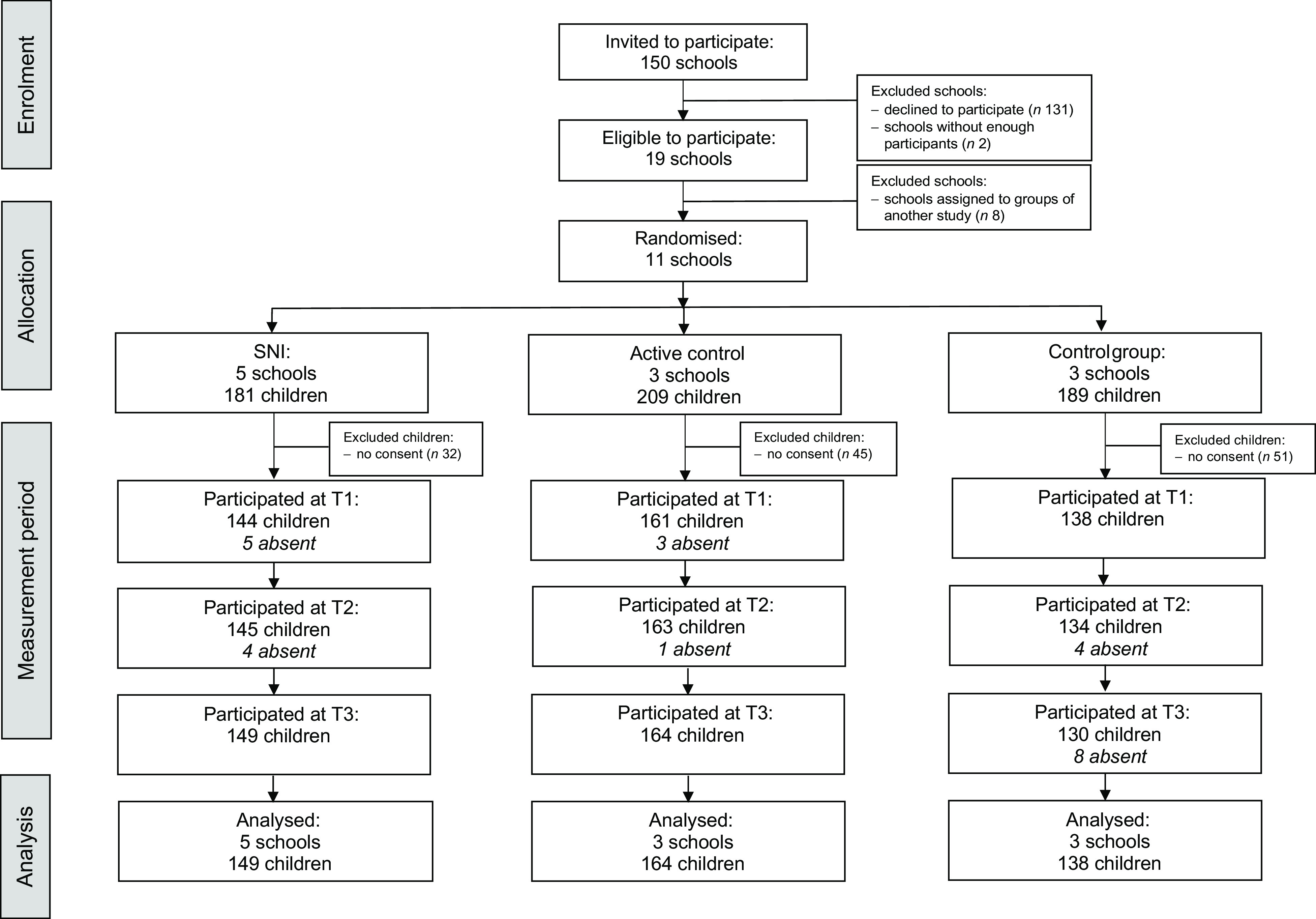
A three-arm cluster randomised control trial design was used. In the SNI, a subset of children were selected and trained as 'influence agents' to promote water consumption-as an alternative to sugar-sweetened beverages (SSB)-among their peers. In the active control condition, all children were simultaneously exposed to the benefits of water consumption. The control condition received no intervention.
Eleven schools in the Netherlands.
Four hundred and fifty-one children (Mage = 10·74, SDage = 0·97; 50·8 % girls).
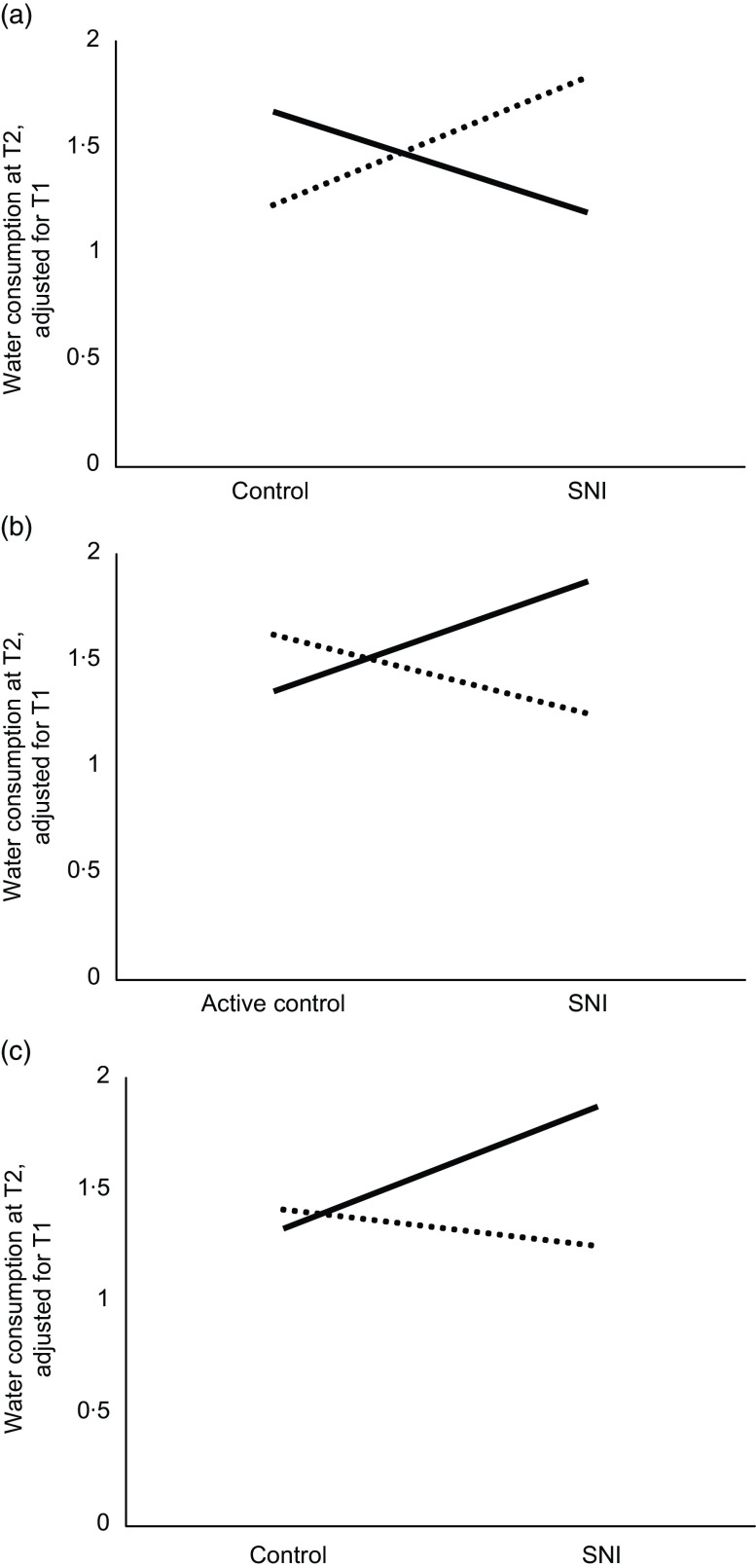
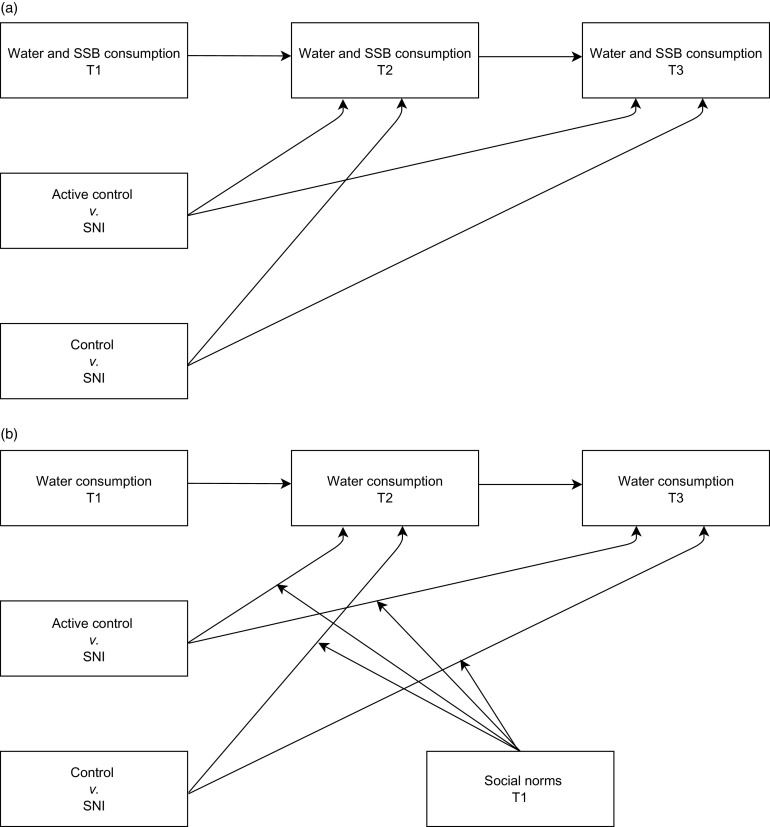
Structural path models showed that children exposed to the SNI consumed 0·20 less SSB per day compared to those in the control condition (β = 0·25, P = 0·035). There was a trend showing that children exposed to the SNI consumed 0·17 less SSB per day than those in the active control condition (β = 0·20, P = 0·061). No differences were found between conditions for water consumption. However, the moderation effects of descriptive norms (β = -0·12, P = 0·028) and injunctive norms (β = 0·11-0·14, both P = 0·050) indicated that norms are more strongly linked to water consumption in the SNI condition compared to the active control and control conditions.
These findings suggest that a SNI promoting healthy drinking behaviours may prevent children from consuming more SSB. Moreover, for water consumption, the prevailing social norms in the context play an important role in mitigating the effectiveness of the SNI.
检验社交网络干预(SNI)对改善儿童健康饮品行为的有效性。
采用三臂群组随机对照试验设计。在 SNI 中,选择一部分儿童作为“影响者”进行培训,以促进其同龄人饮用(而非含糖饮料)。在主动对照条件下,所有儿童同时了解到饮用的益处。对照条件未接受干预。
荷兰 11 所学校。
451 名儿童(Mage=10.74,SDage=0.97;50.8%为女孩)。
结构路径模型显示,与对照组相比,暴露于 SNI 的儿童每天饮用 SSB 减少 0.20 杯(β=0.25,P=0.035)。有趋势表明,暴露于 SNI 的儿童比主动对照条件下的儿童每天少饮用 0.17 杯 SSB(β=0.20,P=0.061)。各组间的饮水量无差异。然而,描述性规范(β=-0.12,P=0.028)和指令性规范(β=0.11-0.14,均 P=0.050)的调节作用表明,与主动对照和对照组相比,SNI 条件下规范与水的摄入量的关联更为紧密。
这些发现表明,促进健康饮品行为的 SNI 可能有助于防止儿童饮用更多 SSB。此外,对于水的摄入量而言,所处环境中的主流规范在减轻 SNI 的有效性方面发挥了重要作用。