Counseling & Counseling Psychology, Arizona State University, Tempe, Arizona, United States of America.
Dirección de Investigaciones Epidemiológicas y Psicosociales, Instituto Nacional de Psiquiatría Ramón de la Fuente Muñiz, Ciudad de México, México.
J Affect Disord. 2021 Feb 15;281:891-898. doi: 10.1016/j.jad.2020.11.038. Epub 2020 Nov 10.
Sexual minority college students are at a higher risk for suicidal thoughts and self-injurious behaviors compared to heterosexual students. Minority stress theory proposes sexual minority individuals experience higher stress due to stigma. Using a sample of Mexican college students, this study tested perceived life stress as a mediator of suicide and self-injury outcomes across various sexual orientation groups.
The sample of college students (N=7882) was recruited from nine Mexican universities as part of the WHO World Mental Health International College Student (WMH-ICS) initiative. Participants completed an online survey including demographic questions, measure of perceived life stress, suicide outcomes, and non-suicidal self-injury (NSSI) in the past 12 months.
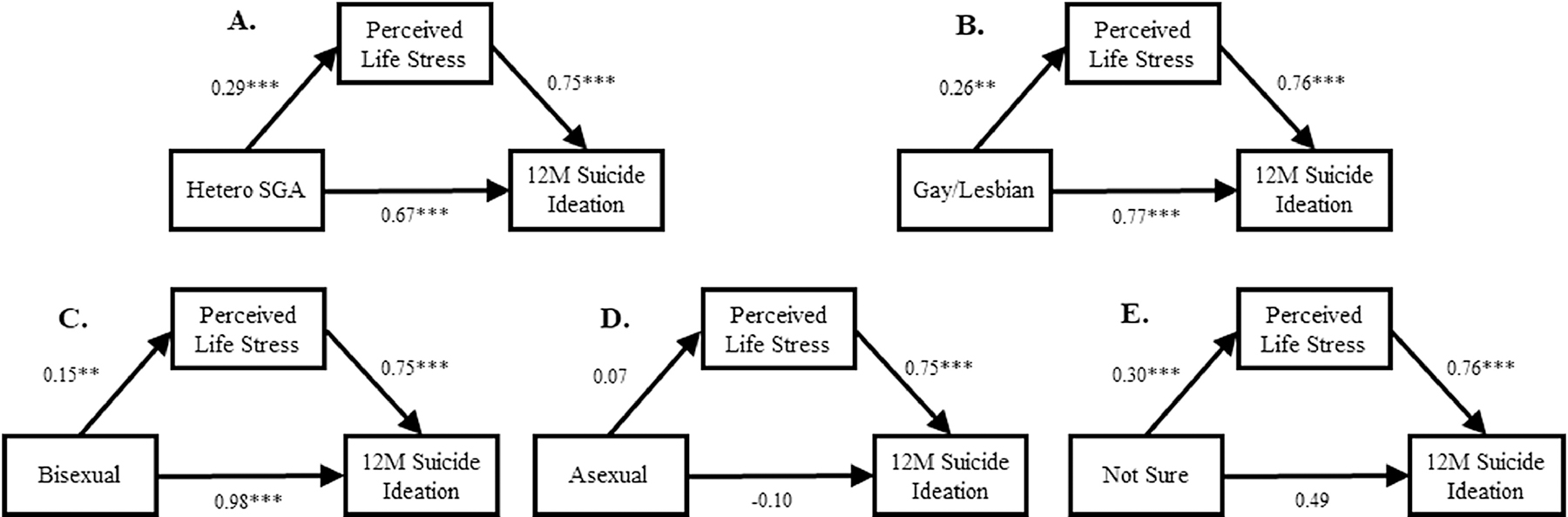
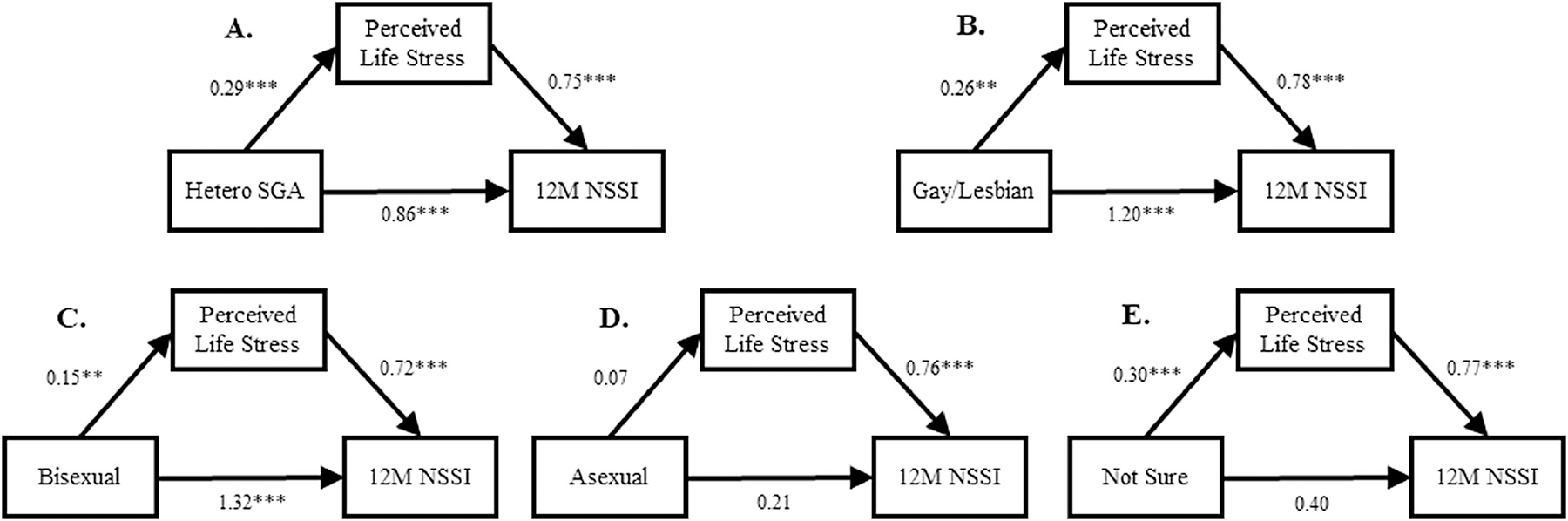
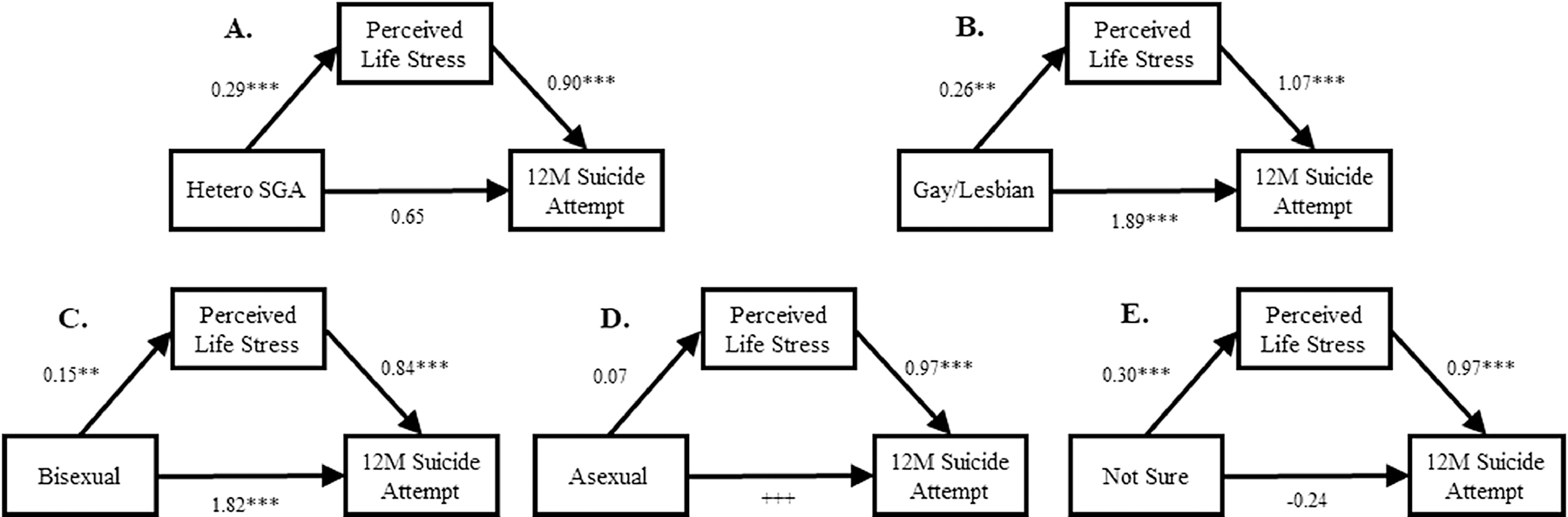
Logistic regression analyses revealed identifying as a sexual minority significantly predicted a higher likelihood of suicide ideation (ORs 2.05-3.00), suicide attempts (ORs 2.48-8.73), and NSSI (ORs 2.92-4.18) compared to heterosexual students reporting no same-gender attraction. Significant indirect effects from mediation path analyses showed perceived life stress mediated the relationship between a sexual minority identity and suicide ideation (range of proportion mediated 10.48-31.48%), attempts (10.48-31.48%), and NSSI (7.69-20.09%) across each group except among asexual students.
The cross-sectional nature of the survey design precludes drawing causal inferences.
Findings from this study contribute to minority stress theory by elucidating the role of perceived life stress as a mediator of suicide ideation and attempts and NSSI among sexual minority college students. Clinical interventions may benefit in focusing on experiences of stress across various life areas when supporting sexual minority college students.
与异性恋学生相比,性少数群体大学生自杀念头和自残行为的风险更高。少数群体应激理论提出,性少数群体个体由于污名而经历更高的压力。本研究使用墨西哥大学生样本,检验了感知生活压力作为不同性取向群体自杀和自残结果的中介。
该大学生样本(N=7882)是作为世界卫生组织世界心理健康国际大学生(WMH-ICS)倡议的一部分,从墨西哥的九所大学招募而来。参与者完成了一项在线调查,包括人口统计学问题、感知生活压力的测量、自杀结果以及过去 12 个月的非自杀性自伤(NSSI)。
逻辑回归分析显示,与报告没有同性吸引的异性恋学生相比,认同自己为性少数群体显著预测了更高的自杀意念(ORs 2.05-3.00)、自杀企图(ORs 2.48-8.73)和 NSSI(ORs 2.92-4.18)的可能性。中介路径分析的显著间接效应表明,感知生活压力中介了性少数群体身份与自杀意念(范围为 10.48%-31.48%)、自杀企图(10.48%-31.48%)和 NSSI(7.69%-20.09%)之间的关系,除了无性恋学生之外,每个群体都存在这种关系。
调查设计的横断面性质排除了因果推断。
本研究的结果通过阐明感知生活压力作为性少数群体大学生自杀意念和企图以及 NSSI 的中介作用,为少数群体应激理论做出了贡献。当支持性少数群体大学生时,临床干预可能会受益于关注各种生活领域的压力体验。