Li Yun-Fen, Liu De-Quan, Nie Jian-Yun, Chen De-Dian, Yan Mei, Zuo Zhen, Liu Liang-Xian, Wang Wei-Yu, Zhu Mian-Sheng, Li Wen-Hui
The Third Affiliated Hospital of Kunming Medical University/Yunnan Cancer Hospital, Breast Cancer Surgery Department, Kunming, People's Republic of China.
Yunnan University of Traditional Chinese Medicine, College of Acupuncture, Kunming, People's Republic of China.
Onco Targets Ther. 2020 Nov 17;13:11743-11754. doi: 10.2147/OTT.S272747. eCollection 2020.
To investigate the feasibility and effectiveness of ATAS acupuncture (Acupoints-Time-Space Acupuncture) as a non-pharmacological intervention to prevent or relieve chemotherapy-induced fatigue in breast cancer patients undergoing taxane chemotherapy.
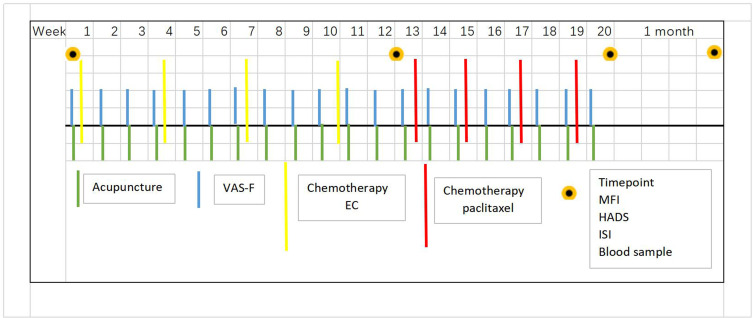
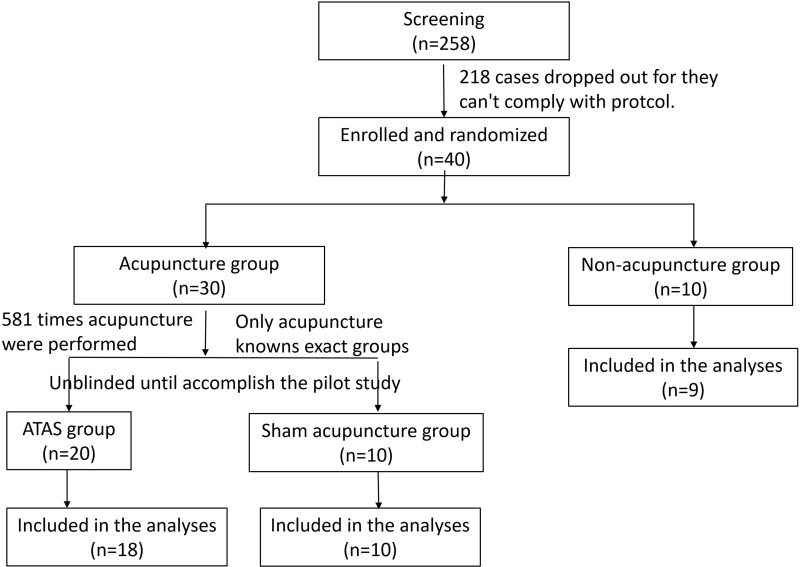
A pilot study in Kunming center with the aim of evaluating 40 patients randomized to 3 groups: ATAS, sham and non-acupuncture with an unequal randomization of 2:1:1. Participants with stage I-III breast cancer were scheduled to receive adjuvant EC4P4 chemotherapy. Participants in the ATAS and sham acupuncture arms received 20 sessions of acupuncture over 20 weeks, non-acupuncture arm received usual care. Evaluation scales, including VAS-F, MFI-20, HDAS, ISI, and blood samples were collected at four timepoints (T1-T4). mRNA sequencing was performed to detect the mechanism of acupuncture.
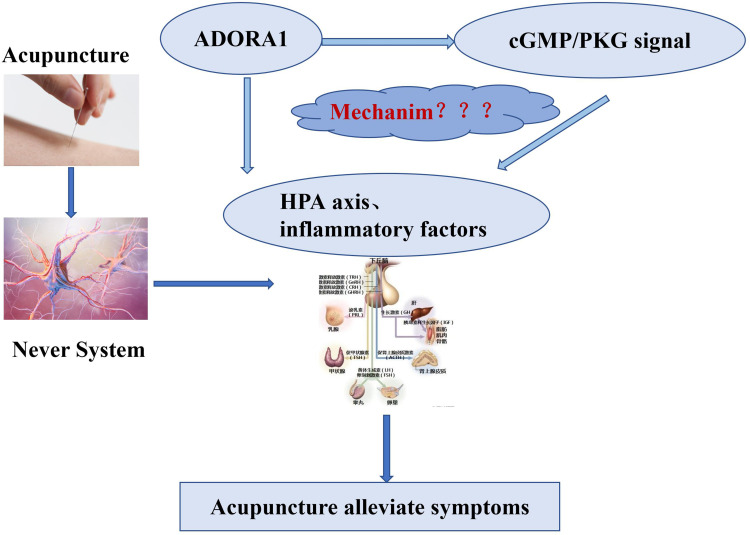
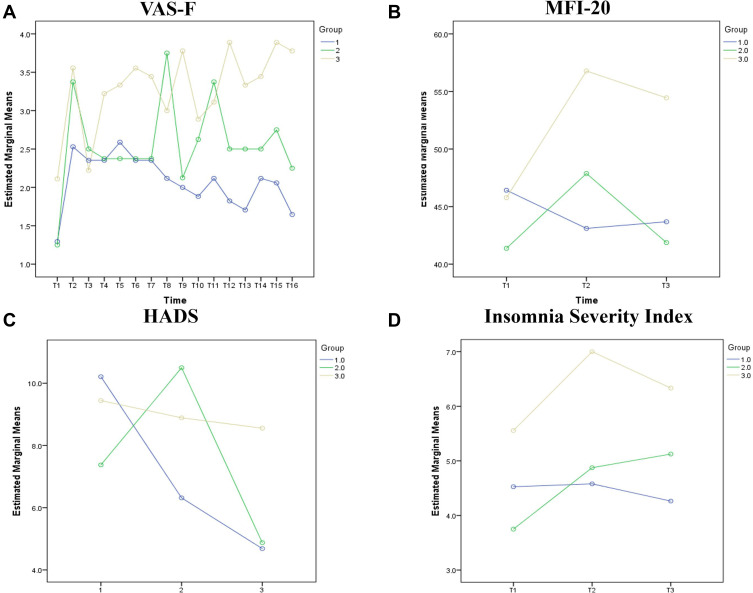
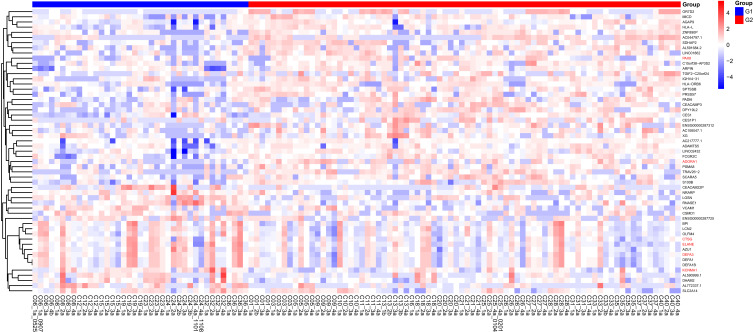
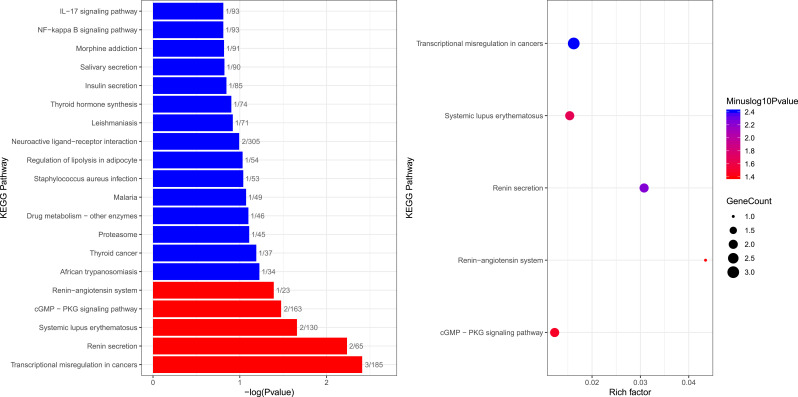
A total of 581 sessions of acupuncture were performed on patients in the acupuncture group. There was no difference between the three groups in terms of clinical characteristics. Patients randomized to ATAS acupuncture had improved symptoms including fatigue, anxiety and insomnia during the whole process of chemotherapy compared with the other two groups. The VAS-F score of ATAS acupuncture group was decreased compared with non-acupuncture group (P=0.004). The score of MFI-20 in ATAS acupuncture group was kept at low level, while the other two groups' scores kept climbing during chemotherapy (P=0.016; P=0.028, respectively). The mechanism of ATAS acupuncture which reduced fatigue and depression may be related to ADROA1, by regulating cGMP/PKG pathway.
This pilot study has demonstrated that ATAS acupuncture can significantly reduce fatigue induced by chemotherapy.
Chinese Clinical Trials Registry, ChiCTR-IPR-17,013,652, registered Dec 3, 2017. http://www.chictr.org.cn/.
Version 3.2 dated from 2018/04/20.
探讨时空穴位针刺法(ATAS 针刺法)作为一种非药物干预措施,预防或缓解接受紫杉烷化疗的乳腺癌患者化疗所致疲劳的可行性和有效性。
在昆明中心进行一项初步研究,旨在评估 40 例患者,随机分为 3 组:ATAS 针刺组、假针刺组和非针刺组,随机比例为 2:1:1。I - III 期乳腺癌患者计划接受辅助 EC4P4 化疗。ATAS 针刺组和假针刺组的参与者在 20 周内接受 20 次针刺治疗,非针刺组接受常规护理。在四个时间点(T1 - T4)收集评估量表,包括视觉模拟疲劳量表(VAS - F)、多维疲劳量表(MFI - 20)、医院焦虑抑郁量表(HDAS)、失眠严重程度指数(ISI)以及血样。进行 mRNA 测序以检测针刺的作用机制。
针刺组患者共接受了 581 次针刺治疗。三组患者的临床特征无差异。与其他两组相比,随机接受 ATAS 针刺的患者在化疗全过程中疲劳、焦虑和失眠等症状有所改善。ATAS 针刺组的 VAS - F 评分与非针刺组相比降低(P = 0.004)。ATAS 针刺组的 MFI - 20 评分保持在较低水平,而其他两组在化疗期间评分持续上升(分别为 P = 0.016;P = 0.028)。ATAS 针刺减轻疲劳和抑郁的机制可能与 ADROA1 有关,通过调节 cGMP/PKG 通路发挥作用。
这项初步研究表明,ATAS 针刺可显著减轻化疗所致疲劳。
中国临床试验注册中心,ChiCTR - IPR - 17,013,652,于 2017 年 12 月 3 日注册。http://www.chictr.org.cn/。
2018 年 4 月 20 日的 3.2 版。