
针刺疗法治疗乳腺癌患者癌症相关疲劳的系统评价与Meta分析
Acupuncture for Managing Cancer-Related Fatigue in Breast Cancer Patients: A Systematic Review and Meta-Analysis.
作者信息
Choi Tae-Young, Ang Lin, Jun Ji Hee, Alraek Terje, Birch Stephen, Lu Weidong, Lee Myeong Soo
机构信息
KM Science Research Division, Korea Institute of Oriental Medicine, Daejeon 34054, Korea.
School of Health Sciences, Kristiania University College, 0107 Oslo, Norway.
出版信息
Cancers (Basel). 2022 Sep 11;14(18):4419. doi: 10.3390/cancers14184419.
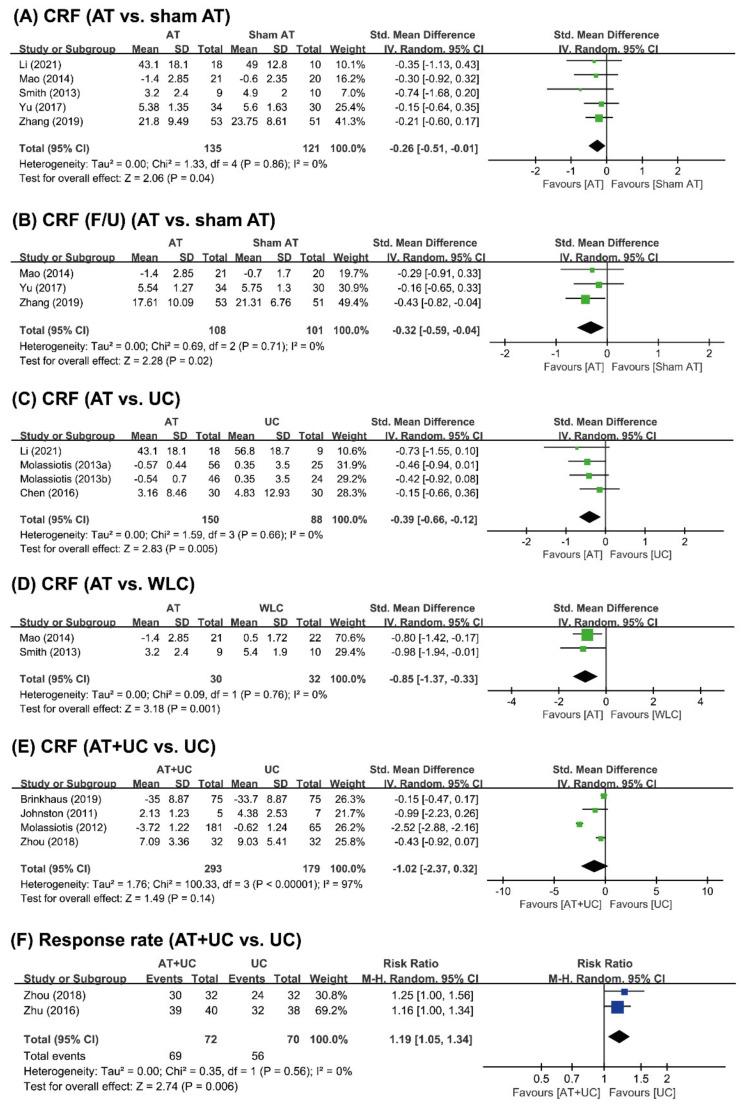
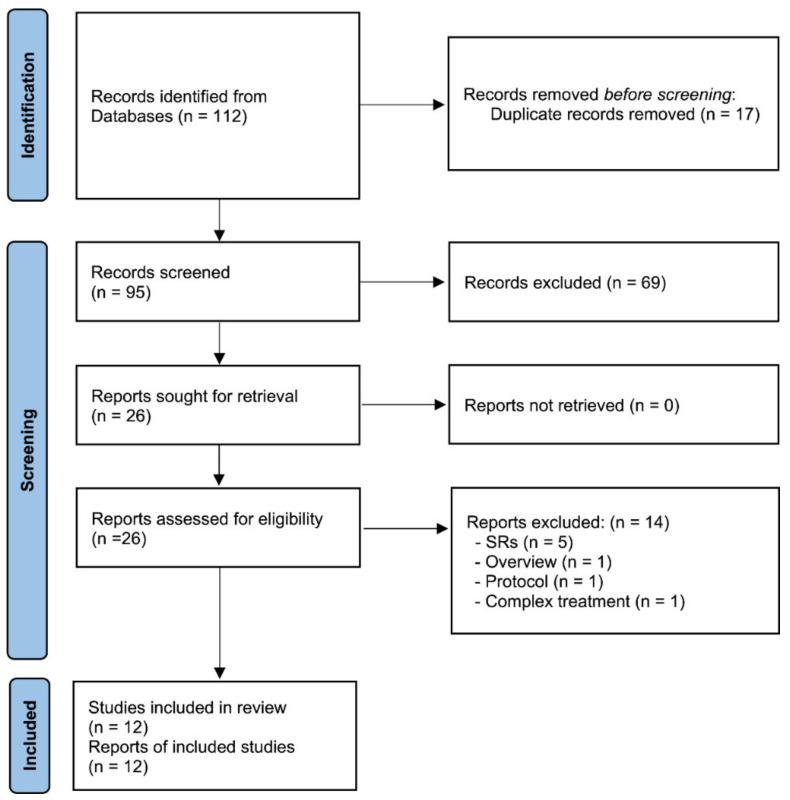
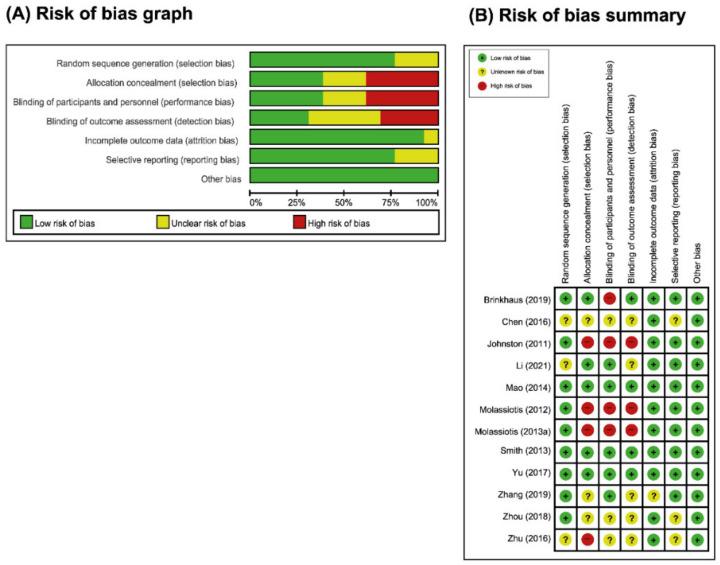
Breast cancer (BC) is the most common cancer in women and is a serious threat to women's health. Cancer-related fatigue (CRF) is a distressing symptom in BC patients during and after chemotherapy or radiation therapy that severely affects quality of life (QoL). AT is widely used for fatigue management. However, the effect of AT on CRF is still uncertain. This study aimed to evaluate the efficacy and safety of AT in the management of CRF in patients with BC. Eleven databases were searched through June 2022. Two researchers independently performed the database search, study selection, data extraction, and risk of bias assessment. Study selection was performed based on predefined Participants, Intervention, Comparators, Outcomes, Study design (PICOS) criteria, and the Preferred Reporting Items for Systematic Reviews and Meta-Analyses (PRISMA) guidelines were followed when reporting the results. A meta-analysis was performed according to the Cochrane systematic review method using RevMan 5.3. A total of 12 studies including a total of 1084 participants were included. The results showed that AT had a beneficial effect compared with sham AT ( = 256, SMD = -0.26, 95% CI [-0.51, -0.01], = 0.04, I = 0%) and a long-term effect on fatigue score ( = 209, MD = -0.32, 95% CI [-0.59, -0.04], = 0.02, I = 0%). Meta-analysis showed that AT had a beneficial effect compared with usual care (UC) on fatigue scores ( = 238, SMD = -0.39, 95% CI [-0.66 to -0.12], = 0.005, I = 0%). Of the 12 articles, 3 articles were judged as having a low risk of bias in all domains and hence were of high quality. No serious adverse effects were identified. AT is an effective and safe treatment for CRF, and AT is more effective than sham AT or UC or wait-list control (WLC). Nevertheless, the methodological quality of most of these studies was low, and the included studies/sample sizes were small, so the ability to derive decisive implications was limited. Further research is needed to confirm these findings.
乳腺癌(BC)是女性中最常见的癌症,对女性健康构成严重威胁。癌症相关疲劳(CRF)是BC患者在化疗或放疗期间及之后出现的一种令人痛苦的症状,严重影响生活质量(QoL)。芳香疗法(AT)被广泛用于疲劳管理。然而,AT对CRF的效果仍不确定。本研究旨在评估AT在BC患者CRF管理中的疗效和安全性。检索了截至2022年6月的11个数据库。两名研究人员独立进行数据库检索、研究选择、数据提取和偏倚风险评估。研究选择基于预先定义的参与者、干预措施、对照、结局、研究设计(PICOS)标准,并在报告结果时遵循系统评价和Meta分析的首选报告项目(PRISMA)指南。根据Cochrane系统评价方法,使用RevMan 5.3进行Meta分析。共纳入12项研究,包括1084名参与者。结果显示,与假芳香疗法相比,芳香疗法有有益效果(n = 256,标准化均数差[SMD] = -0.26,95%置信区间[CI][-0.51,-0.01],P = 0.04,I² = 0%),且对疲劳评分有长期影响(n = 209,均数差[MD] = -0.32,95%CI[-0.59,-0.04],P = 0.02,I² = 0%)。Meta分析表明,与常规护理(UC)相比,芳香疗法在疲劳评分方面有有益效果(n = 238,SMD = -0.39,95%CI[-0.66至-0.12],P = 0.005,I² = 0%)。在这12篇文章中,3篇文章在所有领域被判定为偏倚风险低,因此质量高。未发现严重不良反应。芳香疗法是一种治疗CRF有效且安全的方法,且芳香疗法比假芳香疗法、UC或等待列表对照(WLC)更有效。然而,这些研究大多方法学质量较低,纳入的研究/样本量较小,因此得出决定性结论的能力有限。需要进一步研究来证实这些发现。
 Zotero 插件