Department of Chemical Engineering, Carnegie Mellon University, Pittsburgh, PA 15213, United States.
Department of Chemical Engineering, Carnegie Mellon University, Pittsburgh, PA 15213, United States; Department of Biomedical Engineering, Carnegie Mellon University, Pittsburgh, PA 15213, United States.
Int J Pharm. 2021 Jan 25;593:120120. doi: 10.1016/j.ijpharm.2020.120120. Epub 2020 Nov 26.
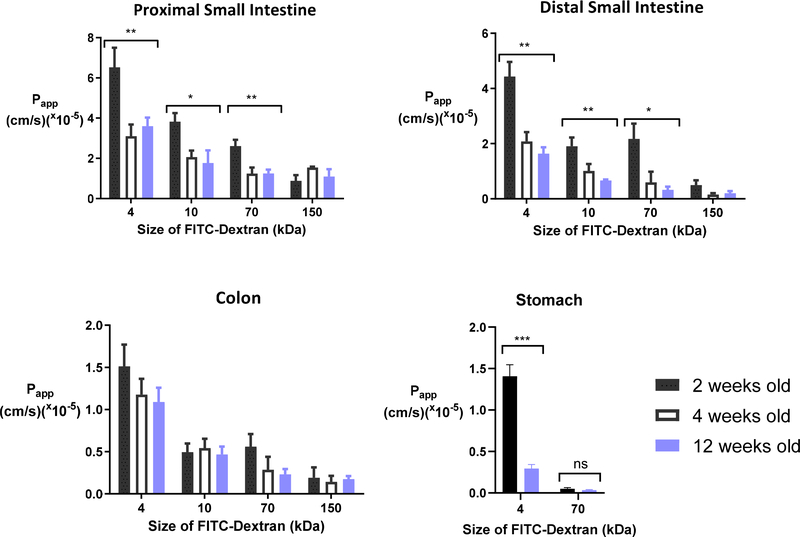
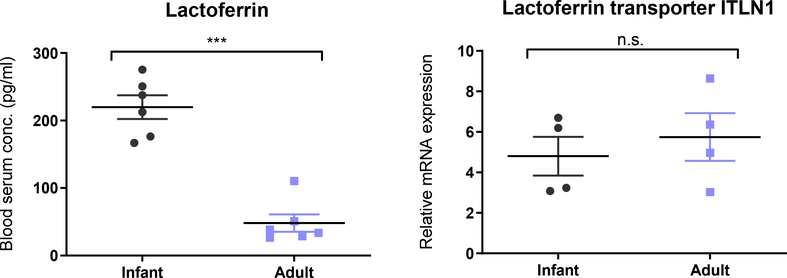
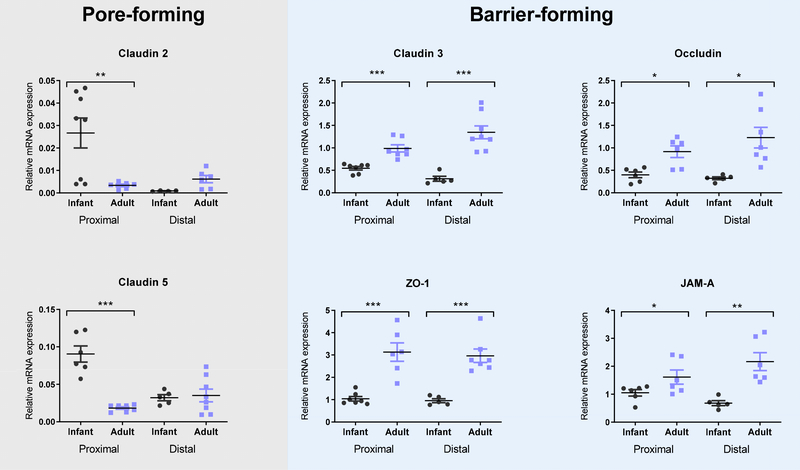
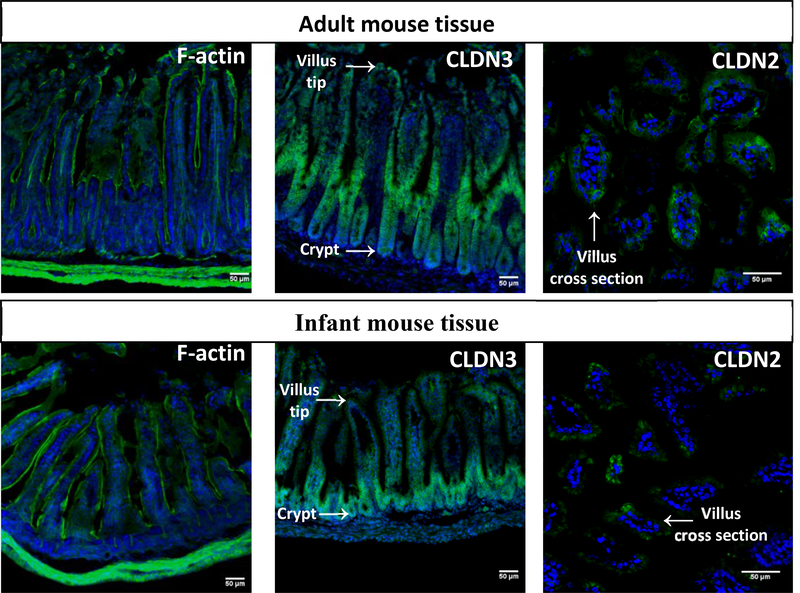
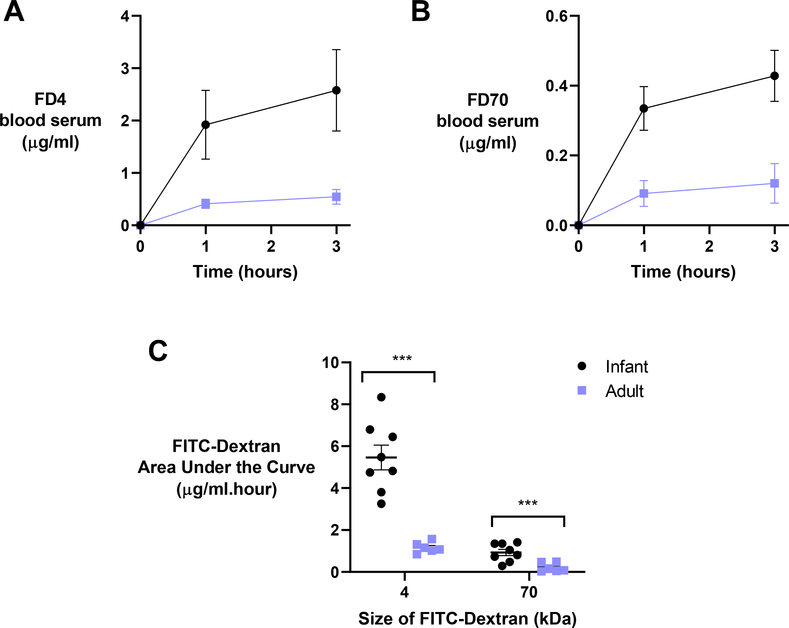
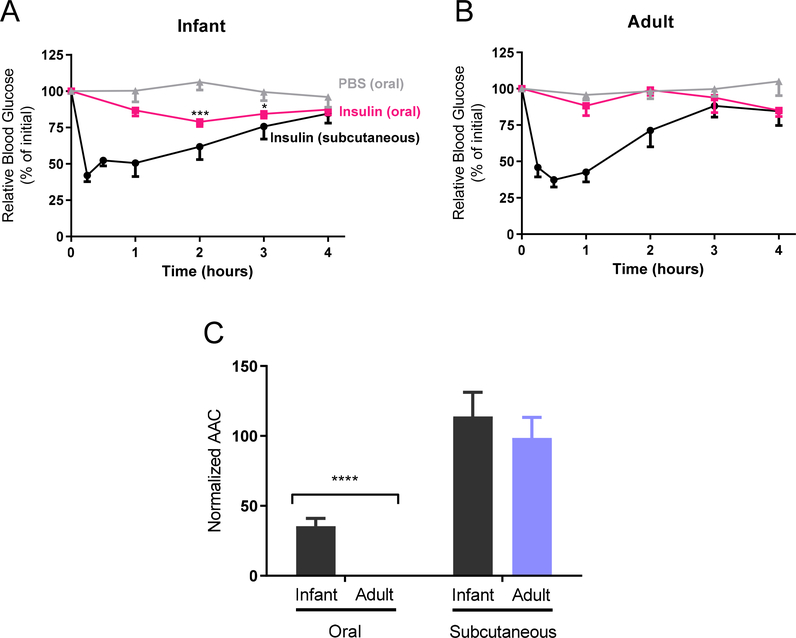
Oral delivery of macromolecular drugs is the most patient-preferred route of administration because it is painless and convenient. Over the past 30 years, significant attention has been paid to oral protein delivery in adults. Unfortunately, there is an outstanding need for similar efforts in infants, a patient population with distinct intestinal physiology and treatment needs. Here, we assess the intestinal permeability of neonatal and infant mice to determine the feasibility of orally delivering peptide and protein drugs without permeation enhancers or other assistance. Using the non-everted gut sac model, we found that macromolecular permeability depended on molecular size, mouse age, and intestinal tissue type using model dextrans. For example, the apparent permeability of 70 kDa FITC-Dextran (FD70) in infant small intestinal tissue was 2-5-fold higher than in adult tissue. As mice aged, the expression of barrier-forming and pore-forming tight junction proteins increased and decreased, respectively. The in vivo oral absorption of 4 kDa FITC-Dextran (FD4) and FD70 was significantly higher in younger mice, and there was a fourfold increase in oral absorption of the 80 kDa protein lactoferrin compared to adults. Oral gavage of insulin (5 IU/kg) reduced blood glucose levels in infants by >20% at 2 and 3 h but had no effect in adults. Oral insulin had 35% and <1% of the pharmacodynamic effect of a 1 IU/kg subcutaneous dose in infants and adults, as measured by area above the curve. These data indicate that the uniquely leaky nature of the infantile intestine may support the oral delivery of biologics without the need for traditional oral delivery technology.
口服给予大分子药物是患者首选的给药途径,因为它无痛且方便。在过去的 30 年中,人们对成人的口服蛋白传递给予了极大的关注。不幸的是,婴儿群体也非常需要类似的努力,他们的肠道生理学和治疗需求与成人不同。在这里,我们评估了新生和婴儿期小鼠的肠道通透性,以确定在没有渗透增强剂或其他辅助手段的情况下,口服给予肽和蛋白类药物的可行性。使用非外翻肠囊模型,我们发现大分子通透性取决于分子大小、小鼠年龄和肠组织类型,使用模型葡聚糖。例如,在婴儿小肠组织中,70 kDa FITC-葡聚糖(FD70)的表观渗透率比成年组织高 2-5 倍。随着小鼠年龄的增长,形成屏障的紧密连接蛋白和形成孔的紧密连接蛋白的表达分别增加和减少。4 kDa FITC-葡聚糖(FD4)和 FD70 的体内口服吸收在年幼的小鼠中明显更高,与成年人相比,80 kDa 蛋白乳铁蛋白的口服吸收增加了四倍。口服给予胰岛素(5 IU/kg)可使婴儿的血糖水平在 2 和 3 小时内降低 20%以上,但对成年人没有影响。口服胰岛素在婴儿和成年人中的药效学作用分别为皮下给予 1 IU/kg 剂量的 35%和<1%,通过曲线下面积来衡量。这些数据表明,婴儿肠道的独特渗漏特性可能支持生物制剂的口服递送,而无需传统的口服递送技术。